Quick answers
Can you add lighting to a closet system?
Yes—most closet storage systems can include lighting, but how easy and how expensive it is depends on your space, the system type, and whether electrical work is already in place. Ask for an all-in written price before anything starts.
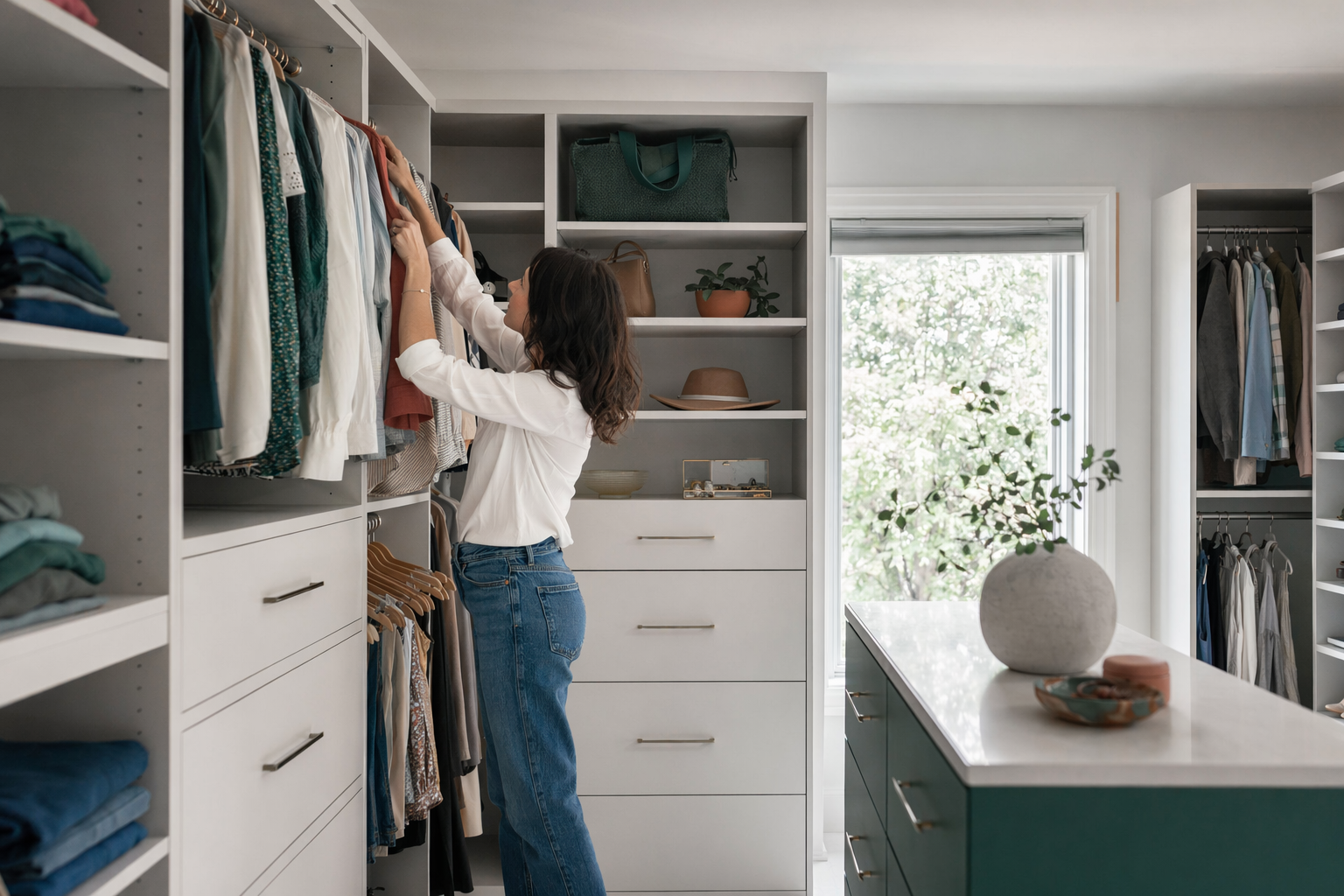
First: what “adding lighting” usually means in a closet
Most custom closets add lighting in one of two ways: either a built-in fixture (like LED strip channels in the shelves) or small lights (like puck lights) mounted inside the closet.
Where the work gets more complex is when the lights need new power and wiring. Even if the lighting itself is simple, the builder may still need access to an existing power source or coordinate electrical work with a licensed professional.
At a planning level, you’ll want to decide: do you want light for the whole hanging area, for shelves only, or for specific zones (like a shoe shelf or drawers)? That decision affects the number of fixtures and the overall cost.
- Tip: Bring a photo and rough measurements of the closet wall(s) when you ask for options.
- Ask whether lighting is “included” in the storage price or priced as an add-on.
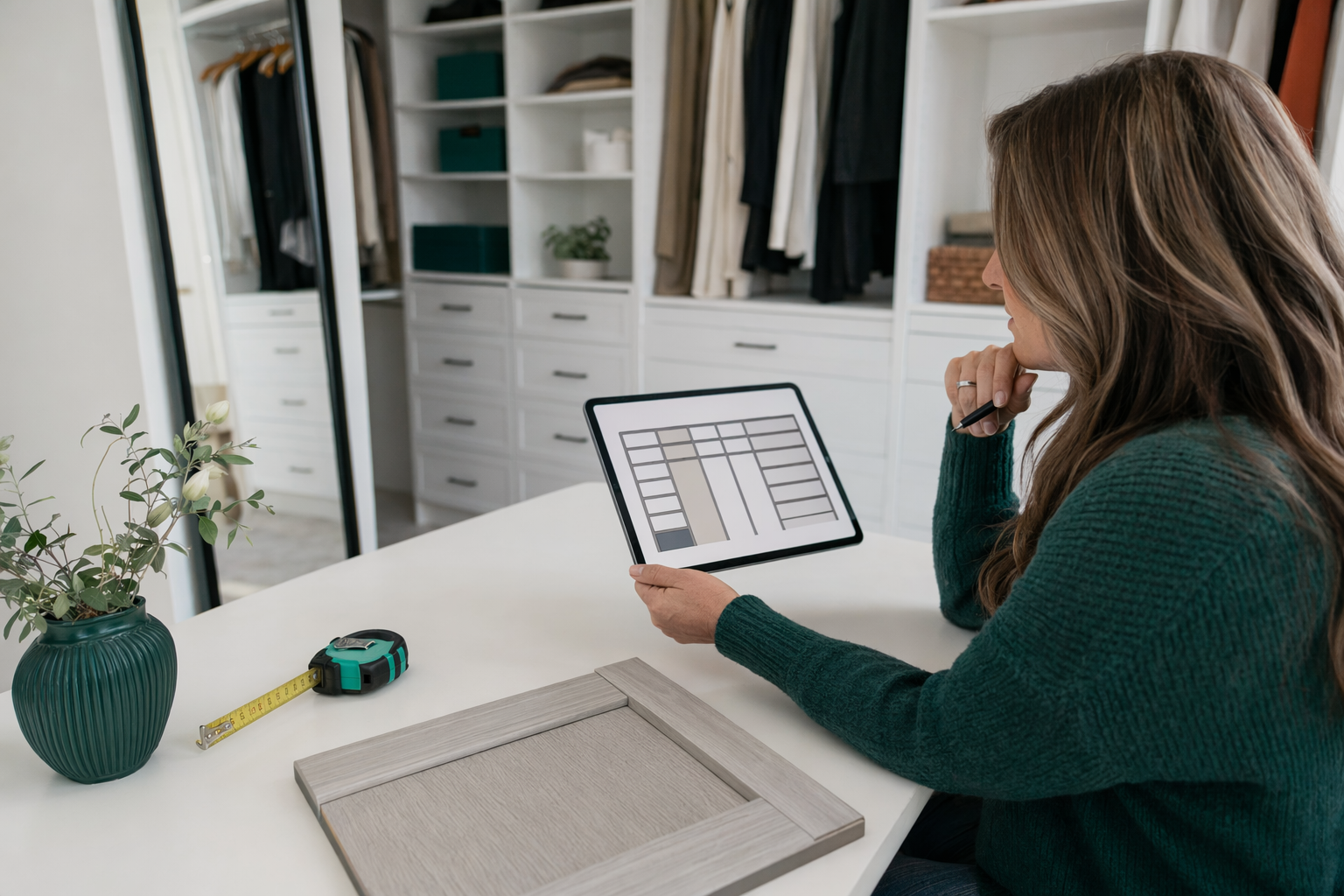
Which system types work best with lighting
Lighting is usually easiest to plan with melamine/laminate systems because there are flat surfaces where you can route LED channels, mount puck lights, and hide wiring routes neatly.
Wire systems can also include lighting, especially LED strips and small fixtures, but the look and the “clean hide” options can be more limited depending on the product line the builder uses.
Solid wood/veneer (premium visible built-ins or higher-end walk-ins) can absolutely support lighting, but you’ll typically pay more because the materials and finish quality cost more—and any hidden channel work is more labor-intensive.
- Common planning approach: LED strips in shelf channels for an even look, plus a separate light switch location you control.
- If your closet has no nearby power, lighting becomes both a design and electrical planning question.
Honest costs: lighting usually raises the price per linear foot
Closet systems are commonly priced per LINEAR FOOT of wall (for the built-in run). Lighting typically adds cost on top of that base system price, because it adds materials (LEDs, diffusers/channels, switches) and labor (layout, mounting, routing).
As a practical planning range (not a quote), many builders land in the following per-linear-foot ballparks for the closet/storage system itself: wire often costs the least per linear foot, melamine/laminate is usually the best value-to-look sweet spot, and solid wood/veneer is usually the highest. Lighting can add a meaningful amount depending on how many fixtures you want and whether new wiring is needed.
Because builders price lighting differently (some include certain hardware, others charge per fixture or per channel), ask for two separate line items in writing: (1) the closet/storage system, and (2) the lighting package—then ask whether electrical work is included or coordinated separately.
- Get the all-in price in writing, including lighting, hardware, and any removal of old shelving if you have it.
- Ranges vary by area and by builder—don’t treat any single number as your final cost.
Upcharges to watch for (lighting + common closet add-ons)
Lighting is not the only “easy add-on” that can raise the price. Drawers and pull-outs, soft-close hinges and slides, premium finishes, and extra accessories often change the cost a lot—sometimes more than people expect.
If you’re planning lighting, also think about how you’ll use the closet. Do you really want deep drawers everywhere, or would a few drawers near the top be enough? Choosing fewer high-cost features can keep the design balanced.
When you compare options, always ask: Are the lights on a switch, motion sensor, or both? Are there extra charges for a dimmer? Are the LED channels included or added as a custom detail?
- Common cost drivers: number of lights, continuous LED channels vs. individual fixtures, and switch/dimmer options.
- Ask whether the builder includes wire management/hidden routing as part of the lighting package.
How the process usually works (and what to request from a builder)
A good builder will start with measurements and a layout: hanging length, shelf heights, drawer locations, and where light will help you most (tops of shelves, hanging rods, shoe areas).
Then they’ll propose a system type (wire, melamine/laminate, or wood/veneer) and include an equipment list for accessories. For lighting, ask for a simple description of the lighting style (LED strips in channels vs. puck lights, for example) and the placement.
Finally, before any work begins, confirm the all-in price and what’s included. If electrical access is needed, ask who is responsible for electrical coordination. ShelfGrove is not an electrical trade advisor, and lighting can involve electrical considerations—so hire licensed, insured professionals as required locally and confirm with your builder and local rules.
- Request an itemized estimate: storage system + lighting package + any hardware upgrades + any removal.
- Confirm finish/materials (wire vs. melamine/laminate vs. wood/veneer) and the exact components being used.
Get matched with a local builder (free) and ask the right lighting questions
ShelfGrove is a FREE matching service. We connect you with licensed, insured local closet and storage-system builders who can discuss options for lighting, system type, and a practical design for your space.
To get useful results, choose your closet run length (linear feet) and tell us what kind of lighting you want (overall closet light, shelf light, or both). If you can, include the closet ZIP code and your preferred language so the builder communication is easier.
Start by requesting an all-in written estimate and a clear list of what’s included in lighting (fixtures, channels/diffusers, switch/dimmer, and wiring coordination). Then compare proposals and pick who to hire—your choice stays with you.
- If you want options, start at [get matched](/get-matched/).
- Learn more about budgeting in [closet costs](/costs/).
Yes, you can add lighting to a closet system, but the final cost and ease depend on your storage layout, the system type, and whether wiring access is already in place—so ask for a clear, itemized all-in written estimate.
Common questions
Can a builder add LED lighting to an existing closet without replacing everything?
Sometimes, yes—especially if there’s already power nearby and there’s space to mount lights or add LED channels. Many builders still recommend updating parts of the system so the lighting looks clean and wiring can be hidden. Ask for an itemized estimate for “lighting only” versus “lighting plus system update.”
Do closet lighting prices depend on linear feet?
Closet systems are often priced per linear foot, but lighting is frequently priced as an add-on based on the number of fixtures or LED channels and switch/dimmer choices. Your total cost may still track with how much wall run you’re building, but you should request lighting as a separate line item in writing.
Is lighting always included when I buy a custom closet?
Not usually. Many standard closet packages focus on shelves, rods, and drawers, and lighting is extra. Before work starts, confirm exactly what the base price includes and get the lighting plan and hardware list in your estimate.
What lighting style is most practical: strips or small puck lights?
LED strips in channels are often the easiest way to get even light across shelves and hanging areas with a clean look. Puck lights can work too, especially for targeted spots, but they may require more fixtures and careful placement. Ask your builder to show a couple layout examples for your closet size.