Quick answers
How many drawers do I need in a closet?
In most closets, you don’t need a “drawer in every bay”—you need drawers where you store items that go in small categories. Here’s how to estimate drawer count and what it usually costs, so you can design a closet that fits your real life.
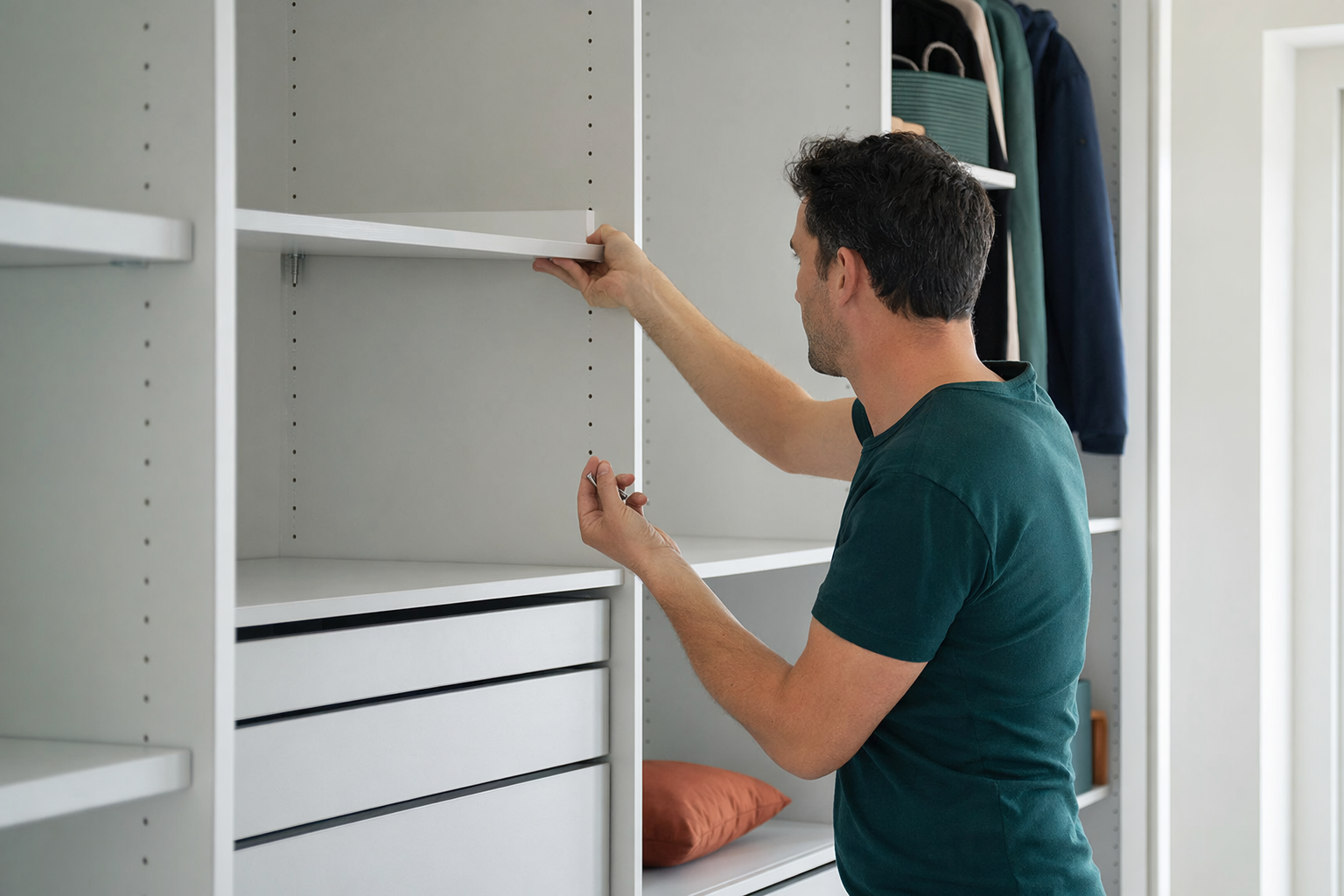
Start here: how to decide the right drawer number
A good rule is to match drawers to “small, mixed items” (socks, underwear, ties, belts, skincare/hair tools, pajamas, cleaning items). If you can fold it and stack it in a drawer without needing to dig, it usually belongs in a drawer.
For many reach-in closets, a practical starting point is 2 to 6 drawers total, spread across the areas you use most. For walk-ins and larger spaces, 6 to 12 drawers is common, especially if you’re replacing a dresser.
If you already know you hate rummaging, start with more shallow drawers near the most-used height (often waist to chest level). If you rarely use drawers, you’ll save money by using more shelves and adding just a few drawers for the “must-organize” items.

Use this quick planning method (real items, real places)
Drawers work best when you can group items into categories you’ll actually keep together. Before you count drawer boxes, list what will live in the closet and how you currently store it.
A simple way to estimate is to plan drawers for categories, then fill the rest with shelves:
- Pick 4–8 item categories you want to keep sorted (examples: socks, underwear, workout gear, accessories, seasonal basics, baby items, belts, ties).
- Decide which categories truly need a drawer. If items fold neatly and you don’t mind stacking, shelves may be enough.
- Estimate how many drawer “zones” you want at each level: usually 1 zone for small daily items, and 1–2 zones for seasonal or bulky-fold items.
- Spread drawers so you don’t block hanging space you’ll need daily.
What to watch: if your closet has lots of hanging, drawers should not crowd the hanging zone. If you have mostly folded clothes, drawers can replace some shelf clutter.
The system choice that affects drawer planning (and cost)
Closet systems are often priced by linear foot of wall. Drawers are an add-on that can raise costs across any system type, but the size and finish choices can change the total a lot.
In plain terms:
- Wire systems are usually the cheapest to build, and they’re ventilated (often good for items that need airflow). Drawers may be limited depending on the product line.
- Melamine/laminate systems are the value-to-look sweet spot for most custom closets. They’re popular because they’re clean-looking, practical, and commonly come with drawer options.
- Wood (or wood-veneer) is often premium, especially for visible walk-in built-ins. It can look great, but it typically costs more per linear foot.
If you’re mainly adding drawers for organization, melamine/laminate is commonly the middle ground—while wire may be best if you mostly want hanging and open shelving.
Honest cost ranges: drawers add real dollars per linear foot
Shelf systems are often priced per linear foot, but a closet rarely comes from “empty wall + shelves.” The all-in price depends on system type, sizes, and accessories.
As a general planning range (not a quote):
- Wire systems: commonly about $50–$150 per linear foot for many basic setups.
- Melamine/laminate systems: commonly about $100–$250 per linear foot for typical custom closets.
- Wood/veneer systems: commonly about $180–$350+ per linear foot for more premium builds.
Drawers and pull-outs are usually where you’ll see noticeable increases. Common cost drivers (get the all-in price in writing):
- Drawer boxes and multiple drawer sizes
- Soft-close hardware
- Specialty organizers inside drawers (dividers, trays)
- Premium finishes or matching higher-end wood tones
- Any removal of old shelving and haul-away
Because every project is different (wall length, height, how many drawers, what accessories you pick), treat these as budgeting ranges—not guarantees. Builder pricing also varies by area.
How many drawers should you actually choose? Simple targets
Use these as “starter targets,” then adjust based on what you store and whether the closet is replacing a dresser.
- Small reach-in (short hanging + some shelves): about 2–4 drawers if you’re sorting daily wear and accessories.
- Average reach-in (mostly hanging + folded items): about 3–6 drawers to cover key categories.
- Large reach-in or walk-in (you want a dresser replacement): about 6–12 drawers depending on how many folded clothing categories you keep there.
- Closets with mostly hanging (shirts/jackets): often 0–3 drawers, using more shelves for folded items.
If you’re debating between shelves vs drawers, ask yourself: will you keep categories separated without visual digging? If “no,” drawers usually pay off. If “yes,” you can save money with more shelves and fewer drawers.
Get matched to a licensed local builder (and confirm the drawer details)
ShelfGrove is a FREE matching service, not a builder and not a closet company. We help you connect with licensed, insured local closet and storage-system builders and compare options.
To get useful matches for drawer count and pricing, provide the basics:
- Closet type (reach-in or walk-in)
- Approximate wall length (linear feet) and general layout (hanging vs shelving areas)
- What you want stored (folded clothes, accessories, shoes, linens)
- Your preferred drawer target (for example, “around 6 drawers”) and whether you want dividers/soft-close
- Your ZIP code and preferred language
Before anyone starts work, confirm the all-in price and what it includes:
- Exact number of drawers and sizes
- Hardware (soft-close yes/no)
- Interior organizers (dividers, trays)
- Materials and finishes
- Whether old shelving removal is included
- Lead time and start date (varies by builder)
And because you may have unique home conditions, always verify any permitting, structural concerns, or load questions with the builder and local requirements.
Most closets work best with about 2–6 drawers for reach-ins or 6–12 for walk-ins, and drawer choices can noticeably raise the per-linear-foot cost—so plan categories first and get the all-in drawer details in writing from a licensed, insured local builder.
Common questions
Should I put drawers next to hanging clothes or in a separate section?
Either can work, but most people prefer drawers where they’ll grab daily items without squeezing between hangers. If your hanging area is tight, keep drawers toward the folded-clothing/shelf side so you don’t reduce usable closet space.
How deep should closet drawers be for socks and underwear?
Many closets use medium-depth drawers with dividers for socks and underwear so items stay separated. The exact depth depends on how you fold and your shoe/boot or accessory storage needs—confirm sizes with your builder so the drawer clears your chosen organizers.
Are soft-close drawers worth it?
They’re a convenience upgrade and can add cost. If drawers will get used multiple times per day, many homeowners find it worth it; if you want the lowest upfront cost, you can often start without soft-close and compare prices in writing.
Can a closet have too many drawers?
Yes. Too many drawers can make the closet feel crowded and reduce hanging or shelf space you actually need. If you don’t sort items by category, extra drawers may turn into “random stuff drawers,” which defeats the purpose.