Quick answers
How much does a custom closet cost?
Most custom closets are priced by linear foot of wall, and the honest answer is that cost depends first on the system: wire is cheapest, melamine is the best value for most homes, and wood is premium.
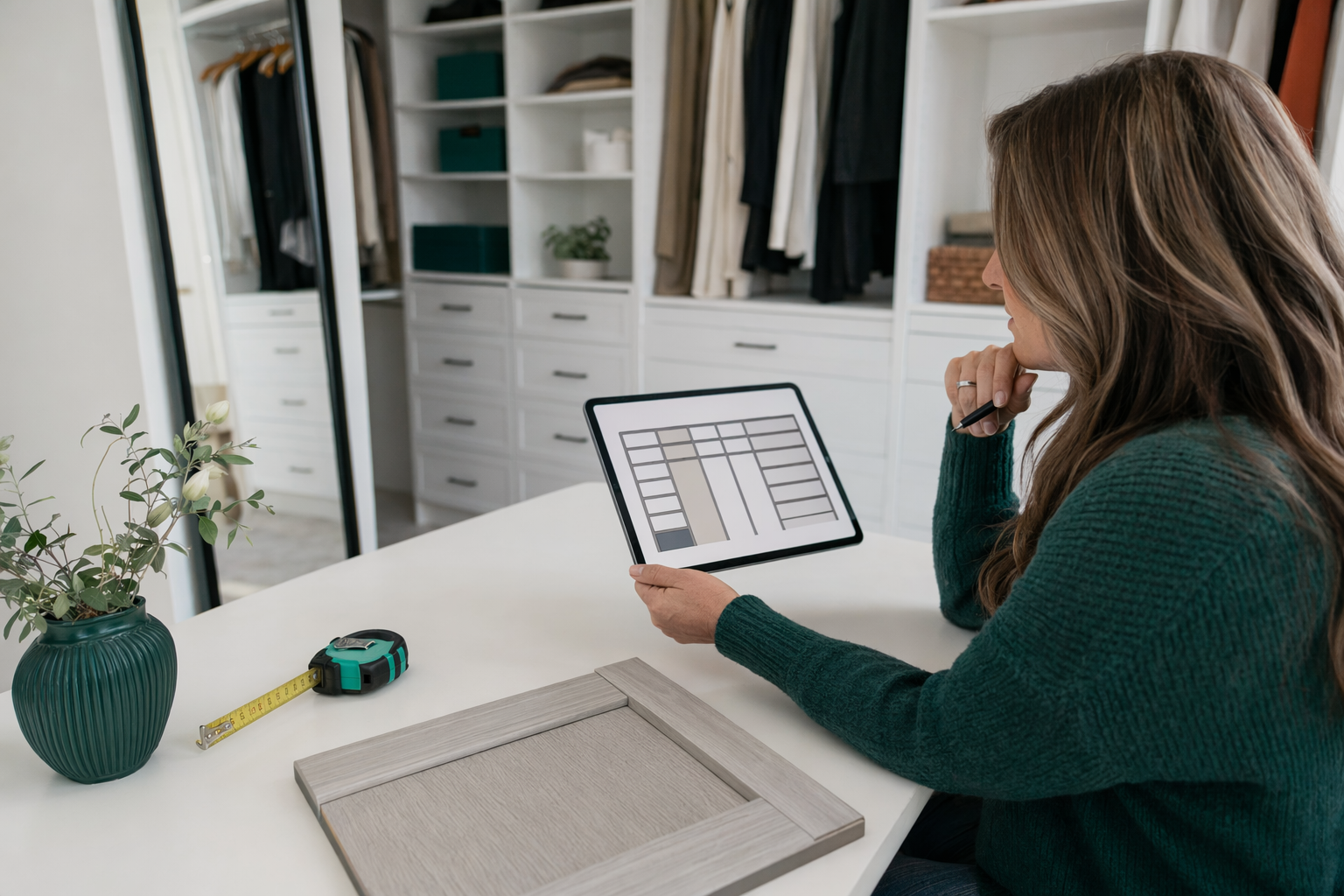
Short answer: what a custom closet usually costs
A practical starting range is about $90 to $600+ per linear foot, depending on whether you choose wire, melamine/laminate, or wood/veneer. For a typical project, that often works out to roughly $1,000 to $8,000+ total, but bigger walk-ins, lots of drawers, islands, lighting, or premium finishes can push it higher.
A simple reach-in closet with basic shelves and hanging can be on the lower end. A large walk-in with drawers, glass-front sections, shoe storage, valet rods, and built-in lighting can cost several times more. These are general ranges, not quotes.
The real number depends on system type, materials, accessories, room size, layout, and your area. Builders also vary in what they include, so get the all-in price in writing before you agree to anything.
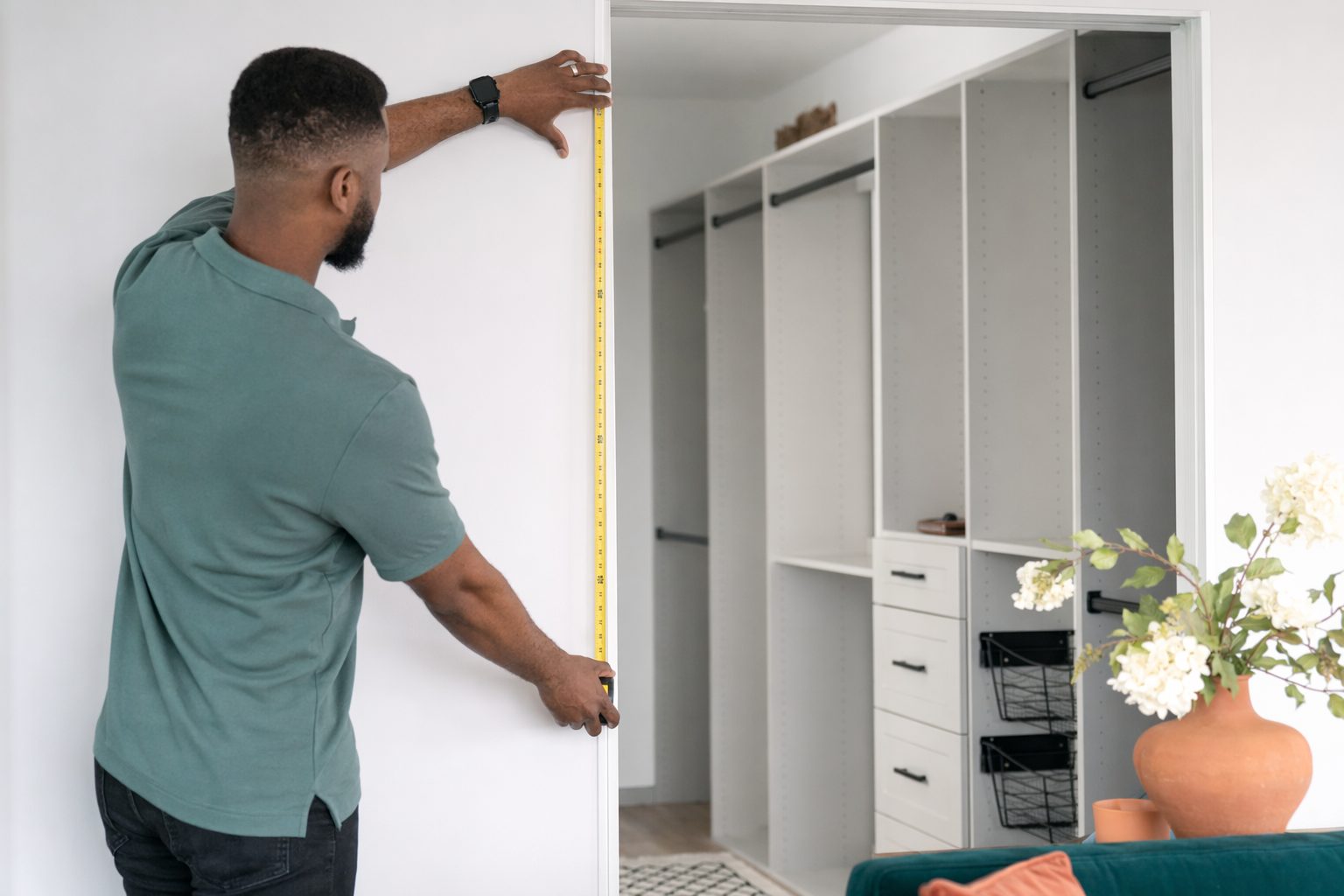
Cost by system type: wire, melamine, and wood
Wire systems are usually the lowest-cost option. A fair general range is often around $90 to $180 per linear foot. They are ventilated, simple, and practical for basic reach-ins, laundry areas, or secondary closets. They usually give you good function for less money, but they do not have the built-in furniture look many people want.
Melamine or laminate systems are the value sweet spot for most custom closets. A common range is about $140 to $300 per linear foot. This is where many homeowners land because it looks cleaner and more finished than wire, gives you more shelf and drawer options, and usually costs much less than real wood. For many primary-bedroom reach-ins and walk-ins, this is the most balanced choice.
Wood or wood-veneer systems are the premium tier. A broad range is often around $250 to $600+ per linear foot. These are usually chosen for larger walk-ins, visible built-ins, or homes where the closet is meant to feel like furniture. The price rises quickly with better finishes, thicker trim details, more drawers, and specialty hardware.
If you are still comparing options, start with costs and guides.
What that means in real project dollars
Here is a simple way to think about it. A reach-in closet that is 6 to 8 linear feet wide might cost around $700 to $2,400 in wire, about $1,000 to $3,000 in melamine, or roughly $1,800 to $4,800+ in wood, depending on the exact design and features.
A walk-in with 12 to 18 linear feet of usable wall can land around $1,500 to $4,000 in a simpler system, around $2,500 to $5,500 in a typical melamine setup, or $4,000 to $10,000+ in a wood or furniture-style design. If you add a center island, many drawers, glass inserts, specialty shoe storage, or lighting, the total can rise fast.
The cheapest closet is not always the best value. Many people waste money by upgrading the material before they have a useful layout. Good planning matters more than fancy finishes. Two double-hang sections, a few adjustable shelves, and one drawer stack often serve a real family better than expensive accessories they barely use.
What drives the price up
The main cost drivers are not a mystery. More parts means more money. Drawers and pull-outs are some of the biggest upcharges. Soft-close hardware, premium finishes, lighting, islands, glass doors, specialty shoe shelves, jewelry trays, tilt hampers, and removal of old shelving also add cost quickly.
A basic hanging-and-shelf closet is much cheaper than a closet full of drawer banks and accessories. In plain terms, one drawer stack can change the total more than people expect. If you are trying to stay on budget, add only the components you will actually use every week.
Shape matters too. A simple straight-wall closet is usually cheaper than a U-shaped walk-in with corners, trim work, and multiple heights. Tall units, custom color matching, and complicated installation conditions can also raise labor costs.
Ask every builder to break the proposal into clear parts: system type, linear footage, number of shelves, number of drawers, hardware level, finish, removal of old shelving, and installation. Get the all-in price in writing first so there are no surprise add-ons.
How to plan the right closet before you buy
If you want a closet that feels worth the money, start with what you actually store. Count hanging clothes, folded clothes, shoes, bags, and bulky items. Then decide what deserves prime space.
- Measure the wall length you can actually use. Most pricing starts with linear feet of wall, not floor area.
- Decide the system type first: wire for lowest cost, melamine for best value, wood for premium look.
- List the must-haves: double hang, long hang, shelves, maybe one drawer bank.
- Leave out low-use accessories unless you know you want them.
- Ask for a simple design and a fuller design so you can compare value.
Many homeowners do well with a straightforward plan: two hanging sections, 3 to 6 adjustable shelves, and 2 to 4 drawers. That is often more useful than paying extra for many specialty inserts. If you are early in the process, answers and guides can help you compare layouts and system types.
How to compare builders without getting overcharged
Compare proposals line by line, not just by total price. One builder may quote a lower number but leave out removal of old shelving, soft-close hardware, trim, or installation details. Another may include them from the start. The lowest number is not always the lowest real cost.
Hire licensed, insured local builders, verify that yourself, and ask who is responsible for measuring, installation, permits if needed, and any wall repair or patching. ShelfGrove is a free matching service, not a closet company, and does not design, build, or install storage systems.
If you want help finding local options, you can use get matched. The service is free for the customer. We only collect contact and project-intent details like your name, phone, optional email, the space, ZIP code, and preferred language so you can connect with local closet and storage-system builders.
Pricing, materials, lead times, and what is included vary by builder and by area in the US, so always confirm the material, component list, installation scope, and all-in price before any work starts.
A custom closet can cost about $90 to $600+ per linear foot, and the smartest way to save money is to choose the right system first and skip accessories you will not really use.
Common questions
What is the average cost of a custom closet?
A broad honest range is about $90 to $600+ per linear foot, with many full projects landing around $1,000 to $8,000+. The real number depends on the system type, materials, accessories, size, and your area.
Is a custom closet priced by square foot or linear foot?
Most custom closets are priced by linear foot of wall, not square foot of floor. That is why a small walk-in with lots of built-ins can cost more than people expect.
What is the cheapest type of custom closet system?
Wire is usually the cheapest. It is practical and ventilated, but it has a simpler look and fewer furniture-style options than melamine or wood.
What gives the best value for money?
For most homeowners, melamine or laminate is the value sweet spot. It usually gives a cleaner built-in look than wire without the premium price of wood.
Why do closet prices jump so much?
Drawers and pull-outs, soft-close hardware, premium finishes, lighting, islands, and removal of old shelving are common upcharges. The more components and custom details you add, the faster the price rises.
How can I keep the cost of a custom closet down?
Choose the system type first, keep the layout simple, and add only the components you will really use. A few shelves, hanging sections, and one drawer bank often do more than expensive specialty accessories.
Can ShelfGrove give me a quote or install the closet?
No. ShelfGrove is a free matching service, not a closet or cabinet company, and does not design, build, or install storage systems. It helps you connect with licensed, insured local builders so you can compare options.