Quick answers
How much does a pantry system cost?
A custom pantry system usually costs less than a big walk-in closet, but the real price depends on the wall length, system type, and how many drawers, pull-outs, and specialty shelves you add. Most builders price pantry storage by linear foot of wall, with extras raising the total quickly.
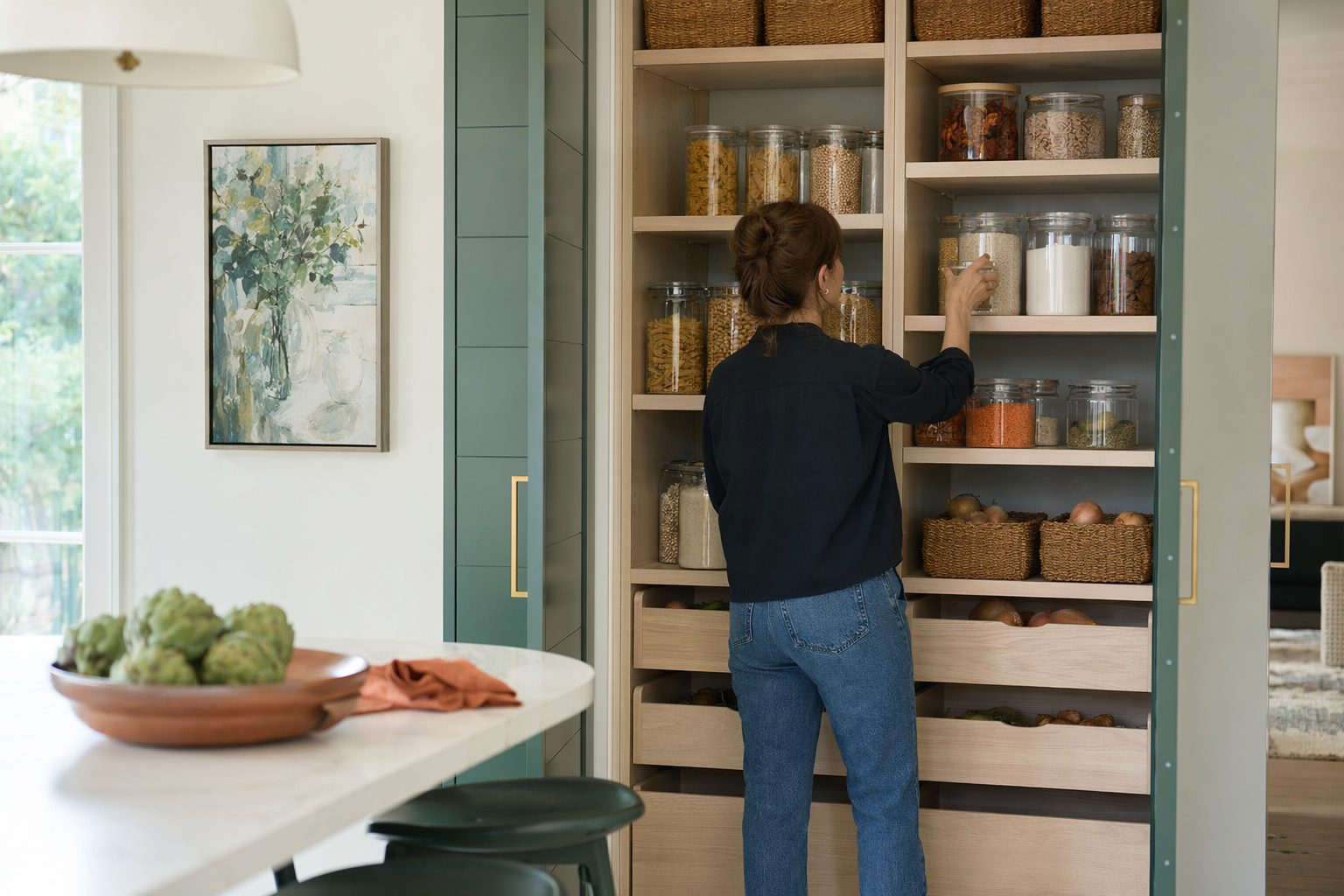
What a pantry system usually costs
For a simple custom pantry, many homeowners see pricing start around $150 to $300 per linear foot for basic wire shelving, about $250 to $500 per linear foot for melamine or laminate systems, and roughly $500 to $1,000+ per linear foot for premium wood or wood-veneer pantry built-ins. Those are general ranges, not quotes.
In real projects, that often means a small pantry may land around $1,000 to $3,000, a medium pantry around $2,000 to $6,000, and a larger or more upgraded pantry around $5,000 to $12,000 or more. Materials, finish level, accessories, your area, and the size and shape of the space all affect the total.
Most pantry systems are priced off the linear feet of wall being outfitted, then adjusted for shelf depth, height, corner conditions, and add-ons. If two pantries have the same wall length, the one with more drawers, roll-out trays, and custom details will usually cost much more.

Which pantry system type fits the budget best
Wire is the cheapest option. It works well if you want ventilation, basic food storage, and easy cleaning, and if your main goal is function over appearance. It is often enough for a utility pantry, laundry-pantry combo, or garage-adjacent food storage area.
Melamine or laminate is the value sweet spot for most custom pantries. It gives you a more finished built-in look, solid shelves, cleaner lines, and better control over shelf spacing. For many homeowners, this is the best balance of look, durability, and price.
Wood or wood veneer is the premium choice. It makes sense for a visible walk-in pantry, a pantry that opens into the kitchen, or a built-in that needs to match nicer cabinetry. It looks great, but it raises the per-linear-foot cost fast.
If you are trying to control spending, spend on the layout first and the finish second. A practical melamine pantry with the right shelf depths and a few useful pull-outs often works better than a fancy material package with too many expensive features you do not actually use.
- Wire: lowest cost, ventilated, basic look
- Melamine/laminate: best value for most custom pantries
- Wood/veneer: premium look for visible built-ins
What makes pantry pricing go up
The biggest upcharges are usually drawers and pull-outs, soft-close hardware, premium finishes, lighting, decorative trim, and removal of old shelving. These are useful in some pantries, but they are also where people spend more than they expected.
Roll-out trays are a common pantry upgrade because they make canned goods, small appliances, and dry goods easier to reach. They also cost more than fixed shelves. Full drawers cost more than open shelving too, so only add them where they solve a real problem.
Deep shelves can look efficient, but if they are too deep, food gets lost in the back. Many homeowners do better with more adjustable shelves, a few pull-outs, and specific zones for bulky items than with lots of deep custom accessories.
Before you hire anyone, ask for the all-in price in writing. That should include materials, hardware, finish level, delivery, installation, and removal of old shelving if needed. This is the easiest way to avoid surprise upcharges later.
- Common cost drivers: pull-outs, drawers, soft-close, trim, lighting
- Removal of old wire or builder-grade shelves may cost extra
- Get the all-in price in writing before work starts
How to think about size in real pantry terms
A pantry quote makes more sense when you think in wall length and actual storage parts. A reach-in pantry might have 6 to 10 linear feet of wall storage. A walk-in pantry may have 10 to 20+ linear feet, depending on whether one, two, or three walls are being outfitted.
A basic setup may be mostly adjustable shelves for food, small appliances, and bulk items. A more upgraded pantry may add 2 to 6 roll-out trays, a few drawers, vertical dividers for trays or cutting boards, and a countertop section for appliances.
Try to match the components to what you really store. If you mostly need cereal, cans, snacks, and paper goods, fixed and adjustable shelves may do most of the job. If you store heavy mixers, pet food, or bulk containers, then a few stronger pull-outs may be worth the extra cost.
People often waste money by over-customizing a small pantry. If the space is tight, smart shelf spacing and a few targeted accessories usually matter more than adding every premium feature.
How to compare estimates without getting confused
When you compare pantry estimates, look at three things first: the system type, the total linear feet being covered, and the exact component count. One builder may show a lower price because the design has fewer shelves, thinner materials, or no pull-outs.
Ask each builder to spell out what is included: material type, shelf count, drawer or pull-out count, hardware, finish, installation, and demolition of old shelving. If one quote is much lower, check what has been left out.
It also helps to ask what is standard versus upgraded. In one area, soft-close hardware may be standard. In another, it may be an add-on. Materials and pricing vary by builder and by area, so a range you see online should only be used for planning, not as a promise.
You can read more general planning help in guides or browse other cost topics in costs.
How ShelfGrove can help you get matched
ShelfGrove is a free matching service, not a closet or cabinet company. We do not design, build, or install pantry systems. We help homeowners connect with licensed, insured local closet and storage-system builders so they can compare options and stay in control of the decision.
If you want help getting started, you can use get matched. We only collect basic contact and project intent details: your name, phone, optional email, the space, ZIP code, and preferred language. It is free for the customer.
Before hiring anyone, verify the builder yourself, confirm they are licensed and insured where required, and ask local questions about permits, wall conditions, electrical work, or anything structural. ShelfGrove provides general information only, not structural, electrical, or other licensed-trade advice.
If you are still comparing ideas, answers can help you understand the basics before you talk with a local builder.
Most custom pantry systems are priced by linear foot, and the fastest way to save money is to choose the right system type and only pay for accessories you will actually use.
Common questions
How much does a small pantry system cost?
A small pantry system often falls around $1,000 to $3,000, depending on wall length, system type, and add-ons. Basic wire is usually cheapest, while melamine and wood cost more.
Is pantry shelving priced by linear foot?
Often, yes. Many custom pantry systems are priced by linear foot of wall, then adjusted for material, shelf depth, height, drawers, pull-outs, and other features.
What is the cheapest custom pantry option?
Wire shelving is usually the cheapest custom-style pantry option. It is practical and ventilated, but it has a more basic look than melamine or wood systems.
Are pull-out pantry shelves worth the extra cost?
Sometimes. Pull-outs can be very useful for heavy items, appliances, and food that gets lost on deep shelves, but they are one of the most common upcharges, so only add them where you will really use them.
Why do pantry quotes vary so much?
The total can change a lot based on system type, materials, finish level, accessories, wall length, and your local area. One quote may also include installation or removal of old shelving while another does not.
Can ShelfGrove build my pantry?
No. ShelfGrove is a free matching service, not a pantry or closet company. We help you connect with local licensed, insured builders so you can compare designs, materials, and all-in pricing.