Quick answers
Is melamine or wood better for a closet?
For most closets, melamine is the better choice if you want a good look for a fair price. Wood is usually worth it only when the closet is very visible, you want a furniture feel, or you are paying for a premium built-in finish.
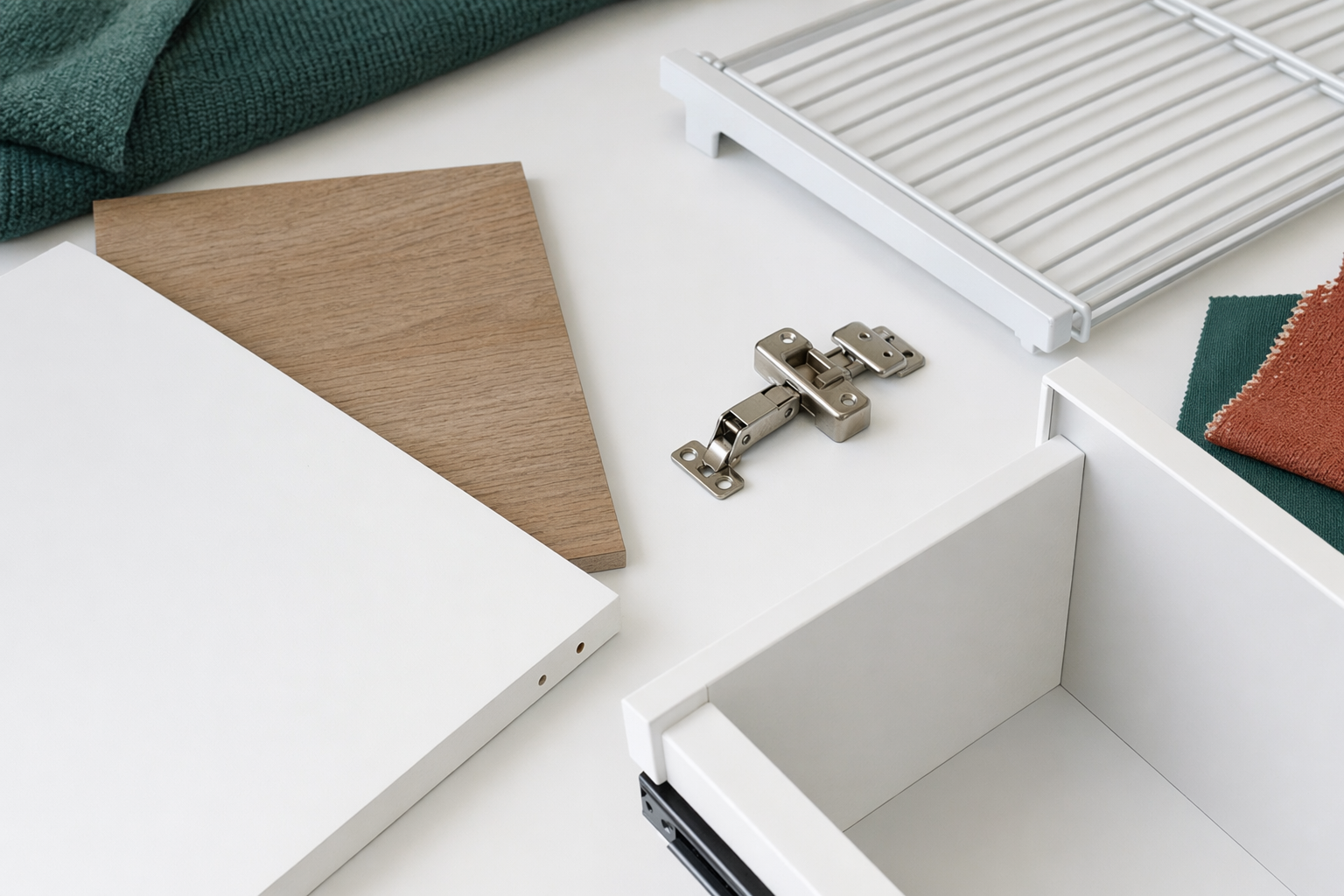
Short answer: which one fits most closets?
If the question is “which is better overall,” melamine usually wins for a typical reach-in or walk-in closet. It gives you a clean, built-in look, handles everyday use well, and usually costs less than solid wood or veneer.
Wood is the better pick when the closet is part of the room design and you want the storage to look like custom furniture. That is common in primary walk-ins, dressing rooms, and visible built-ins. It is also a better match if you care most about rich finish detail, matching other woodwork, or a higher-end feel.
A lot of homeowners overpay by choosing wood for a space where they will mostly see shelves, bins, and hanging clothes. In those cases, melamine often gives the same day-to-day function for less money. ShelfGrove is a free matching service, not a closet company, so you can compare local licensed, insured builders before you decide.
- Melamine: best value, clean look, common for most custom closets
- Wood/veneer: premium look, best for visible, furniture-style spaces
- Wire: usually cheaper than both, but more utilitarian

What you really get with each material
Melamine is a manufactured board with a smooth finish. It is popular because it looks neat, cleans easily, and usually gives you the best balance of price and appearance. For many homeowners, it is the sweet spot between basic wire shelving and premium wood.
Wood or wood veneer is the premium option. It can look warmer and more built-in, but the cost goes up fast once you add thicker panels, nicer edge details, and matching trim. It makes the most sense when the closet is open to the room or when you want a furniture-like result.
The truth is that the material is only part of the decision. The layout matters more than people think. A smart melamine design with enough hanging space, a few drawers, and the right shelf count usually beats a fancy wood design that wastes space.
- Choose melamine if you want value and a polished everyday closet
- Choose wood if appearance is the priority and the closet is highly visible
- Choose wire only if low cost and ventilation matter most
What it should cost, in plain numbers
Most custom closet systems are priced by linear foot of wall. That means the cost depends on how many feet you are building out, what material you choose, and how many accessories you add. These are honest ranges, not quotes, and local pricing varies by builder and area.
For a basic custom closet system, melamine often lands around $150 to $350 per linear foot installed. Wood or veneer can commonly run about $250 to $600+ per linear foot installed, especially in larger walk-ins or more detailed built-ins. Wire systems are usually lower.
On a small reach-in closet, that might mean roughly $900 to $3,000 for melamine and $1,500 to $5,000+ for wood, depending on size and layout. For a larger walk-in, totals can move into the $3,000 to $10,000+ range for melamine and higher for wood if you add more drawers, panels, and finishing details.
- Costs vary by linear feet, material, accessories, and local labor
- Bigger spaces and more drawers raise the total quickly
- Always ask for the all-in price in writing before work starts
The upcharges people miss
The material choice is only the starting point. The price goes up when you add features that look nice but are not always necessary.
Watch for these common upcharges: drawers and pull-outs, soft-close hardware, premium finishes, lighting, islands, decorative trim, and removal of old shelving. If you do not need a feature every day, do not pay for it automatically.
A simple way to stay on budget is to build the closet around what you actually use. Most people need a mix of hanging space, a few shelves, and only a limited number of drawers. Get the design, the materials, the accessories, and the all-in installation price in writing before you agree to anything.
- Drawers and pull-outs cost more than fixed shelves
- Soft-close hardware and lighting add up fast
- Removal of old shelving may be extra
How to choose the right system for your home
If you want the most practical answer: use melamine for most closets, use wood for visible premium spaces, and use wire only when budget or ventilation is the top concern. A good builder can show you how each option looks in your exact space so you are not guessing from a photo.
Think in real parts, not just “better material.” Ask how many hanging sections you get, how many shelves, how many drawers, and how much usable linear footage the layout covers. A well-planned 8-foot wall with the right components can be more useful than a prettier system that wastes half the wall.
If you want more help comparing options, see the answers hub and cost guides.
- Best value for most people: melamine
- Best appearance for visible built-ins: wood or veneer
- Best for fast, low-cost utility: wire
How ShelfGrove helps you move forward
ShelfGrove is a free matching service that connects homeowners with local closet and storage-system builders. You tell us the space, ZIP code, and preferred language, then compare designs from licensed, insured builders and choose who to hire.
We only collect contact and project intent details such as name, phone, optional email, the space, ZIP, and preferred language. We do not design, build, or install anything ourselves.
Before you hire anyone, verify the builder’s license and insurance yourself, confirm the materials and components, and make sure the all-in price is written down clearly. To get started, use get matched.
- Free for the customer
- Compare local licensed, insured builders
- Confirm all materials and pricing before work begins
Melamine is usually the best value for most closets, while wood is better for a premium look in visible spaces, and both should be priced by linear foot with extras written down clearly.
Common questions
Is melamine good enough for a custom closet?
Yes, for most closets it is more than good enough. It gives a clean built-in look, holds up well for normal use, and usually costs much less than wood.
When is wood worth the extra cost?
Wood is worth it when the closet is very visible, you want a furniture-style finish, or you care most about the premium look. If it is a basic reach-in, melamine is usually the smarter buy.
Is melamine always cheaper per linear foot?
Usually yes, but the final price still depends on the builder, the area, the layout, and the accessories. Drawers, pull-outs, soft-close hardware, and lighting can raise the per-linear-foot cost quickly.
Should I ask for a quote by linear foot?
Yes, but also ask what that linear foot includes. The real number depends on material, shelves, drawers, finish level, and installation, so get the full all-in price in writing.