Quick answers
What finishes are available for closet systems?
Closet finishes are mostly about how the surface looks and how it holds up over time. The right choice usually comes down to budget, style, and how visible the system will be in daily use.
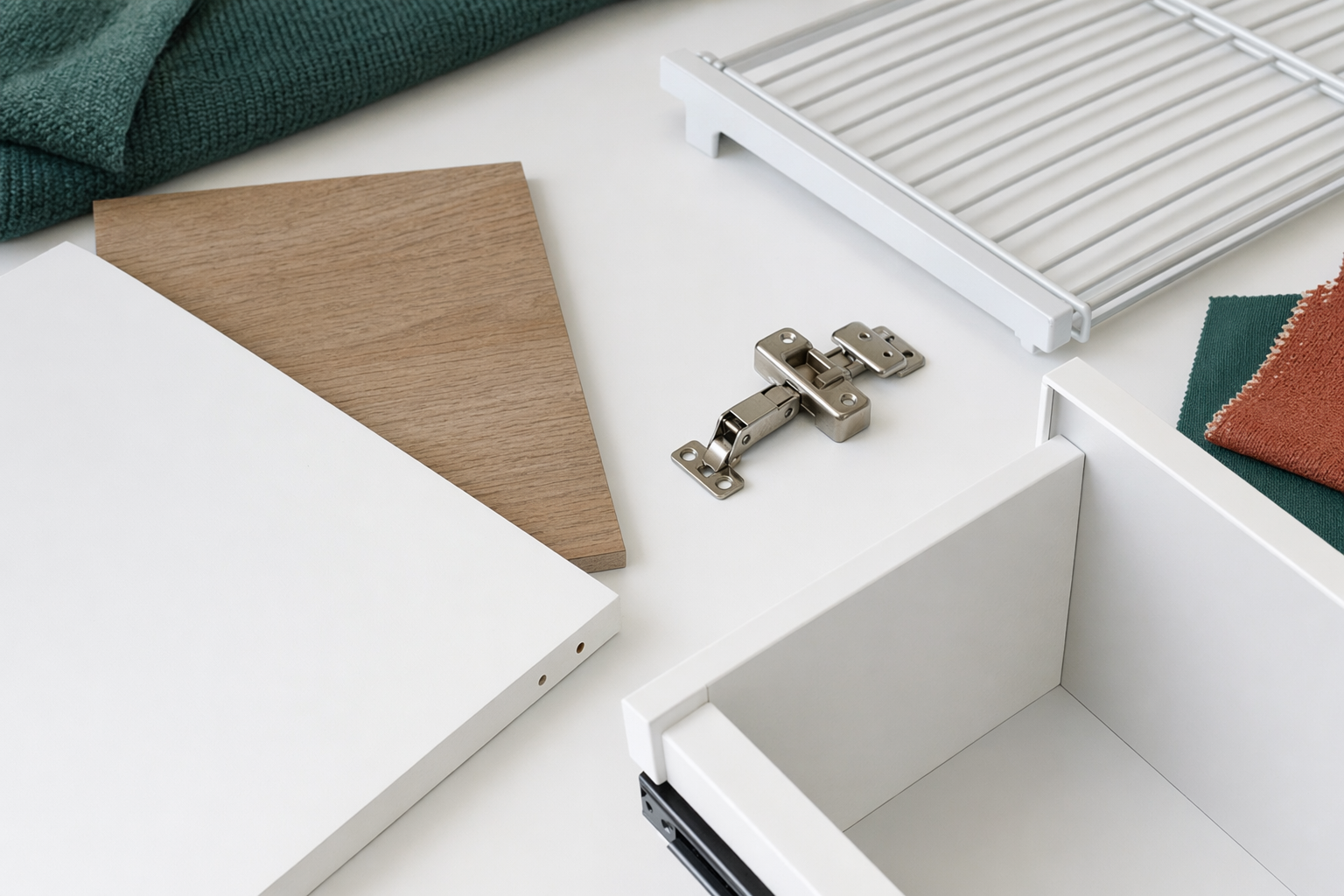
The short answer: the main finishes are wire, melamine/laminate, and wood veneer or painted wood
For most custom closet systems, you will see three broad finish choices: wire, melamine or laminate, and wood-based finishes such as veneer or painted wood. Wire is the most basic and usually the lowest cost. Melamine or laminate is the common middle ground for a clean look without paying for premium cabinetry. Wood veneer or painted wood is the higher-end choice for walk-ins, open shelving, and built-ins where the closet is part of the room design.
If you are trying to decide quickly: wire is best when function and ventilation matter most, melamine is usually the best value for a typical closet, and wood is best when appearance matters most and the closet is very visible. The right finish also depends on your budget in cost ranges, the room, and the installer’s material options.
ShelfGrove is a free matching service, not a closet company. We help you compare local builders, but the builder you choose is the one who supplies the materials, confirms the finish options, and gives you the final all-in price.
- Wire: lowest cost, open/ventilated, simple look
- Melamine/laminate: durable, easy to clean, most common value choice
- Wood veneer/painted wood: premium look, higher cost, best for visible built-ins

What each finish is really like in everyday use
Wire shelves are usually metal, sometimes with a coated finish. They are practical, they let air move through, and they cost less per linear foot than most built systems. The tradeoff is that they look more utilitarian, and smaller items can tip or sit unevenly unless you use baskets or bins.
Melamine or laminate is a wood-based board with a durable surface layer. It is popular because it looks neat, comes in many colors, and is easier to wipe clean than raw wood. In many homes, this is the sweet spot for a reach-in or walk-in closet because it gives you a built-in look without moving into premium pricing.
Wood veneer and painted wood are used when the closet is very visible or the homeowner wants a furniture-like finish. These finishes can look beautiful, but they cost more and can also show wear differently depending on the builder, the grade of finish, and how much handling the surfaces get over time.
- Best for wet or humid areas: usually wire, because it ventilates better
- Best for a clean custom look on a budget: melamine/laminate
- Best for a luxury walk-in or visible built-in: wood veneer or painted wood
Finish choices affect price, and pricing is usually tied to linear feet
Most closet systems are priced per linear foot of wall, then adjusted for the parts you add. A simple wire system may land around the lowest end of the range, while melamine systems are often mid-range, and wood systems are usually the highest. As a very general guide, many projects fall somewhere from about $75 to $250+ per linear foot for simpler to mid-range systems, and higher for premium wood, complex layouts, or lots of accessories. Larger projects can run from a few hundred dollars for a small reach-in to several thousand dollars for a larger walk-in or built-in wall, depending on materials and scope.
Those are ranges, not quotes. Real pricing depends on the finish, the room size, the number of shelves and drawers, the hardware, the builder’s labor, and the area you live in. Prices also vary by builder and by market, so always compare an all-in price in writing before work starts.
- More finish detail usually means more cost
- Drawers, pull-outs, and soft-close hardware raise the price
- Lighting, islands, and removal of old shelving can add more
Where people waste money on finishes they may not need
A common mistake is paying for a premium finish in parts of the closet that nobody really sees. For example, a fully painted or veneer-lined interior may be nice, but if most of the system is behind doors or packed with clothes, a simpler melamine finish may be the smarter buy.
Another common waste is choosing expensive upgrades before deciding how the closet will actually be used. If you do not need many drawers, do not pay for them. If you mostly hang clothes, a good hanging layout with enough shelf space may matter more than a luxury surface finish.
A practical way to save money is to choose the finish based on visibility: use the best-looking finish where you see it every day, and a simpler finish where it is mostly hidden. For many homeowners, that means melamine in the main system and only a premium finish on open, front-facing shelves or a built-in wall.
- Do not pay for a premium finish where it will be hidden
- Add only the drawers, pull-outs, and accessories you will truly use
- Ask for the all-in price in writing, including finish upgrades
How to compare builders without getting lost in the options
When you talk to local builders, ask them to list the finish options clearly and show the price difference for each one. Ask what is standard, what is upgraded, and what is included in the base price. A good comparison should cover the finish, the material thickness, the shelf count, the drawer count, the hardware, and any removal or install charges.
It also helps to ask for the project in simple terms: how many linear feet, how many hanging sections, how many shelves, how many drawers, and what finish on each visible surface. That makes it easier to compare one design against another without guessing.
If you want help finding licensed, insured local companies, you can start at get matched. ShelfGrove collects contact and project details only — name, phone, optional email, the space, ZIP code, and preferred language — then connects you with builders so you can compare designs and choose who to hire.
- Verify the builder’s license and insurance yourself
- Confirm the finish, materials, lead time, and all-in price in writing
- Compare designs before you commit
A simple rule for choosing the right finish
If budget is tight, choose wire or a basic melamine system. If you want the best balance of cost and appearance, melamine or laminate is usually the smart middle choice. If the closet is a showpiece or part of a visible built-in, wood veneer or painted wood can be worth the extra cost.
The right answer is not the fanciest finish. It is the finish that fits your space, your budget, and the way you will actually use the closet every day. If you want more plain-language help, see the answers hub or the guides.
- Wire = practical and cheapest
- Melamine = best value for most closets
- Wood = premium look for visible spaces
Closet finishes are usually wire, melamine/laminate, or wood, and the best choice is the one that fits your budget, your space, and how visible the closet will be.
Common questions
Is melamine the same as laminate for closet systems?
People often use the words interchangeably in closet planning, and both usually mean a smooth, finished surface on a wood-based board. The exact material and quality can vary by builder, so ask what they use and how it is edged.
Which closet finish is easiest to clean?
Melamine or laminate is usually easiest to wipe down. Wire is also simple, but dust can settle on the open shelves and baskets more easily.
Do nicer finishes always mean a better closet?
No. A premium finish can look great, but it is not useful if you do not need it or cannot see it. Many homeowners are better off spending on a better layout first, then choosing a finish that fits the budget.
How much more does a premium finish cost?
It depends on the builder, the room, and the materials, but wood veneer or painted wood usually costs more per linear foot than melamine, and melamine usually costs more than wire. Ask for the all-in price in writing so you can compare fairly.