Quick answers
What is double-hang vs long-hang closet space?
Double-hang means two shorter hanging sections stacked in the same closet wall space; long-hang means one tall section for coats, dresses, and other long items. The right choice depends on what you actually own, how much hanging space you need, and how much shelf or drawer space you want to add.
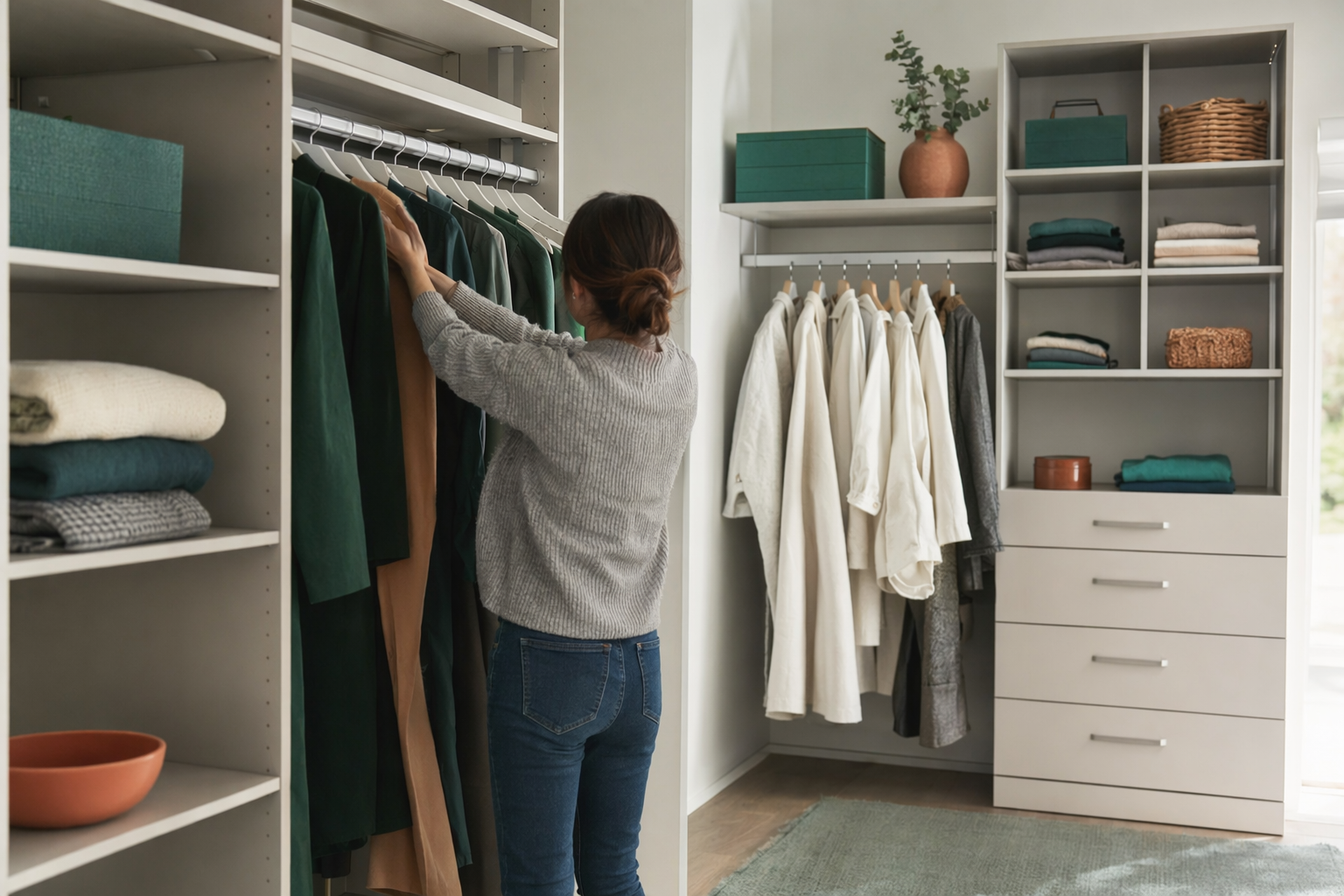
The simple difference
Double-hang gives you two rows of hanging space, usually one above the other. It is the best use of a standard reach-in closet when most of your clothes are shirts, pants, folded items, or short jackets.
Long-hang uses the full height of one section for longer items. It works better for dresses, long coats, robes, uniforms, or anything that needs extra drop length.
In plain terms: double-hang gives you more hanging capacity in the same width; long-hang gives you fewer hanging bars but more vertical clearance.
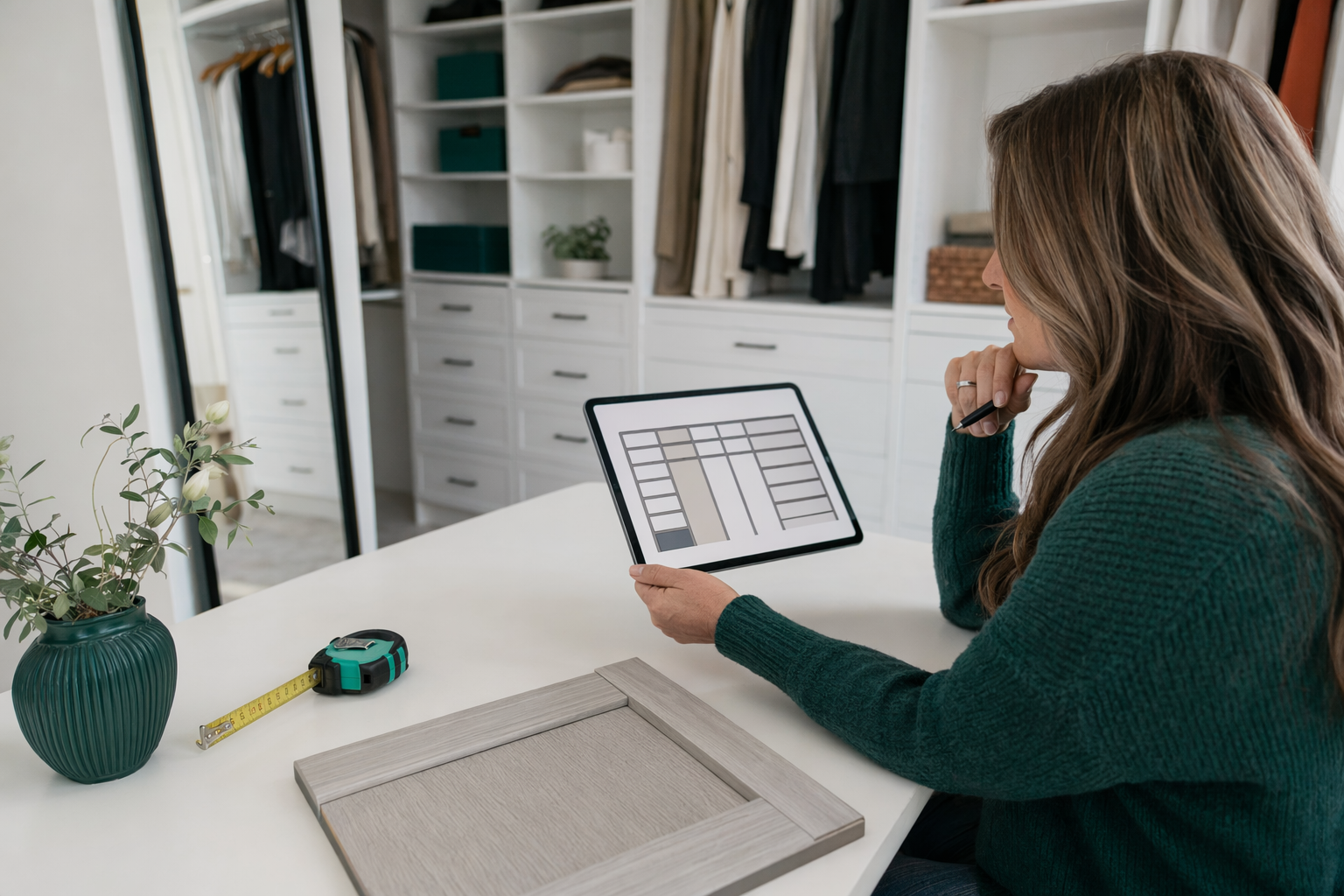
Which one fits your closet better?
Most homeowners do best when they match the storage to the clothes, not the other way around. A small reach-in closet often needs more double-hang because it makes the space work harder.
Use long-hang if you regularly hang long dresses, full-length coats, or clothing that would wrinkle if squeezed under a second bar. Use double-hang if most items are everyday tops, folded pants, and shorter pieces.
A useful rule: if you have mostly short-hang clothes, double-hang usually gives better value per linear foot. If you only have a few long items, you usually do not want to give up an entire section for them unless you really need it.
What this means in linear feet and layout
Closet systems are often priced by linear foot of wall, so the layout matters just as much as the finish. One 3-foot section of double-hang can hold far more garments than one 3-foot section of long-hang, but the long-hang section may be necessary for tall items.
A common planning mix is to reserve one narrow long-hang section and use the rest for double-hang, shelves, or drawers. That keeps the system practical instead of wasting vertical space.
If you are comparing proposals, ask the builder to show the exact linear feet of each section, the hanging heights, and how many drawers, shelves, and rods are included. ShelfGrove is a free matching service, not a closet company, so the customer still compares the designs and chooses who to hire.
Honest cost ranges and what changes the price
For a basic closet system, rough pricing often starts lower for simple wire, then moves up for melamine/laminate, and higher for wood or veneer. As a general guide, many systems land somewhere around $75 to $300+ per linear foot for simpler setups and about $250 to $700+ per linear foot for more finished custom work, with premium wood systems sometimes higher. Those are ranges, not quotes.
A small reach-in closet might total roughly $600 to $3,000+ depending on materials and layout. A larger walk-in can easily run $2,000 to $8,000+ or more if it includes drawers, accessories, lighting, or premium finishes. Cost varies by builder and area.
Watch for the common upcharges: drawers and pull-outs, soft-close hardware, premium finishes, lighting, islands, and removal of old shelving. Get the all-in price in writing first so you do not get surprised later.
What systems usually make sense
Wire is the cheapest and most ventilated, and it can work well when budget matters most. Melamine or laminate is usually the value-to-look sweet spot for most custom closets because it looks finished without going to the highest price tier. Solid wood or veneer is the premium choice for walk-ins and visible built-ins.
For a typical reach-in closet, a mix of double-hang, one shelf above, and maybe one or two drawers is often enough. For a walk-in, you may want one long-hang section, one double-hang section, and more shelf space for folded clothes, shoes, or baskets.
Do not pay for features you will not use. A lot of people overspend on extra drawers, fancy lighting, or decorative upgrades when simple hanging and shelf space would work better.
How to get help without getting boxed in
If you want help finding someone local, you can use Get matched to connect with licensed, insured closet and storage-system builders in your area. ShelfGrove collects only contact and project-intent details, like your name, phone, optional email, the space you want to improve, ZIP code, and preferred language.
Before any work starts, verify the builder’s license and insurance yourself, and confirm materials, hardware, lead time, and the all-in price in writing. If your project might involve structural, electrical, or permit questions, check locally with the proper licensed professionals.
For more planning help, see cost guides and general answers for plain-language guidance on closet and storage choices.
Double-hang is for more short clothes in less space, long-hang is for tall items, and the best closet plan is the one that fits your real wardrobe and your real budget.
Common questions
Is double-hang always better than long-hang?
No. Double-hang is better when you want to store more short items in the same space, but long-hang is necessary for coats, dresses, and other tall clothing. The best layout depends on what you actually wear.
How much closet space should be long-hang?
There is no single right number, but many people only need one section for long items and use the rest for double-hang or shelves. If you have very few long garments, giving away too much space to long-hang can waste valuable storage.
Does a double-hang closet cost more?
Not always. A double-hang section can be simpler than adding drawers or special accessories, but the total cost still depends on the system type, the materials, the size of the closet, and the builder’s pricing in your area.
What should I ask for in a quote?
Ask for the linear feet, the hanging heights, the number of shelves and drawers, the finish, and the all-in price. Also ask what counts as an upcharge, such as soft-close hardware, lighting, and removal of old shelving.