Quick answers
What is the best closet system for a small bedroom?
For most small bedrooms, the best closet system is usually melamine or laminate: it uses space well, looks built-in, and costs less than premium wood. Wire can work on a tight budget, but layout matters more than fancy features.
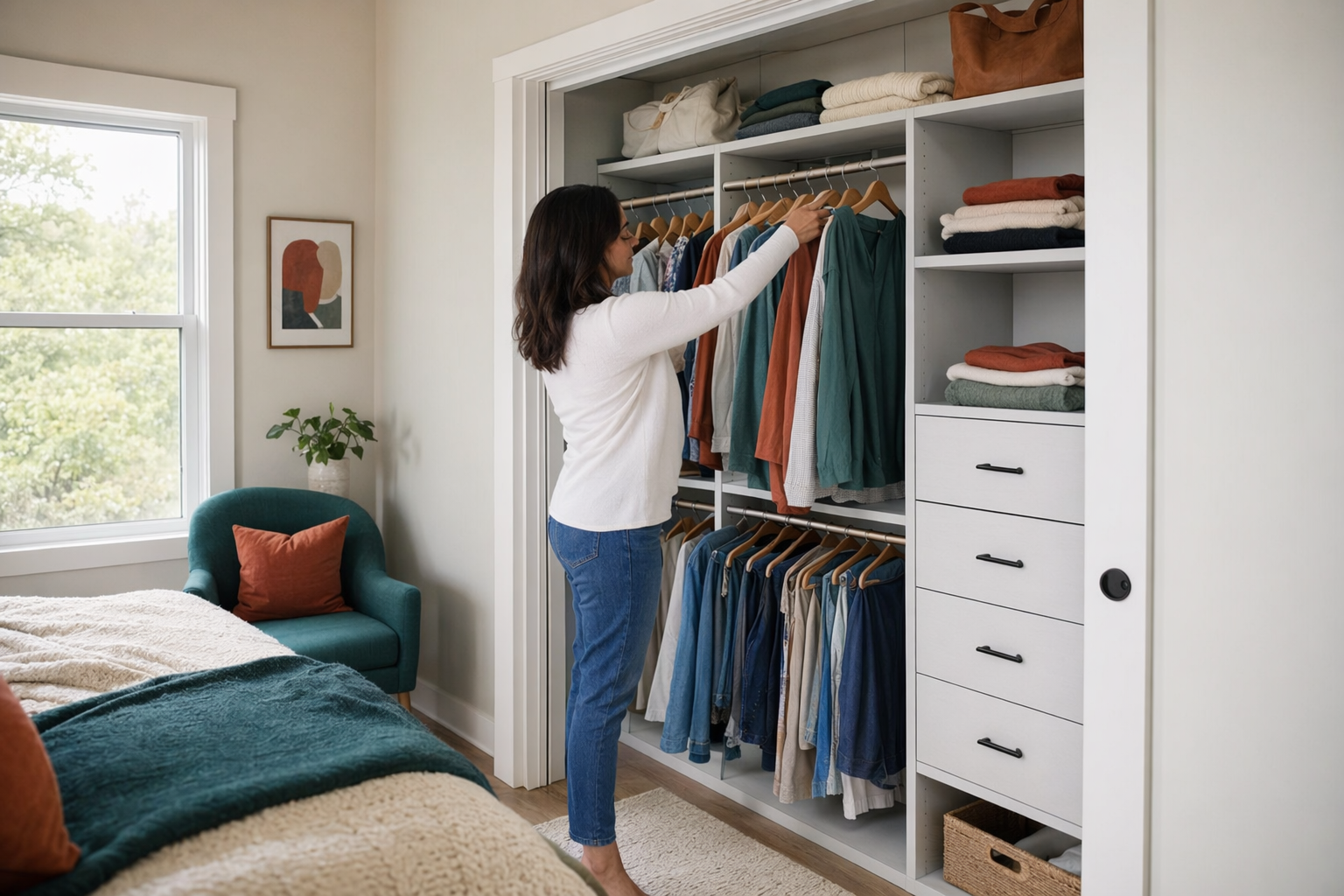
Best choice for most small bedrooms
If you want the short answer: for most small bedroom closets, a melamine or laminate system is the best balance of function, looks, and cost. It gives you full-height panels, adjustable shelves, and a cleaner built-in look than basic wire, without the price of solid wood or veneer.
Wire is usually the cheapest option and it does let air move around, which some people like. But in a small bedroom, wire can feel a little unfinished, and it usually gives you fewer good ways to add drawers, shoe storage, and a polished layout.
Solid wood or wood veneer is usually the premium choice. It can look beautiful, especially in visible walk-ins or custom built-ins, but for a small bedroom closet it often costs more than the space really needs.
The real winner is usually not the material alone. It is the layout. In a small closet, good planning matters more than buying the most expensive system. Most people do better with double-hang sections, a few adjustable shelves, and only one or two drawers if they truly need them.
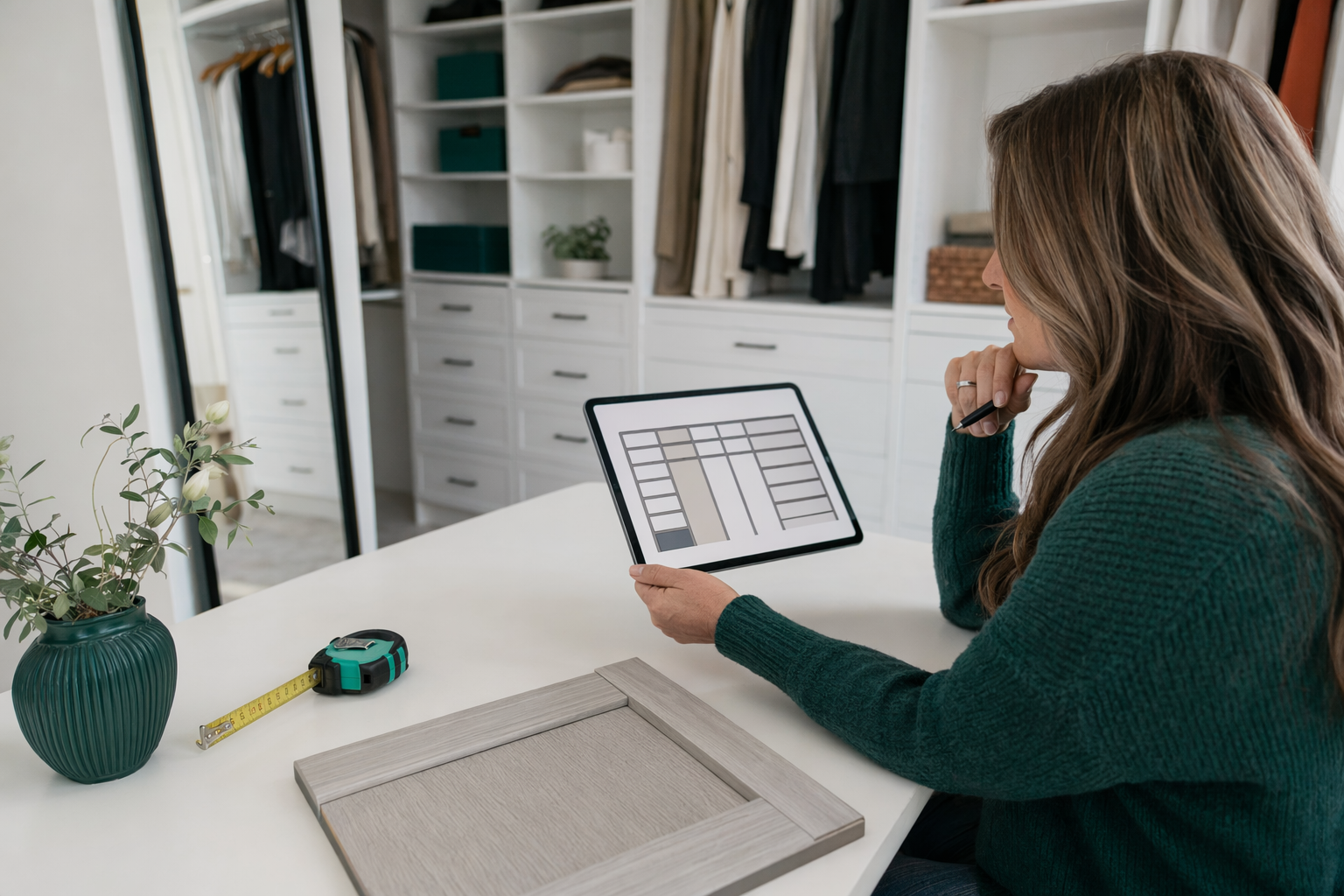
How to plan a small bedroom closet so it actually works
Most closet systems are priced by linear foot of wall, so start there. Measure the width of each usable wall inside the closet. A simple reach-in small bedroom closet is often around 4 to 8 linear feet. That is not a quote, just a practical way to think about size.
In a small space, the best use of room is usually hanging first, shelves second, and drawers only where they solve a real problem. Many people waste money by adding too many drawers, too many shoe racks, or specialty accessories they stop using after a month.
A practical small-bedroom setup often looks like this:
1. One double-hang section for shirts, folded pants, kids' clothes, or shorter items
2. One single-hang section for dresses, coats, or longer pieces
3. Two to five adjustable shelves for sweaters, bags, or bins
4. One top shelf across the closet for less-used items
5. Zero to two drawers only if you truly need hidden storage
If the closet is very tight, full-depth drawers may not be worth it. Shelves with labeled bins or baskets can cost less and make the space easier to use. Sliding valet rods, pull-out hampers, and built-in shoe displays sound nice, but they are common upcharges and often not the best value in a small bedroom.
Which system type fits your budget
Here is the plain version. Wire is usually best if your main goal is spending as little as possible. Melamine or laminate is usually the value sweet spot for most custom bedroom closets. Wood or veneer is usually for a higher-end look when the closet is more visible or part of a premium bedroom design.
Honest ballpark ranges for installed systems often look like this, but materials, accessories, builder, and area all affect the real number:
- Wire: about $100 to $250 per linear foot
- Melamine or laminate: about $200 to $500 per linear foot
- Wood or wood veneer: about $400 to $800+ per linear foot
For a small bedroom closet of roughly 4 to 8 linear feet, that can mean a very rough project range like:
- Wire: about $500 to $2,000+
- Melamine or laminate: about $1,000 to $4,000+
- Wood or veneer: about $2,000 to $6,500+
These are general ranges, not quotes. The real number depends on system type, finish, hardware, accessories, the size of the space, and where you live. A simple layout in white melamine may be far cheaper than a smaller closet packed with drawers, pull-outs, and premium finishes. If you want more pricing context, start with costs.
Upcharges that make a small closet expensive fast
This is where people often overspend. In a small bedroom, the extras can raise the price faster than the basic structure.
The most common upcharges are drawers and pull-outs, soft-close hardware, premium finishes, lighting, islands, and removal of old shelving. In a small closet, an island usually does not apply, but the other items do. Drawers especially can add a lot to the final price because they need more parts, more labor, and better hardware.
A few honest rules help:
- Add drawers only for items you truly want hidden
- Skip specialty racks unless you know you will use them every week
- Ask if shelves can do the same job for less
- Get removal of old shelving included in writing if that work is needed
- Ask for the all-in price before you agree to anything
Many homeowners do best with a simple, adjustable system they can live with for a while. You can always add a drawer bank later if the builder offers matching parts. It is much harder to justify paying for accessories you never use.
What to ask a local builder before you hire
A good local closet and storage-system builder should be able to explain the layout in plain language, show you where your linear feet are going, and separate the base system from the upgrades. You should know exactly what material you are getting, how many shelves and drawers are included, and what counts as extra.
Ask practical questions:
- Is this wire, melamine, laminate, wood, or veneer?
- How many linear feet are being priced?
- How many shelves, hanging sections, and drawers are included?
- What costs extra?
- Is removal of old shelving included?
- What finish and hardware are included in the base price?
- What is the all-in price in writing?
ShelfGrove is a free matching service, not a closet company, and does not design, build, or install systems. We help homeowners connect with licensed, insured local builders so they can compare options. You stay in control: compare designs, confirm materials and components, and verify the builder yourself before any work starts.
For more general planning help, see answers or guides. If you want to start comparing local options, use get matched.
For most small bedroom closets, a simple melamine system with more hanging space, a few shelves, and only the accessories you will really use is usually the smartest choice.
Common questions
Is wire or wood better for a small bedroom closet?
For most people, neither is the best middle-ground choice. Wire is usually cheapest, wood is usually premium, and melamine or laminate is often the best fit for a small bedroom because it balances price, function, and appearance.
How many drawers should a small bedroom closet have?
Usually fewer than people first think. One or two drawers may be enough; many small closets work better with shelves and bins because drawers are a common upcharge.
What is a reasonable cost for a small custom closet?
A small bedroom closet might run roughly from about $500 to $6,500 or more depending on whether it is wire, melamine, or wood, plus accessories and local labor. Most systems are priced per linear foot, and these ranges are not quotes.
Should I put shoe racks in a small closet?
Only if you will really use them. In many small closets, simple adjustable shelves do the same job for less money and with more flexibility.
Can ShelfGrove design my closet?
No. ShelfGrove is a free matching service, not a closet or cabinet company. We help you connect with licensed, insured local builders; you compare options and choose who to hire.
What information do I need to get matched?
Just basic contact and project details: your name, phone, optional email, the space you want done, your ZIP code, and preferred language. We do not need financial account numbers, Social Security numbers, or income records.