Quick answers
What is the cost per linear foot for a closet?
Closet systems are usually priced per linear foot of wall, but the real cost depends on the system type (wire vs. melamine/laminate vs. wood) and how many built-in features you add. Here are practical ranges and what can raise the price.
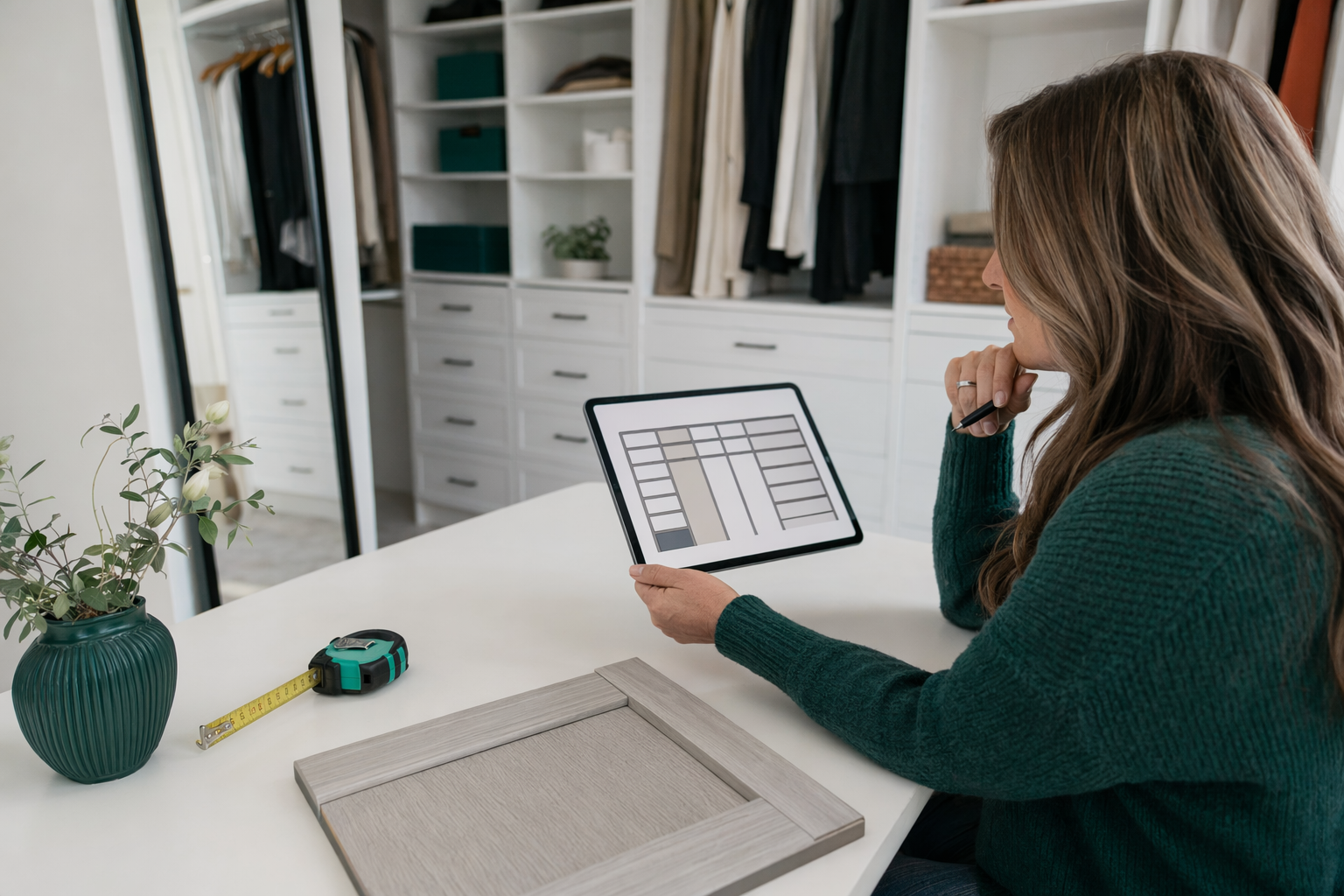
Quick answer: typical closet costs per linear foot
Most custom closet projects in the US are priced per linear foot of wall (not by the square footage of the room).
A realistic planning range people see is:
- Wire systems (cheapest): about $30–$70 per linear foot
- Melamine/laminate systems (value sweet spot): about $70–$150 per linear foot
- Wood systems (premium): about $140–$250+ per linear foot
These are not quotes. Your all-in price can be higher or lower depending on what you actually need (shelves, hanging rods, drawers), the size and layout, and the builder’s material choices and pricing in your area.
If you’re comparing options, always ask for the all-in cost in writing (materials + labor + install) and confirm the system type the price is based on.
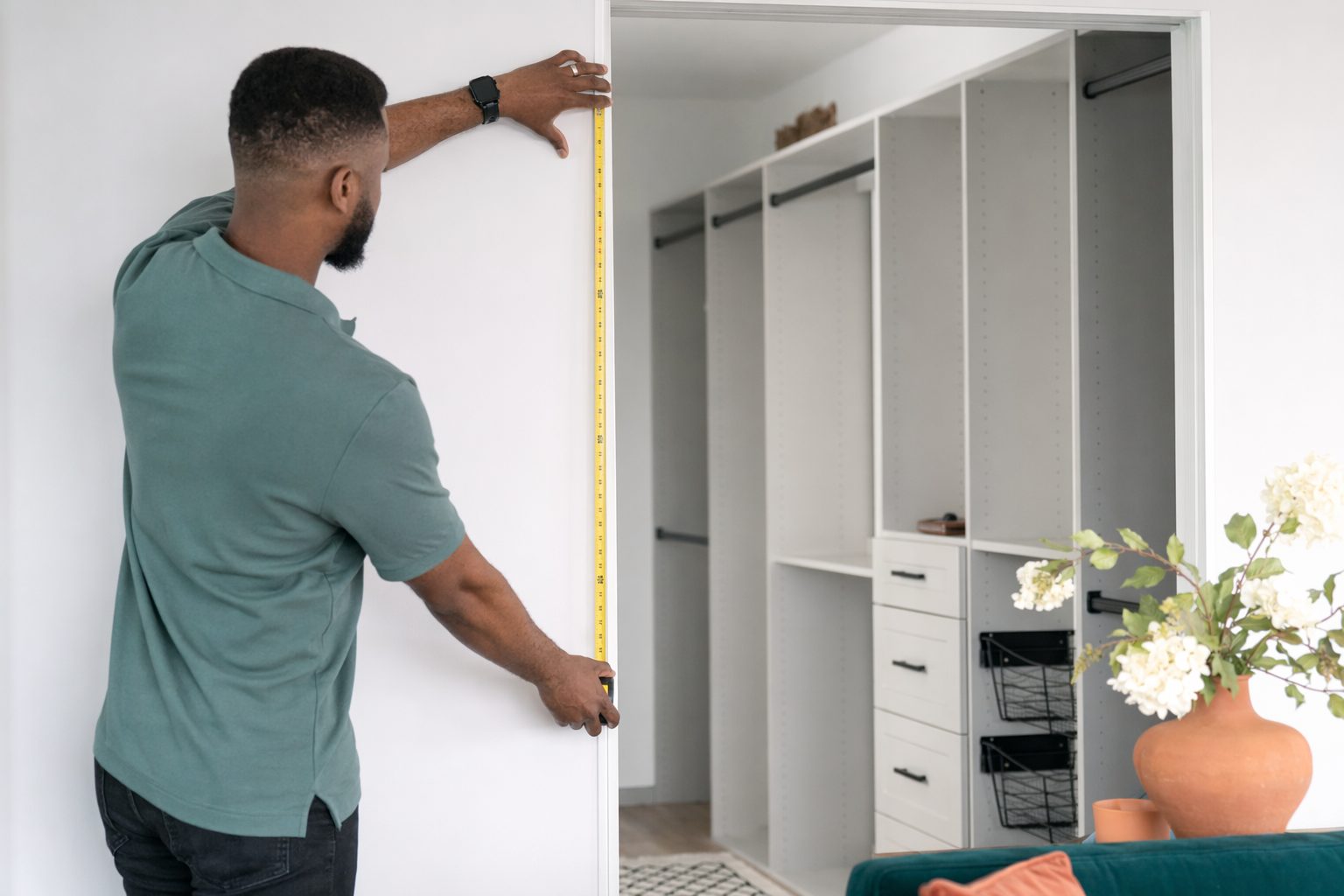
How to figure your “linear feet” so you can compare prices
Closets are typically measured along the wall line where the system will sit. That means the cost is often based on the number of feet of wall you’re outfitting.
To estimate your pricing basis:
1. Measure the closet run(s) where the storage will go (for example, one wall that’s 6 feet long = 6 linear feet).
2. If you have two walls (like a corner closet or a walk-in with shelves on two sides), add both sides’ linear feet.
3. Note any openings the system must work around (doors, windows, or angled sections).
Then compare apples to apples: if one proposal is “per linear foot” but includes fewer drawers, fewer shelves, or fewer specialty parts, it may look cheaper while being less complete.
What drives the price up (and what’s often worth it)
The biggest cost swings usually come from the system type and the accessories you choose. Most people get surprised by drawers, pull-outs, and extra finishing details.
Common price drivers:
- Drawers and pull-outs: more expensive than shelves or standard hanging. Even a few can change the per-foot cost.
- Soft-close hardware: adds cost, especially if you want it on multiple drawers.
- Premium finishes (upgrade fronts, special colors, higher-end melamine/wood veneers): can raise the price.
- Lighting: closet LED strips or puck lights are often priced as an add-on.
- Removal of old shelving: some builders charge to remove and haul away existing systems.
- Complex layouts: more cuts, more custom sections, and more on-site time.
Reminders for budgeting:
- Get the all-in price in writing that clearly lists what’s included.
- Ask whether the per-foot number assumes a basic setup or includes drawers, specialty organizers, and lighting.
- If you’re new to built-in storage, focus first on what you use every day: hanging space, enough shelves, and practical shoe/pantry/towel organization where it matters.
Which system type fits which closet (quick guidance)
Choosing the system type is the fastest way to manage cost—wire is typically cheapest, melamine/laminate is usually the best value, and solid wood/veneer is the premium look.
Here’s the practical way to think about it:
- Wire (ventilated, usually budget-friendly): great for closets where airflow matters and you want simpler pricing. Often fewer “finish” options, and it can be less visually seamless than slab-faced systems.
- Melamine/laminate (durable, most common value choice): a strong balance of clean appearance, durability, and price. Many builders offer lots of shelf/drawer configurations in this category.
- Wood/veneer (premium visible built-ins): best when the closet is a visible feature (for example, a prominent walk-in or a highly styled built-in wall). It costs more, so plan carefully which areas truly need a premium finish.
Whatever you choose, remember: pricing varies by builder and by area. A “melamine closet” from one builder may not match another builder’s thickness, hardware, or included components.
What a fair estimate should include (ask before you sign anything)
To avoid surprises, treat “per linear foot” as a starting point and confirm the scope. A thorough estimate should be specific about components and finish options.
Ask for answers to these basics:
- - What’s included in the linear-foot pricing? (shelves only vs. shelves + rods + basic hardware)
- How many drawers and pull-outs are included, and where are they located?
- Soft-close or not? If yes, on how many drawers?
- Which materials and finishes are included (wire type, melamine/laminate grade, wood/veneer type).
- Is lighting included or priced separately?
- Does it include removal/haul-away of old shelving?
- What exactly is the installation scope (wall prep, mounting, adjustments)?
Safety note: we’re sharing general guidance only. For any structural, electrical, or permit-related concerns in your home, confirm locally with licensed, insured pros and follow your local rules.
How ShelfGrove helps you get matched (free for you)
ShelfGrove is a FREE matching service, not a closet or cabinet builder. We help you plan what to ask for and connect with licensed, insured local closet and storage-system builders.
If you want more accurate local pricing ranges for your exact space, the best next step is to get matched:
- Share your ZIP code, which space you’re planning (reach-in, walk-in, pantry/garage, laundry/mudroom, under-stairs, shelving wall), and your goals.
- You can also tell us your preferred language so builders can communicate clearly.
To start:
1. Review our cost guidance.
2. Use our closet answers for common planning questions.
3. When you’re ready, request matches through get matched.
Closet systems are usually priced per linear foot, and your real all-in cost depends mostly on whether you choose wire, melamine/laminate, or wood—and how many drawers, upgrades, and special features you add.
Common questions
Is the closet cost per linear foot the same for a reach-in vs. a walk-in?
Not usually. A reach-in and a walk-in can have similar linear feet, but walk-ins often look more like “premium visible built-ins” and may include more cabinetry-style finishes, more drawers, or bigger specialty sections—so the per-foot price can be higher.
Why do two closet quotes both say “per linear foot” but end up far apart?
Because the “scope” often isn’t the same. One may include only basic shelves and rods, while the other includes drawers, pull-outs, soft-close hardware, lighting, and specific material upgrades. Always compare the included components and get the all-in price in writing.
What’s usually the biggest upcharge for a custom closet?
Drawers and pull-outs are commonly the biggest add-on, especially when you want soft-close hardware or specialty organizers. Removal of old shelving and lighting can also add cost.
Are wire systems always the cheapest option?
They’re typically the lowest cost per linear foot, but the overall project can still vary. If you add many drawers, upgrades, or complex sections, the total can rise quickly—so it’s still important to compare the full included scope.