Guides
Are custom closets worth the money?
Custom closets can be worth it when you design for your real storage needs instead of squeezing into builder-standard shelves—often the payoff shows up in daily ease and staying organized.
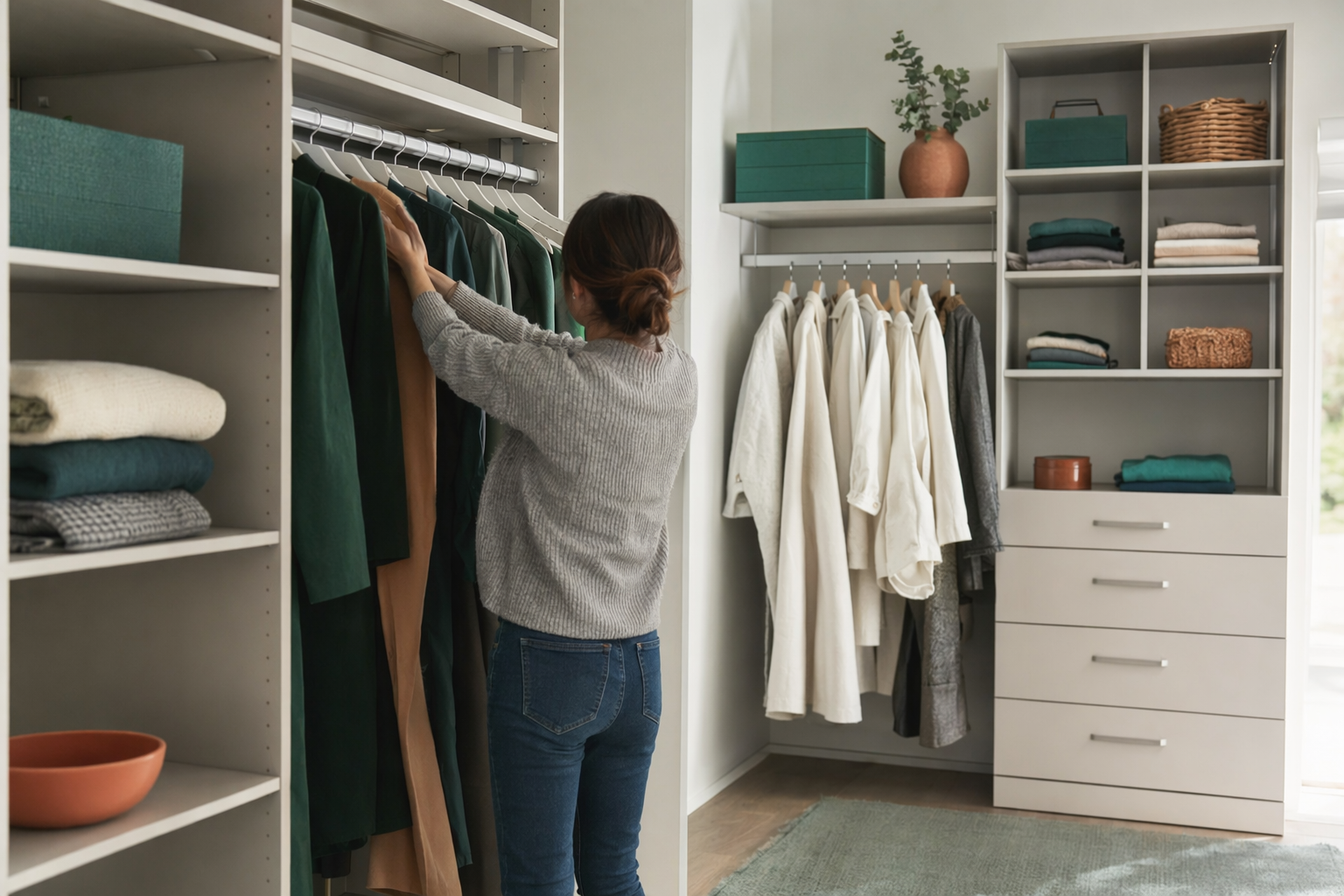
Short answer: worth it if you’re using the space every day (and designing for real needs)
If you spend time getting dressed, searching for items, or dealing with clutter, a custom closet can be worth the money because it replaces “whatever fits” with storage that matches your clothes, shoes, and habits.
Custom only pays off when the design matches your real inventory (how many shirts, how many hanging items, how many shoes, what you fold vs. hang). If you buy a nicer-looking closet but skip key needs—like drawers for small items or enough hanging space—then you may not feel the difference.
A good rule: a custom system is usually worth it when you plan for today’s needs and leave a little flexibility for what changes later (new shoes, more folded items, seasonal bins).
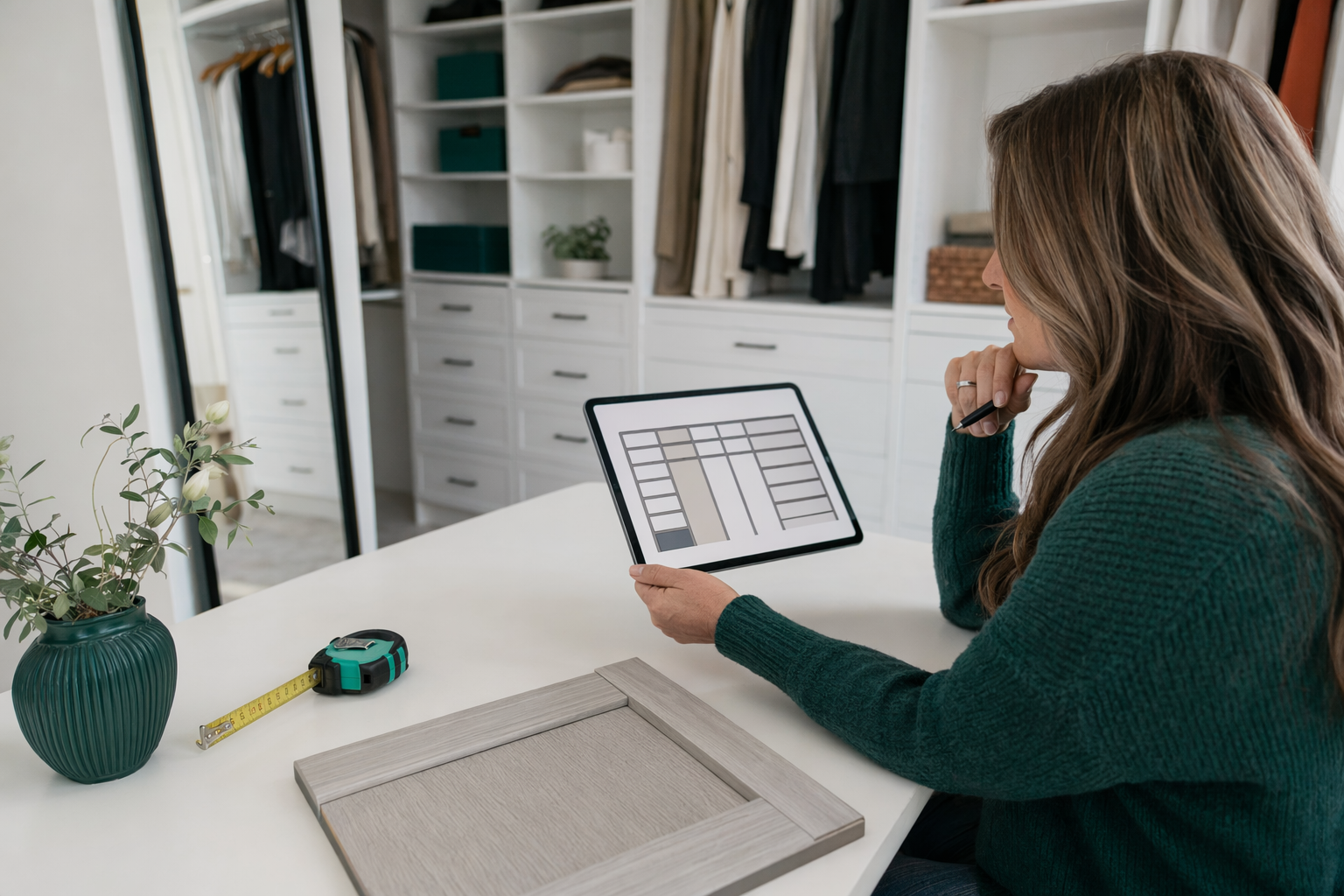
What “value” usually means (daily use first, then resale—no magic promises)
Most homeowners feel the value in everyday life: clothes are easier to see, less time is wasted looking, and items actually get returned to the right place.
Home value varies by neighborhood and buyer preferences. A well-organized, built-in look can help, but it won’t automatically increase value enough to cover the full cost in every market. Think of it as improving how the home functions and how it feels—not as a guaranteed investment.
The safest “value mindset” is to focus on the parts you’ll use daily: hanging sections that fit your garments, shelves where you really keep folded items, and drawers for what gets scattered.
System choice: wire, melamine/laminate, or wood—and what that means for worth
Most custom closets are priced by linear foot of wall. Your “worth it” decision depends a lot on which system type you choose and how visible the finished look needs to be.
- Wire systems: usually the lowest cost per linear foot and great for ventilation. They can be a smart value for utility closets or when you want lighter, adjustable storage.
- Melamine/laminate systems (often called “melamine”): commonly the value-to-look sweet spot for most custom closets. They typically balance clean appearance, durability, and cost.
- Solid wood/wood veneer: usually the premium option. It can be worth it for walk-ins or highly visible built-ins where you want a higher-end finish and feel.
If you want the best chance of “worth it,” start with function and a mid-range material (often melamine/laminate for visibility + price). Upgrade finishes later only if they match your style and the whole room will be visible.
Realistic cost ranges (not quotes): per linear foot and per typical project
Pricing changes by area, builder, and the exact layout, but here are useful planning ranges to understand whether your budget matches your expectations. Costs are usually based on linear feet of wall plus what components you include.
- Wire: often about $45–$120 per linear foot (lower if it’s mostly shelves and rods; higher with more accessories)
- Melamine/laminate: often about $100–$220 per linear foot
- Wood/wood veneer: often about $180–$350+ per linear foot
Typical total projects often land around $1,500–$7,000+ depending on size and complexity (a small reach-in can be closer to the low end, while larger walk-ins with many drawers, premium finishes, or extensive accessories can be higher). These ranges are not quotes, but they help you avoid sticker shock.
If you want a clearer planning baseline, review closet and storage cost basics.
Where people overspend (and what to prioritize instead)
Custom closets can feel “not worth it” when buyers pay for extras that don’t solve their real daily problems. Common cost boosters are also common regret items.
Upcharges to watch:
- Drawers and pull-outs (often one of the biggest cost drivers). Add them where you truly store small items you grab often.
- Soft-close hardware (nice, but it can push your cost up—consider where you’ll notice it most).
- Premium finishes (use when the closet is highly visible; skip for closets that are mostly behind doors).
- Lighting (can help visibility, but plan it intentionally—don’t overbuild if you already have good room light).
- Islands (more cost for the feature, not always necessary—great for large layouts, but not ideal for tight spaces).
- Removal of old shelving (ask for an all-in demo-and-haul-away price in writing).
Priorities that usually pay off:
- Enough hanging space sized to your actual wardrobe.
- Shelf space for what you fold (and bins for what you store seasonally).
- Drawer placement for the items that you handle frequently (socks, underwear, accessories, etc.).
Before you decide, compare two designs: one “value” plan and one “upgrade” plan. If the upgrade doesn’t noticeably improve your day-to-day use, you may not need it.
How to get value without overspending: a simple planning path
Start with a quick inventory and measurements so your builder can design for your life—not for generic options. Then you can ask for the all-in price and compare apples to apples.
- Measure the wall(s) you want to use (linear feet) and note obstructions like doors, vents, windows, or trim.
- List what you store: hanging items vs. folded items vs. shoes vs. accessories.
- Decide your system type: wire for budget + ventilation, melamine/laminate for most closets, wood/veneer for premium visible built-ins.
- Build your “must-have” storage first (rods/shelves) and then add drawers or pull-outs only where they solve a specific problem.
- Ask for an all-in written price before work begins—include demo/removal if needed, hardware, lighting (if any), and the exact materials.
Once you’re ready, ShelfGrove can help you get matched with licensed, insured local closet and storage-system builders based on your space and preferred language. You stay in control of the final design choices—get matched when you’re ready.
For space-specific ideas, you can also browse closet and storage space guides, plus general planning tips in guides.
Custom closets are usually worth it when the layout matches how you actually store and dress, and you choose a system and accessories you’ll use—wire is cheapest, melamine/laminate is the common value choice, and wood is premium.
Common questions
How do I tell if a custom closet is worth it for my budget?
Start by estimating the linear feet you want to build on and pick a system type (wire, melamine/laminate, or wood). If your plan includes enough hanging, realistic shelf space, and only the drawer/pull-out features you’ll actually use, it’s more likely to feel worth it. If the design is mostly “extras” with no match to your wardrobe, you’ll probably feel the cost more than the benefit.
What cost range should I expect per linear foot?
Closet systems are commonly priced per linear foot of wall. Rough planning ranges are often $45–$120/linear foot for wire, $100–$220/linear foot for melamine/laminate, and $180–$350+/linear foot for wood/veneer, but your all-in price depends on materials, accessories, and the size/layout.
Should I choose wire, melamine/laminate, or wood?
Wire is typically the most budget-friendly and ventilated. Melamine/laminate is often the best value for most closets where appearance and cost both matter. Wood/veneer is usually premium and makes the most sense for larger walk-ins or highly visible built-ins.
What upgrades usually cost more but don’t help much?
Drawers and pull-outs, soft-close hardware, premium finishes, islands, lighting, and old shelving removal can raise the total cost quickly. They can be great—just make sure each upgrade solves a specific storage problem you have, rather than adding features “because they’re available.”
Will custom closets automatically increase my home value?
They may help because they improve daily function and the overall built-in look, but results vary by market and buyer preferences. Treat custom closets as a quality-of-life upgrade first, not a guaranteed resale investment.