Guides
Avoiding surprise upcharges on a closet quote
Most closet quotes start with a base price, then climb when drawers, soft-close, lighting, upgrades, and old-shelf removal get added later. The safest move is simple: get the full scope and all-in price in writing before you say yes.
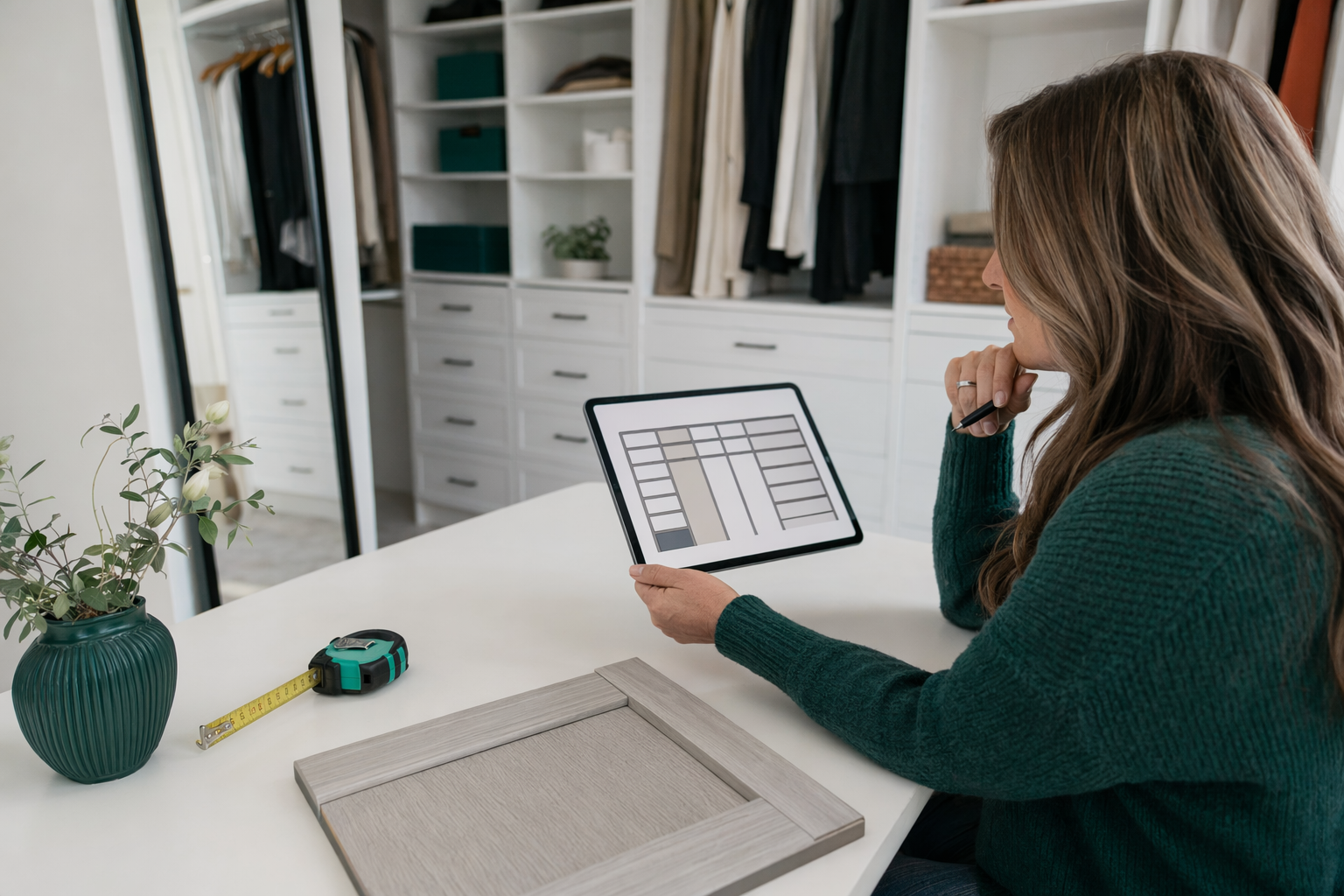
What usually causes surprise upcharges
The short answer: the first number you hear is often only the starting point. Many closet and storage systems are priced per linear foot of wall, but that base price may cover only the basic structure — shelves, hanging sections, and standard finishes — not the extras people assume are included.
The most common add-ons are drawers and pull-outs, soft-close hardware, premium finishes, lighting, islands, and removal of old shelving. Those items are not automatically bad buys. The problem is when they appear late in the process and raise the project cost after you have already mentally committed.
System type matters too. Wire is usually the cheapest and gives good ventilation. Melamine or laminate is often the value-to-look sweet spot for most custom closets. Solid wood or wood veneer is usually the premium choice for walk-ins and visible built-ins. The real price depends on the system type, materials, accessories, area, and size of the space, so any range is general information only, not a quote.
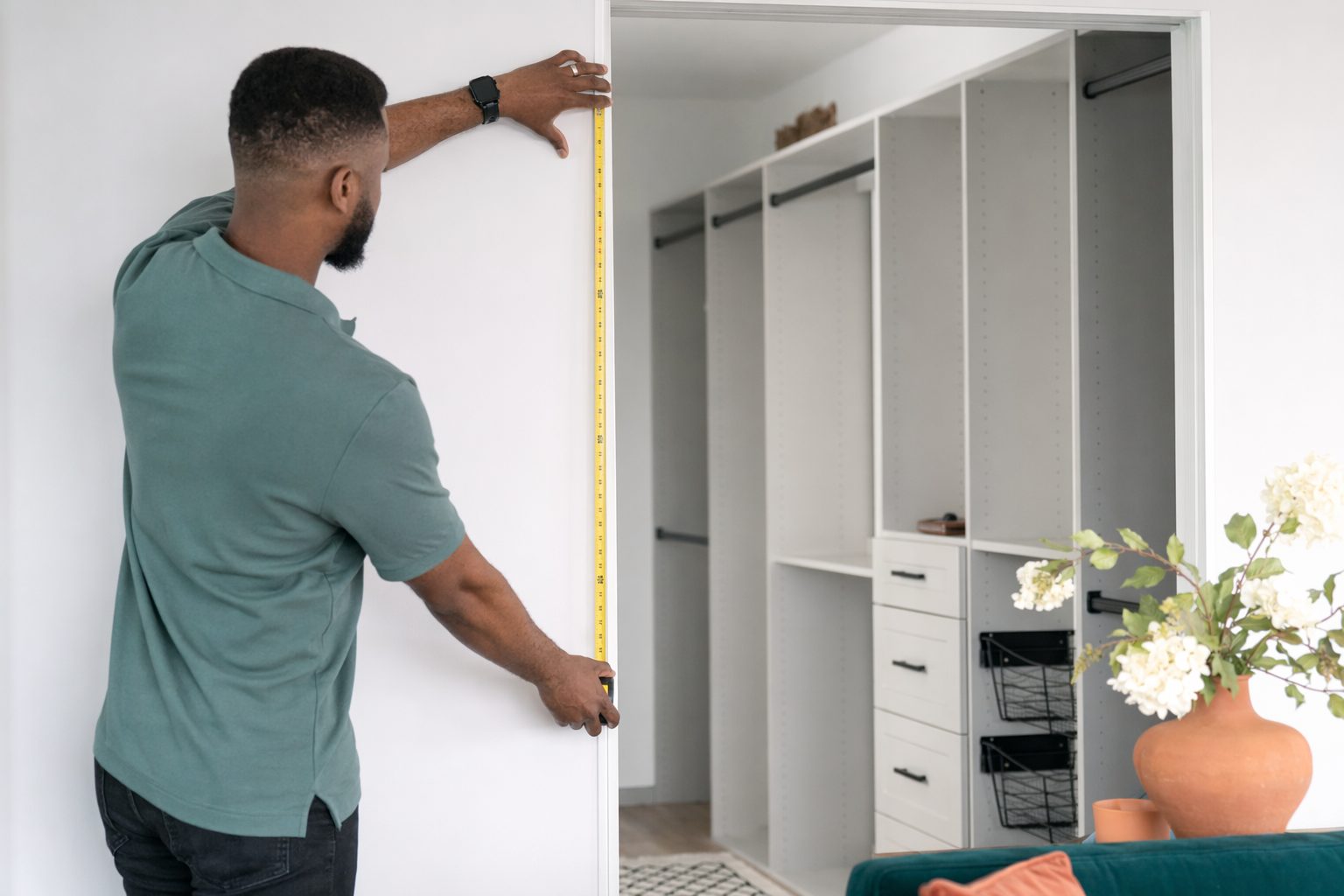
Know what the base price really includes
Before comparing quotes, ask each builder the same direct question: "What exactly is included in your price per linear foot?" That one question can save you a lot of money and confusion.
A base layout often includes some combination of vertical panels, top shelves, hanging rods, and fixed or adjustable shelves. It may not include drawer banks, tilt hampers, valet rods, jewelry inserts, belt racks, pull-out baskets, toe-kick upgrades, crown trim, full backing, or installation conditions that take extra time.
Honest general ranges: wire systems often fall around $90-$180 per linear foot installed, melamine or laminate around $150-$350 per linear foot, and wood or veneer around $300-$600+ per linear foot. For a small to mid-size closet, that can mean roughly $1,000-$6,000+, while larger or more detailed walk-ins can go much higher. Those are not quotes. Materials, finish level, accessories, builder practices, and local labor costs vary by builder and area.
If one quote looks much lower than the others, it may simply include fewer real parts of the job. A low starting number is not a bargain if the drawers, hardware, removal, trim, and finish upgrades are all left out.
The upcharges to ask about before you sign
Ask for these items one by one. Do not assume anything is included unless it is written clearly on the quote.
- Drawers and pull-outs
- Soft-close drawer and door hardware
- Premium finishes or upgraded colors
- Lighting
- Islands or seating
- Removal and disposal of old shelving or rods
- Trim details, backing panels, and filler panels
- Installation in difficult spaces or after-hours scheduling
Drawers are one of the biggest budget changers. A closet with mostly shelves and hanging can stay fairly simple. Add a bank of four to eight drawers, and the price can jump fast. Pull-out hampers, jewelry trays, and specialty inserts also sound small but add up quickly.
Lighting is another common late-stage add-on. If you want lighting, ask early who is responsible for it and what is actually included. ShelfGrove gives general information only and is not a builder, electrician, or licensed trade contractor, so confirm any electrical, permit, or code questions locally with the appropriate licensed, insured professionals.
Removal of old shelving is easy to forget. Some builders include basic removal; some charge separately; some expect the homeowner to clear the space first. Get the all-in price in writing first so you know who is doing what.
How to compare quotes without getting fooled
The best comparison is not just total price. It is price for the same layout, same material level, and same accessory count.
- Count the real components: number of shelves, hanging sections, drawers, hampers, and pull-outs.
- Confirm the system type: wire, melamine/laminate, or wood/veneer.
- Ask what finish level is included and whether soft-close is standard or extra.
- Ask whether demolition, disposal, delivery, and installation are included.
- Ask whether the quote is based on actual measurements or only an early estimate.
- Ask for the all-in total in writing, with line items.
A useful habit is to write your own simple scope before talking to anyone. Example: "10 linear feet of wall, double hang on one section, long hang on one section, 5 adjustable shelves, 4 drawers, one hamper, white melamine, no lighting, removal of one old wire shelf." That makes it much easier to see who is adding cost and why.
You can also read more broad planning help in guides and compare general price ranges on costs.
Where people waste money
The most common waste is buying more specialty storage than you will really use. A clean, practical closet usually works better than one filled with expensive accessories.
People often overspend on too many drawers, too many small divided inserts, premium finishes in low-visibility spaces, and decorative details that do not improve daily use. In many homes, melamine gives the best balance of appearance, durability, and cost. Wire can be perfectly fine for basic reach-ins, laundry areas, and utility storage. Wood is usually best saved for visible walk-ins or built-ins where the appearance matters enough to justify the premium.
If you are trying to control cost, spend first on the layout: enough hanging space, enough shelves, and only the drawers you know you need. Add only the components you will actually use. That is often the difference between a practical project and an overpriced one.
How to get matched and stay in control
ShelfGrove is a free matching service, not a closet, cabinet, or storage-system company. We do not design, build, or install storage systems. We help homeowners connect with local licensed, insured builders so they can compare options and choose who to hire.
You stay in control of the project. Compare designs, ask what is included, confirm the materials and component counts, and get the all-in price, lead time, and scope in writing before any work starts. Verify licensing, insurance, and any local permit or load-bearing questions yourself with the right professionals.
If you want help finding local companies to compare, you can get matched. We only collect contact and project-intent details: your name, phone, optional email, the space, ZIP code, and preferred language. If you are still narrowing down the type of project, the spaces hub can help you think through what fits your home.
A closet quote gets expensive when extras are added late, so ask what the base price includes and get the full all-in cost in writing before you agree.
Common questions
Why did my closet quote go up after the design meeting?
Usually because the first number was a base price and the final design added drawers, pull-outs, soft-close hardware, upgraded finishes, lighting, or removal of old shelving. Ask for a written line-item quote so you can see exactly what changed.
Are closet systems really priced by linear foot?
Often, yes — many builders use linear feet of wall as a starting pricing method. But the real total depends on system type, materials, accessories, space size, and local labor, so a linear-foot range is not a quote.
What is the most common hidden cost in a custom closet?
Drawers are one of the most common cost jumpers, especially when several are added late. Soft-close hardware, lighting, and demolition or disposal of old shelving are also frequent upcharges.
How can I keep my closet project from getting too expensive?
Choose the right system for the space, keep the layout simple, and add only the components you will really use. For many homeowners, melamine or laminate is the practical value choice, while wire is the budget option and wood is the premium option.
Does ShelfGrove build or install closets?
No. ShelfGrove is a free matching service that helps homeowners connect with local licensed, insured builders. It is always free for the customer.