Guides
Closet organization ideas that actually work
The best closet organization ideas are the ones that match how you actually use the space, not the ones that look fancy in a photo. Start with hanging needs, then add shelves, drawers, and shoe storage only where they earn their keep.
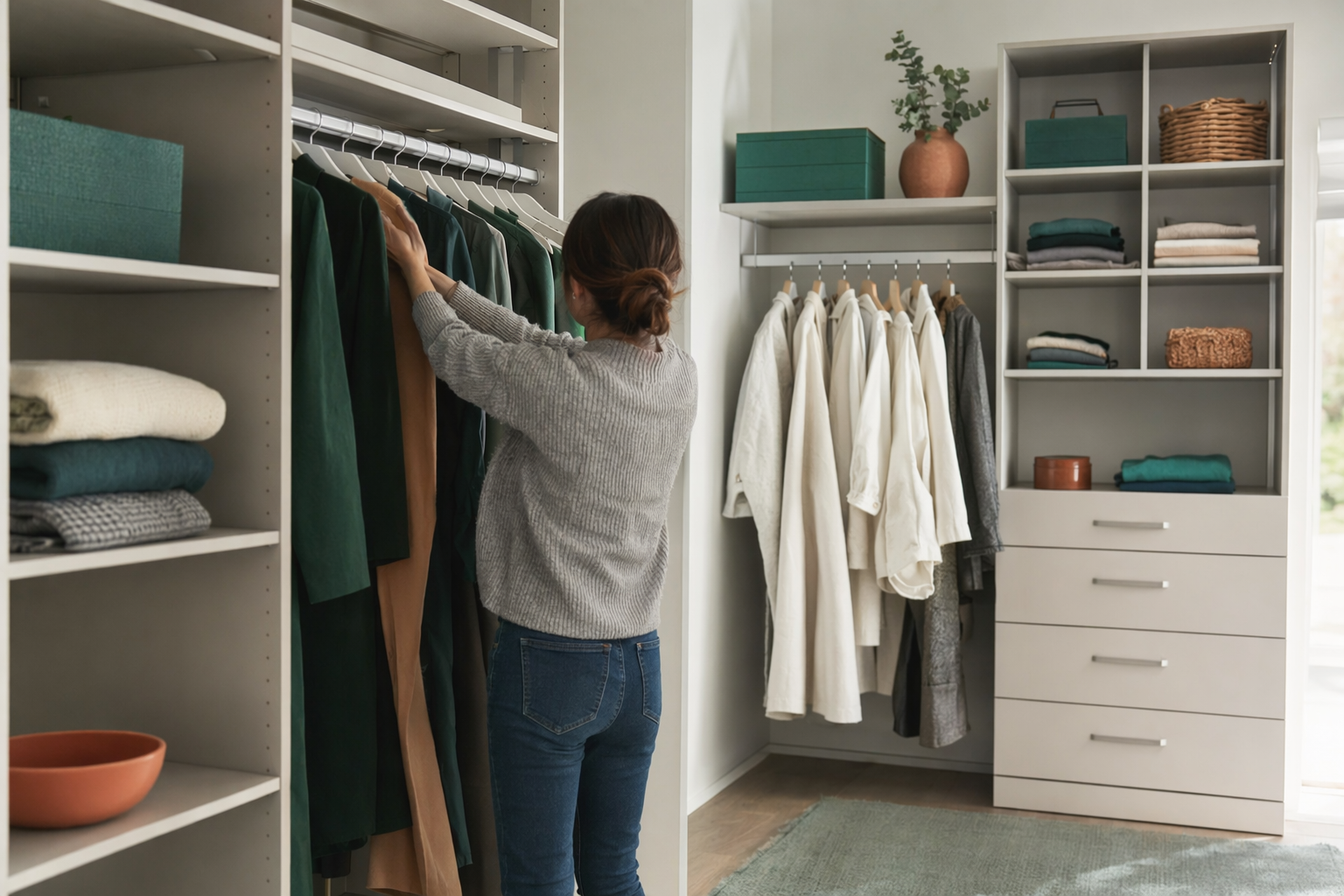
Start with the closet type and the clothes you really own
If your closet is for everyday clothes, the layout should match your hanging lengths first. A reach-in often works best with double-hang sections for shirts, pants, and shorter items, plus one longer-hang section for dresses, coats, or long garments. A walk-in usually gives you more room for shelves, drawers, and a small landing area, but it still should not be overbuilt.
A good rule is simple: put the most-used items at eye and hand level, and keep the least-used items higher up or lower down. If you own mostly folded clothes, prioritize shelf space. If you own mostly hanging clothes, prioritize hanging rods. If you have a mix, use both—but do not add expensive features you will barely touch.
For planning help by space, you can also compare closet and storage system options before you request designs.
- Double-hang: best for shirts, folded pants, skirts, and shorter garments
- Long-hang: needed for dresses, coats, and anything you do not want creased
- Open shelving: useful for bins, sweaters, towels, and folded stacks
- Drawers: best for small items you want hidden and easy to sort
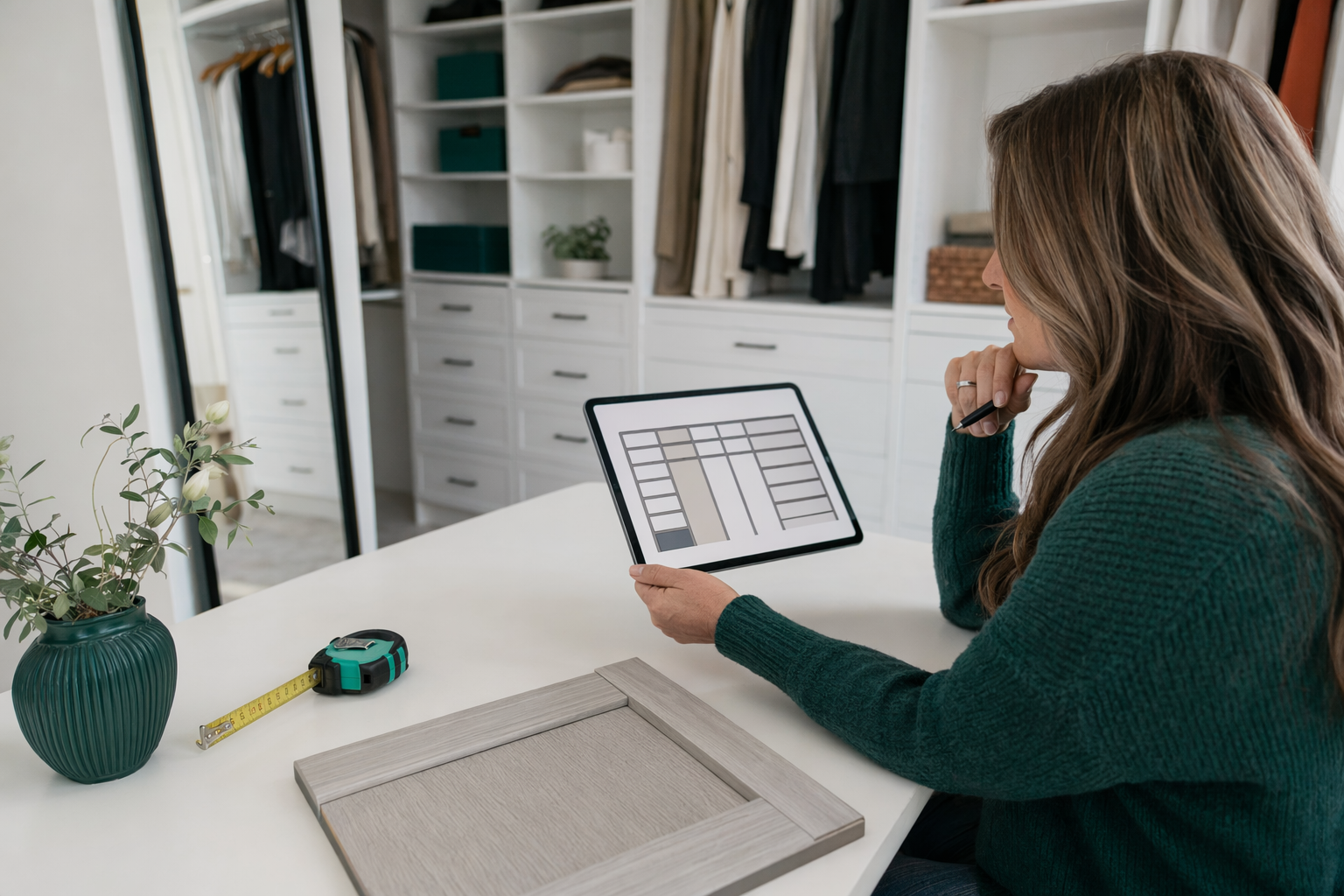
Use a simple layout that makes daily life easier
The most useful closet layouts usually follow a few plain ideas. Keep similar items together, give each category a home, and make the first 2 feet of the closet the easiest to reach. If two people share a closet, split the space by person or by type of item so nobody has to dig through everything.
A practical custom setup often includes 1 to 2 shelves above hanging, 1 to 2 drawers for smaller items, and a clear shoe zone near the floor. For a typical reach-in, many homeowners do better with fewer wide features and more simple sections. For a walk-in, you may want a larger drawer stack, a bench, or a small shelf for daily-use items, but only if the room can handle it.
Think in real linear feet. A 6-foot wall might hold a combination like 3 feet of double-hang, 2 feet of drawers and shelves, and 1 foot of long-hang or open shelf space. A 10-foot wall gives you more room for a balanced mix, but the point is still the same: build only the parts you will actually use.
- Keep daily-use items between waist and eye level
- Use shelves for folded items, bins, and overflow
- Use drawers for socks, undergarments, accessories, and small items
- Leave some breathing room so the closet does not feel packed
Choose the system that fits the job, not the trend
For many homeowners, wire is the cheapest choice and works well when you want ventilation and a basic, durable setup. Melamine or laminate is usually the value-to-look sweet spot for a custom closet because it looks cleaner, feels more finished, and still stays practical for most homes. Solid wood or veneer is the premium choice for visible built-ins and nicer walk-ins where the closet is part of the room design.
The system choice affects both look and price. Most custom systems are priced per linear foot of wall, but the final number changes with materials, accessories, drawer count, and how much coverage you want. A simple wire or basic system may start around the lower end of the market, while a melamine custom closet often lands in the middle, and wood or veneer can push the project much higher.
If you want a broader overview of pricing, see honest closet and storage costs. Remember: any range is not a quote, and pricing varies by builder and by area.
- Wire: budget-friendly, simple, and ventilated
- Melamine/laminate: best all-around balance for most custom closets
- Wood/veneer: premium, especially for visible or high-end spaces
- Pricing is usually tied to linear feet, not just the number of shelves
Know which upcharges people waste money on
The add-ons that raise the price fastest are usually drawers and pull-outs, soft-close hardware, lighting, islands, premium finishes, and removal of old shelving. A few drawers can be useful. Too many drawers can make a closet expensive without making it much better.
Be careful with features that sound helpful but you may not use every day. Pull-out accessories, jewelry inserts, belt racks, valet rods, and extra-thick finishes can all add cost. Sometimes they are worth it. Often they are not. Ask for the all-in price in writing before work starts so you can see what is truly included.
If an existing closet has old shelves or rods, removal may be an extra line item. That is normal, but it should be clear up front. Materials and pricing also vary by builder and area, so the same idea can cost differently from one market to another.
- Drawers and pull-outs
- Soft-close hardware
- Lighting
- Islands
- Premium finishes
- Removal of old shelving
A simple planning method that works for most closets
If you are not sure where to start, use this basic order:
- Measure the wall or walls in linear feet.
- Decide how much of the space is hanging, folded, or shoe storage.
- Pick the system type: wire, melamine, or wood.
- Add only the accessories you will use every week.
- Ask for an itemized all-in price and compare designs before choosing anyone.
This keeps the project grounded in how you live, not how a display closet looks. It also helps you avoid paying for features that sound nice but do not solve a real storage problem.
For matching, ShelfGrove is a free service that helps connect homeowners with licensed, insured local closet and storage-system builders. We do not design, build, or install anything ourselves. You stay in control, compare the options, and verify the builder, materials, and permit or load-bearing questions locally before any work starts. You can get matched when you are ready.
- Measure first, then plan the mix of hanging, shelves, and drawers
- Compare designs side by side before hiring
- Verify licensing and insurance yourself
- Confirm the all-in price, materials, lead time, and included components in writing
A good closet is usually a simple mix of the right hanging space, shelves, and a few useful drawers—not a bunch of extras you will barely use.
Common questions
What is the best closet organization layout for most people?
For most homes, a mix of double-hang, one long-hang section, some open shelving, and a small drawer stack works best. It gives you room for everyday clothes without paying for features you will not use.
Should I choose wire, melamine, or wood for a custom closet?
Wire is the budget choice, melamine is usually the best value for a finished look, and wood or veneer is the premium option for visible built-ins. The right choice depends on your budget, the room, and how polished you want it to look.
How much does a custom closet usually cost per linear foot?
It varies by system type, materials, accessories, size, and area, but custom closet pricing is commonly discussed per linear foot. A simple system may be at the lower end, while melamine and wood/veneer systems cost more; always ask for a written all-in price because ranges are not quotes.
What upcharges should I watch for?
The biggest ones are drawers, pull-outs, soft-close hardware, lighting, islands, premium finishes, and removing old shelving. Ask what is included before you approve the design.
Does ShelfGrove build closets?
No. ShelfGrove is a free matching service, not a closet company. We connect homeowners with local licensed, insured builders so you can compare options and choose who to hire.