Guides
Custom-built vs DIY closet kits
DIY closet kits can be a good “good-enough” option, but custom-built systems usually win on fit, storage efficiency, and finish. Here’s how to decide—and what the real costs typically look like.
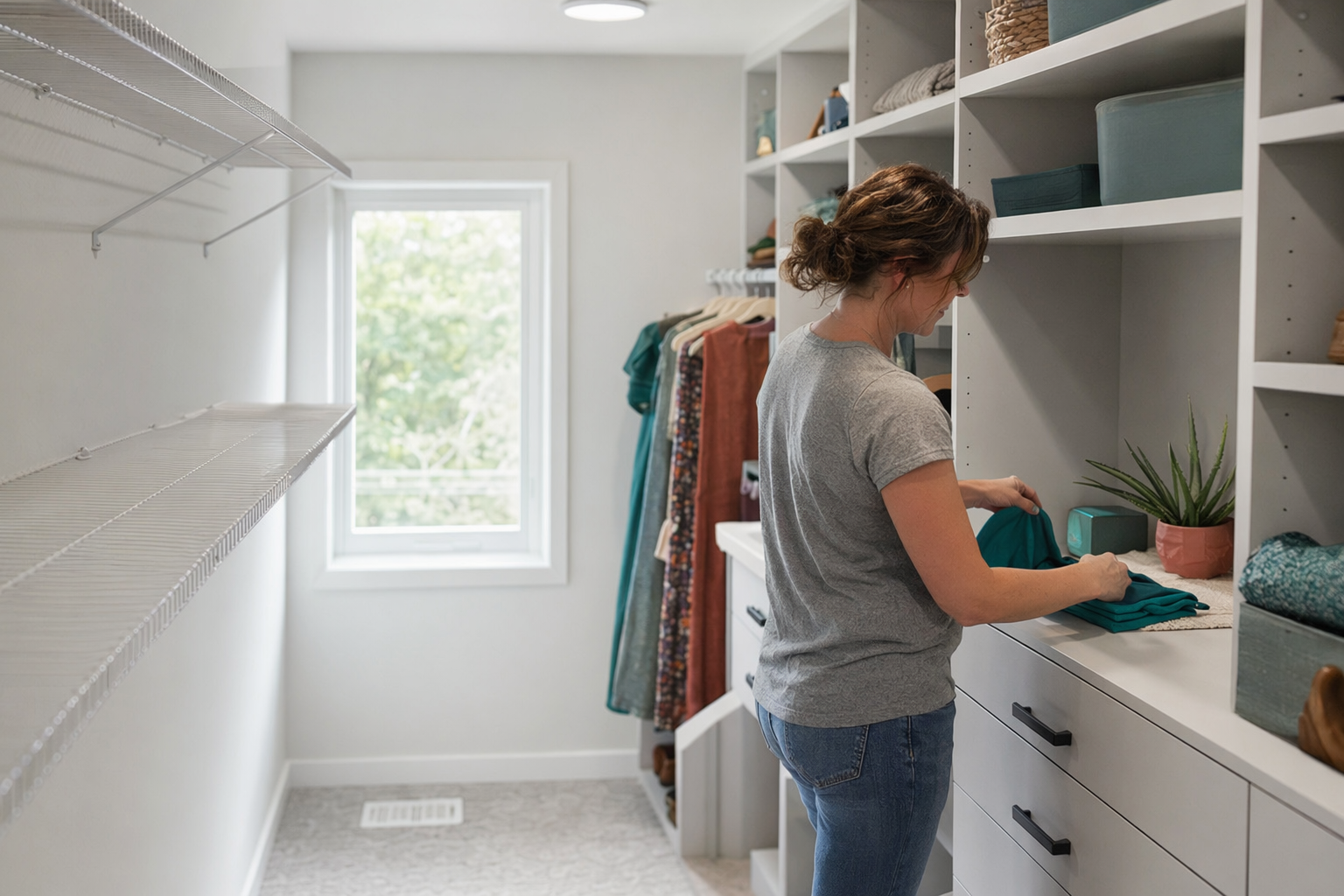
Quick answer: when DIY kits are enough vs when custom-built wins
DIY kits are often enough if your closet is fairly standard, the layout is simple (mostly straight walls), and you’re okay with limited customization—especially for drawers, special corners, or uneven spaces.
Custom-built closets are usually worth it when your space is unusual (angled walls, soffits, deep recesses, mixed heights), you want better use of every inch, or you care about a cleaner, more “built-in” look.
A simple rule of thumb: if your closet wall is wider than the kit’s typical range, or you need multiple different storage zones (hanging + shelves + drawers), custom-built is more likely to feel “worth it.”
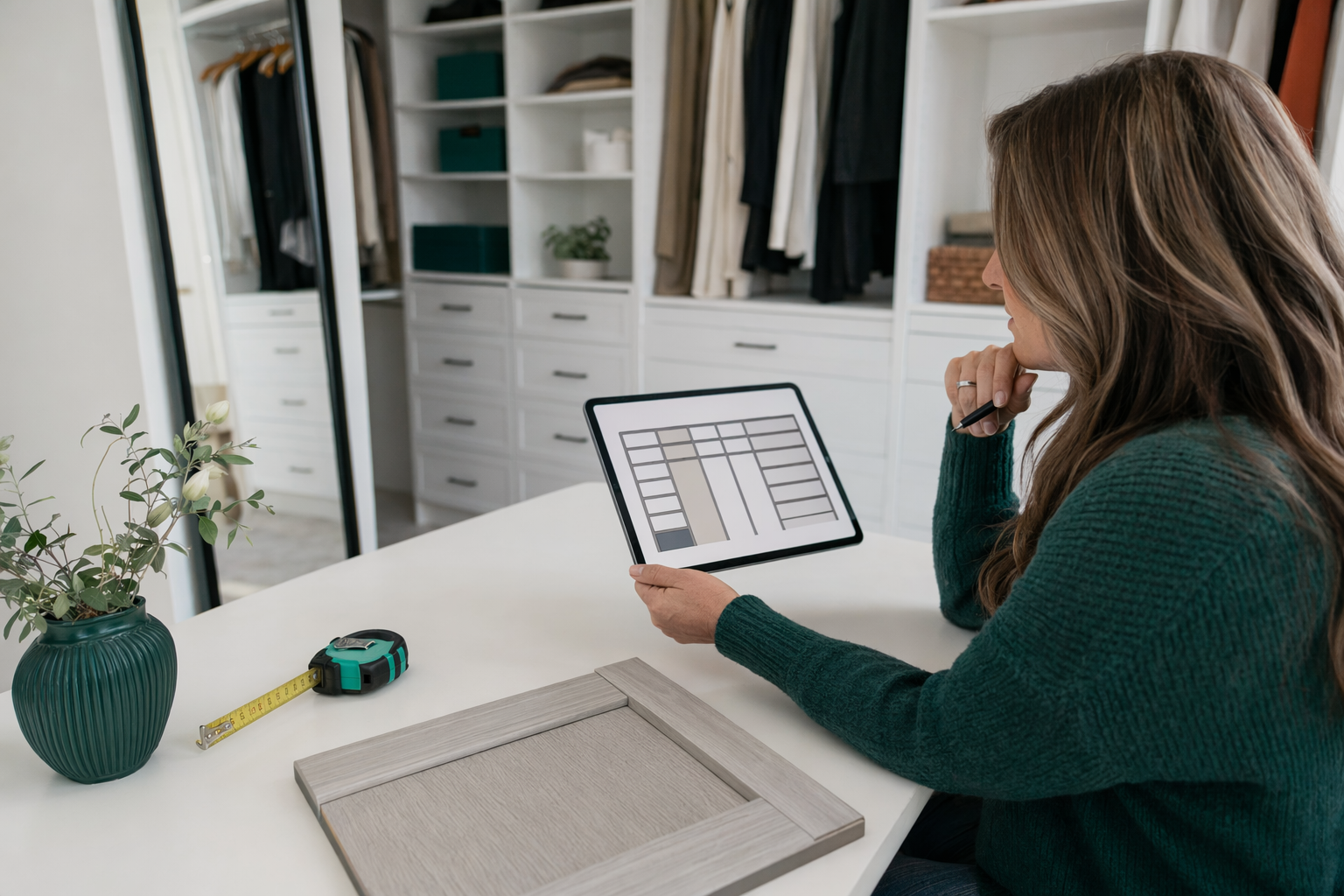
System choice: what kits and custom builders usually use (wire, melamine, wood)
Most DIY kits are designed for easy assembly and often use a mix of particleboard/laminate panels with pre-set shelf positions. That can be a value option, but it can also lock you into fewer choices for spacing and accessories.
Custom-built systems are commonly offered in three material families:
- Wire systems: usually the lowest cost, breathable/ventilated, great for basic hanging and adjustable shelving.
- Melamine/laminate panel systems: the value-to-look sweet spot for many closets—clean look, lots of shelf and drawer planning options, and easier to match finishes.
- Solid wood or wood-veneer systems: higher-end for visible walk-in closets and statement built-ins where finish quality matters most.
Real cost ranges (not quotes): per linear foot and typical project totals
Closet and storage systems are usually priced per linear foot of wall (the total length of organized wall space). Pricing also changes by system type, finish, number of shelves/drawers, and add-ons.
Typical ranges people may see (varies by builder and area—always ask for an all-in written price):
- Wire systems: about $25–$60 per linear foot
- Melamine/laminate panel systems: about $60–$140 per linear foot
- Solid wood/veneer systems: about $120–$250+ per linear foot
A “typical” closet project might run from a few hundred to several thousand dollars depending on linear feet and how much you add (more hanging runs, more shelving, and especially drawers). The only reliable way to understand your true cost is to compare designs with the same requirements and get the all-in price in writing.
What DIY kits can be cheaper on—and what they often cost you instead
DIY kits can look cheaper on the sticker price. But you’re also paying with your time, tools, and risk—especially if walls aren’t perfectly straight or if your closet has constraints the kit doesn’t plan for.
DIY setups often cost more than people expect when they need extra parts, longer replacements, modifications, or additional hardware. Also, “close enough” spacing can reduce how well you store clothes long-term.
Common DIY money traps:
- Limited adjustability: you may later wish you had different shelf spacing for shoes, sweaters, or folded laundry.
- Fewer built-in features: kits often don’t include everything you want (drawers, specialty hang rods, corner solutions).
- Finish mismatch: if the kit’s finish doesn’t match your home, it may feel less “built in,” even if it functions.
Custom-built value: fit, storage efficiency, and the upcharges that matter
Custom-built systems are usually priced higher because they’re planned for your exact closet layout and storage needs. You can tailor the zones: hanging heights, shelf depths, hamper storage, and where drawers go.
That said, custom-built has common upcharges. If you’re comparing quotes, make sure you understand the “all-in” price—not just the base per-linear-foot number. Frequently increased costs include:
- Drawers and pull-outs (they’re more complex than shelves)
- Soft-close hardware
- Premium finishes
- Lighting (if included)
- Islands or special center features in larger walk-in closets
- Removal of old shelving and haul-away (sometimes separate)
Always ask the builder to itemize: materials, number of drawers/pull-outs, hardware type, finish, and any lighting. Get the total in writing before anyone starts work.
How to decide (and get matched) without wasting time
Before you choose DIY or custom, write down what you actually need to store and how you use the closet today. Then match that to the system complexity you’re willing to manage.
Use this quick checklist:
- Measure the wall length (linear feet) you want organized
- Note hanging needs (shirts, dresses, long coats) and their heights
- Decide how many shelves you need for folded items (and roughly what size items)
- Decide whether you truly need drawers now (and how many)
- Tell your planner if the space has awkward spots (soffits, recesses, deep corners)
If you want custom planning without guesswork, ShelfGrove is a free matching service that connects you with licensed, insured local closet and storage-system builders. Share your space type, ZIP, preferred language, and what you want to store, and you can compare options and all-in prices from builders you choose: Get matched. You can also browse planning tips in guides and see system ideas in costs.
DIY kits can be cheaper for simple, standard closets, while custom-built systems usually cost more per linear foot but fit better and use your space more efficiently—just compare all-in written prices and watch for drawer, lighting, and hardware upcharges.
Common questions
Is a DIY closet kit worth it if my closet isn’t perfectly square?
It might be, but kits are designed for predictable layouts. If your walls/ceiling aren’t straight or you have offsets, you may lose time and end up paying extra for modifications or replacement parts. A custom-built system usually handles irregular spaces better.
How much does a custom closet cost per linear foot?
Many builders price closets per linear foot of wall. Roughly, people often see $25–$60/linear foot for wire, $60–$140/linear foot for melamine/laminate, and $120–$250+/linear foot for solid wood/veneer. Exact pricing depends on your accessories, finishes, and how many drawers/pull-outs you add.
What upcharges should I expect on custom closet quotes?
The most common are drawers and pull-outs, soft-close hardware, premium finishes, lighting, removal of old shelving, and any special built-in features. Always request an all-in written price and compare quotes with the same drawer count and hardware level.
Can ShelfGrove design my closet or install it?
No—ShelfGrove is a free matching service, not a closet builder. We help you choose what to request and connect you with licensed, insured local builders so you can compare designs and confirm materials, timeline, and the all-in price.