Guides
What a custom closet really costs
Custom closet pricing is usually figured per linear foot of wall, and the material type (wire, melamine/laminate, or wood) changes the cost most. This guide gives realistic ranges and the add-ons that commonly drive prices up.
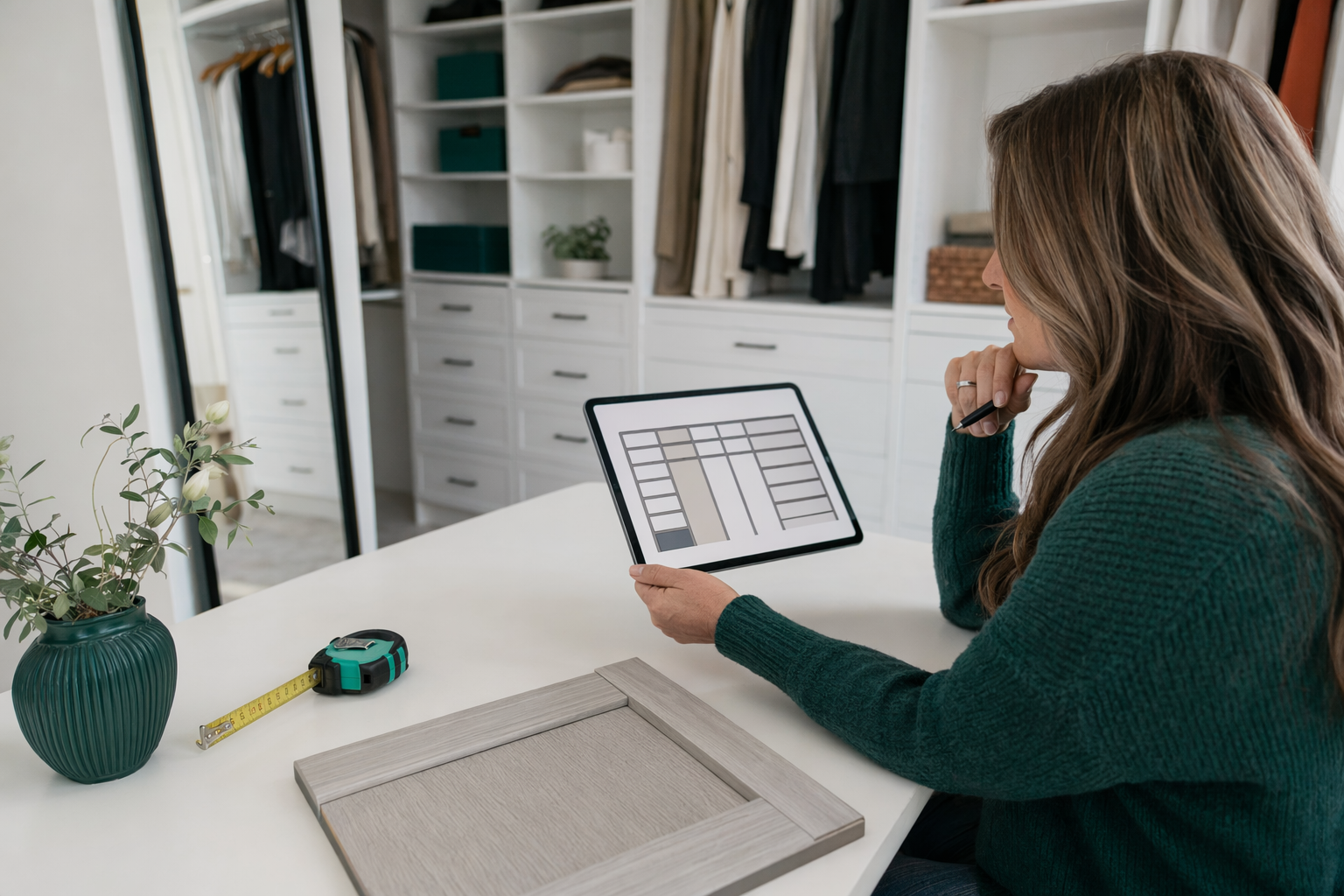
Start here: the realistic cost ranges (not quotes)
Most custom closets and storage systems are priced per linear foot (the length of wall you build into). Your exact price depends on the system type, how many drawers/pull-outs you want, and how wide/deep the sections are—not just the room size.
A common planning range for the built-in “system” (before you add major extras) looks like this:
- Wire systems (usually cheapest): about $35–$90 per linear foot
- Melamine/laminate (value sweet spot for many homes): about $60–$150 per linear foot
- Wood (premium look/feel, especially for visible walk-ins): about $120–$260+ per linear foot
Those ranges are guidance, not a quote. Different builders price differently, and costs vary by ZIP code, materials, and the complexity of your layout.
If you want a quick reality check: a typical reach-in closet might land roughly in the low-to-mid range of the per-foot number times the wall length, while walk-ins often cost more because they include more visible surfaces, more components, and sometimes more accessories (like drawers and specialty shelves).
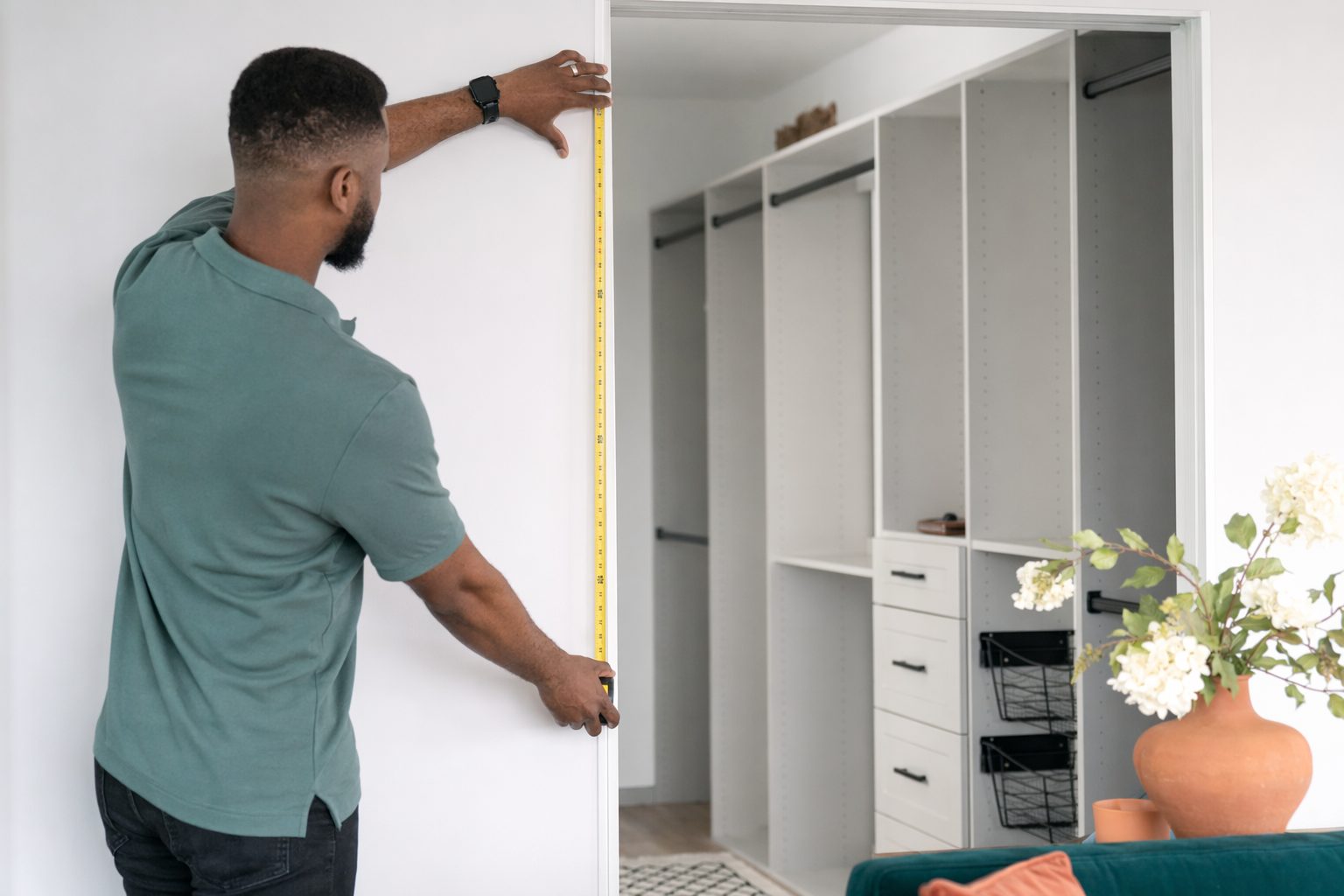
Reach-in vs walk-in: what usually changes the price
A reach-in closet is usually simpler: fewer total shelves, less “finished” visibility, and fewer long runs that need to look perfect from multiple angles. A walk-in often needs more built-in surfaces and more usable storage zones, so the per-foot number may be similar—but the project typically uses more components.
Typical full-project planning ranges (again: not quotes) often look like this:
- Reach-in closet: about $1,200–$6,000+ total
- Walk-in closet: about $3,000–$15,000+ total
- Pantry / garage storage wall (often more linear feet, sometimes lots of shelving): about $2,000–$12,000+ total
These totals can move a lot based on how many drawers and pull-outs you choose, whether you add specialty items (shoe towers, tie/belt racks, valet rods), and how much of the space gets built-out.
What drives the price up (and what’s worth it)
The biggest price drivers are usually not “mystery fees”—they’re specific features you can see on the plan. If you’re trying to stay on budget, focus on choosing the right system type and then deciding where drawers and premium finishes actually help you.
Common cost increases to watch:
- Drawers and pull-outs (especially multiple drawers): often add noticeably to both materials and labor
- Soft-close hardware: can increase cost across the whole project, not just one piece
- Premium finishes (high-end colors, thicker veneers, “designer” looks): usually raises the per-foot number
- Lighting (even simple LED runs) and any electrical-related work: confirm what’s included and get the all-in price in writing
- Removal of old shelving and patch/repair of walls: can add cost, especially if the existing surfaces need extra prep
If a feature doesn’t match how you actually store clothes or supplies, it’s easy to overspend. A lot of homeowners do best with more shelf space and a few drawers where they truly need them (like small items, underwear/socks, or accessories).
Which system fits your budget: wire vs melamine vs wood
Think of system type as the “foundation” of your closet cost. Wire is usually the cheapest and it’s ventilated, but it can look more utilitarian depending on finish. Melamine/laminate is the value-to-look sweet spot for many custom closets: smooth, easy to clean, and available in lots of colors. Wood (solid or veneer) is the premium choice for walk-ins and for built-ins where you want a richer, more furniture-like look.
A practical way to choose:
- Choose wire if you want the lowest price, easy ventilation, and a more modular feel
- Choose melamine/laminate if you want a cleaner, “finished” look at a mid-range budget
- Choose wood if you’re prioritizing a high-end, highly visible built-in and you’re prepared for the higher per-foot range
Most projects combine the material approach into the overall quote—so when you compare bids, make sure you’re comparing the same system type, not just the final “total.”
How the all-in price should be built (so you avoid surprises)
Before anyone builds, you should be able to ask for an all-in price that matches what you approved. Pricing may be quoted per linear foot, but the quote should also list the components included so you can see what’s driving the cost.
When you review a proposal, ask for clear line items for:
- Total linear feet and the exact wall lengths being built out
- System type (wire vs melamine/laminate vs wood) and finish/color
- Number of drawers and drawer locations (and whether they’re soft-close)
- Shelving tiers, hanging rod areas, and any specialty accessories
- Lighting (if included) and what it powers/controls
- Removal/haul-away and any wall preparation/repair included
- A total “all-in” project price and what’s excluded
If you don’t see these details, don’t assume they’re included. Ask for it in writing. Builder practices and what they include can vary by area and vendor.
Get matched to compare real options (free for you)
ShelfGrove is a FREE matching service that connects you with licensed, insured local closet and storage-system builders. We don’t design or install closets—we help you plan what to ask for and then connect you with builders who can quote your space.
To get started:
1. Tell us the space type (reach-in, walk-in, pantry, garage wall, laundry/mudroom, etc.) and your ZIP code
2. Share your preferred language and what you want stored (hanging, folded, shoes, small items, seasonal gear)
3. Include the approximate wall length(s) or dimensions if you have them
4. Compare builder proposals using the same checklist of included items (system type, drawers, finishes, lighting, removal)
For more guidance on planning your layout, see Closet cost basics and explore closet and storage spaces. If you’re ready to connect with local builders, start with Get matched.
Custom closet prices are usually estimated per linear foot, with wire cheapest and wood most premium—your all-in cost mostly depends on the system type, how many drawers/pull-outs you add, and local builder pricing.
Common questions
What’s the average custom closet cost per linear foot?
It usually depends on the system type. Planning ranges often land around $35–$90/linear foot for wire, $60–$150/linear foot for melamine/laminate, and $120–$260+/linear foot for wood—always with project-specific accessories and finishes. Your exact all-in price is not guaranteed and varies by builder and area.
Do drawers make a closet significantly more expensive?
Yes—drawers and pull-outs are one of the most common add-ons that raise the price. If you want the best value, put drawers only where you’ll use them daily (small items) and use more open shelving or hanging for the rest.
Is it cheaper to build more shelves instead of drawers?
Often, yes. More shelves usually add less cost than multiple drawers because shelves are simpler components. The exact difference depends on the system type (wire vs melamine vs wood) and how much the builder includes in the base price.
Are cost ranges the same for walk-in closets?
The per-linear-foot material ranges are similar, but walk-ins typically cost more overall because they use more total components and visible surfaces. Layout complexity and accessory choices (like lighting and specialty racks) can also raise the all-in total.
What should I ask builders to include in the quote?
Ask for an all-in price with line items for total linear feet, system type and finish, drawer count/soft-close, accessories, lighting (if any), and whether removal/repair prep is included. Get it in writing so you can compare proposals fairly.