Guides
Wire vs melamine vs wood closet systems
Wire, melamine/laminate, and wood systems can all work—but they’re priced differently and suit different spaces. Here’s what each type is really good at, plus typical costs per linear foot and common upcharges to watch.
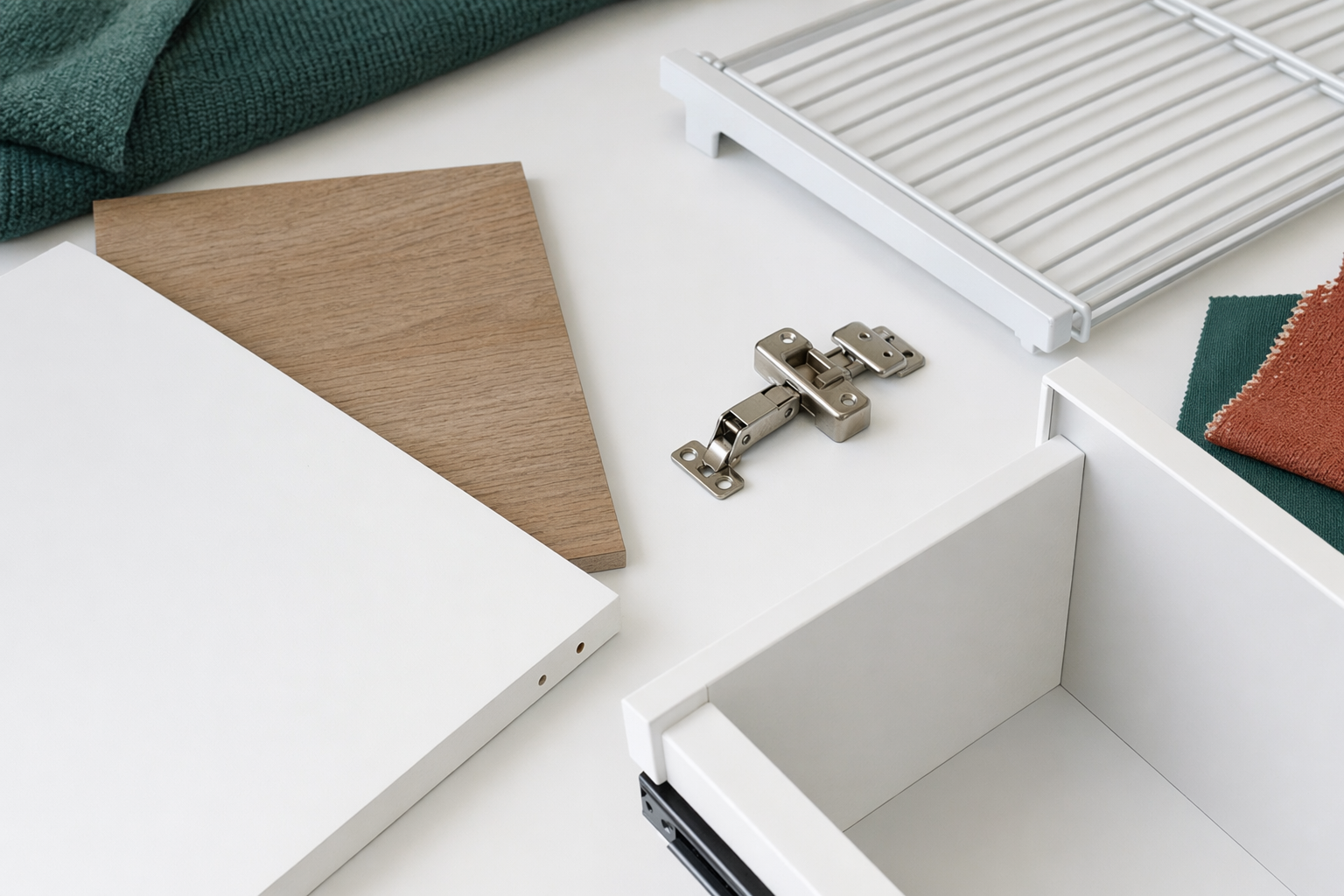
Quick answer: which system to pick
For most reach-in closets and everyday storage, melamine/laminate is the best value-to-look balance.
If you want the cheapest option and better airflow (great for humid areas), choose wire. If the closet will be very visible, or you’re building a premium walk-in look, choose wood (usually solid wood or a wood veneer).
Your “best” choice is also about how you use the space: drawers and pull-outs, soft-close hardware, and lighting will raise the all-in price no matter which system you choose—so plan those last.
To compare apples to apples, ask the builder for the all-in price for the exact components (how many shelves, rods, drawers, and whether lighting is included) and confirm materials in writing before work starts.
- Typical pricing is per **linear foot of wall** (not per shelf).
- Ranges vary by builder, your ZIP/area, and the exact configuration.

Wire systems (cheapest, ventilated, most “open” look)
Wire closet systems use metal frames and wire shelving. They’re usually the lowest cost per linear foot and are naturally ventilated, which can help with odors and moisture compared with fully closed panels.
They also tend to look more “industrial/open,” which many people like. But wire shelves are usually not as visually smooth as solid-faced melamine/laminate or wood, so they can feel less “finished” depending on your home style.
Durability is generally good for wire systems, but the feel can be more lightweight than panel-based options. If you’re planning heavier items, you’ll want a builder to spec the supports correctly (and you should confirm any weight or fit expectations locally with licensed, insured professionals).
- Best fit: budget-focused reach-ins, utility spaces, areas that benefit from airflow
- Expect to pay less per linear foot than melamine or wood
Melamine/laminate systems (value sweet spot for most closets)
Melamine/laminate systems use particleboard panels with a durable surface. For most homeowners, this is the sweet spot: clean, attractive finishes, straightforward customization, and solid performance for typical closet use.
Because the front surfaces are more uniform than wire, melamine/laminate often looks more “built-in,” especially for visible shelving walls or reach-in closets with doors.
In price terms, melamine/laminate typically sits in the middle: more than wire, less than wood. The real cost can rise quickly if you add many drawers, premium finishes, or lighting—so keep your “must-haves” tight at the start.
- Best fit: most reach-in closets, pantry/garage-style storage, built-in look without premium wood pricing
- Commonly the easiest way to get a finished look
Wood systems (premium look, higher cost, often best for walk-ins)
Wood closet systems are typically solid wood or wood veneer on panels. They’re usually chosen when the closet is highly visible, when you want a classic “furniture-quality” look, or when you’re building a walk-in that functions like a room.
Wood can look warm and upscale, and it pairs well with traditional interiors. But it costs more—often significantly—especially with high-end veneers, custom details, and larger spans.
If you choose wood, pay attention to the finish type and how often you’ll clean it. Also remember: even with wood, the price still depends on how many components you’re adding (shelves vs drawers vs specialty storage).
- Best fit: premium walk-ins and visible built-ins
- Expect the highest cost per linear foot of the three
Realistic cost ranges (per linear foot) + what moves the price
Below are honest ranges you can use for planning. They are not quotes—pricing depends on the exact layout, materials, accessories, and your local builder and area.
A typical custom system is priced by linear feet of wall. As a rule of thumb, more shelves, more drawers, more specialty organizers, and higher-finish options raise the total.
Planning ranges (materials + system components only; installation and any related work may change the all-in total depending on the builder):
- Wire: about $40–$90 per linear foot
- Melamine/laminate: about $80–$200 per linear foot
- Wood (solid/veneer): about $180–$350+ per linear foot
If you’re comparing bids, make sure you’re comparing the same things: system type, panel finish, number of rods/shelves, and whether drawers/pull-outs and lighting are included.
- Get the **all-in price in writing** for the exact layout before anything starts.
- Pricing and material availability vary by builder and by area.
Upcharges people forget (ask about these early)
Even when the base system price sounds close, the total cost often changes because of add-ons. The most common upcharges are:
- Drawers and pull-outs (often the biggest line-item jump)
- Soft-close hardware
- Premium finishes (especially for wood or specialty melamine looks)
- Lighting (including wiring requirements handled by the builder’s scope—confirm what they include)
- Removal of old shelving or patching/cleanup (if included in the project scope)
- Islands or specialty centerpiece designs (when you’re not just building one wall)
To avoid surprises, ask the builder to list quantities: how many drawers, how many shelves, how many hanging sections/rods, and what kind of organizers are included. Then ask whether any options are priced separately.
- Don’t shop only by “per linear foot”—shop by the exact component count.
- Ask what’s included for installation vs not included in the scope.
How to get matched (free) and compare designs safely
ShelfGrove is a FREE matching service, not a closet or storage-system company. We help you connect with licensed, insured LOCAL builders for custom closet and storage systems.
To get useful matches, you’ll share contact + project intent details (like the space type and your ZIP) and your preferred language. You’ll stay in control of who you hire and what you purchase.
Before you sign anything, confirm these points with the builder: the system type (wire vs melamine/laminate vs wood), the materials, the component list, the timeline they expect, and the all-in price including any upcharges. If permits or structural questions might be involved, confirm locally with the right licensed professionals and your local requirements.
- Start with the right system type for your needs, then finalize accessories.
- Compare bids using the same component list and all-in scope.
Wire is usually the budget and ventilated pick, melamine/laminate is the value sweet spot, and wood is the premium visible option—then add upcharges like drawers, soft-close, finishes, lighting, and removal to get the real all-in cost.
Common questions
What’s the cheapest closet system type per linear foot—wire or melamine?
Wire is usually the cheapest option per linear foot. Melamine/laminate typically costs more, but it often gives a cleaner, more “built-in” look for everyday closets. Your final price still depends on drawer counts, finishes, and how many linear feet you’re planning.
Is wood always the best choice for a walk-in closet?
Wood is often chosen for a premium, visible look, especially in walk-ins. But “best” depends on your budget and how much storage you need—if you add many drawers, lighting, and premium features, wood can get expensive fast. Melamine/laminate can also work beautifully in walk-ins if you prefer a polished panel finish.
Do drawers cost the same across wire, melamine, and wood systems?
No—drawer pricing varies by system type, hardware, and build details, and soft-close is a common add-on. Across all types, drawers and pull-outs usually raise the total more than extra shelves. Always request a line-item all-in price for the exact drawer quantities you want.
How do I compare two bids if they quote different “per linear foot” numbers?
Ask each builder for the same breakdown: linear feet, system type, finish, number of rods/shelves, drawer count, organizers, lighting, and whether removal of old shelving is included. Then compare totals—not just the per linear foot number—so you’re not paying extra for features one bid includes and the other doesn’t.