Spaces
Home office storage and built-in desks
Planning a home office built-in means balancing desk space, shelves, files, and cable clutter without overspending on extras you will not use. Here is the practical way to choose the system, budget it, and find a licensed local builder.
How to plan your system
A quick, honest way to plan a storage system so you pay for the shelves and drawers you'll actually use — not features you won't.
- 1 Measure your space in linear feet. Measure the wall space you want fitted — width, depth, and ceiling height — in linear feet. Most systems are priced per linear foot of wall, so this is the number that drives the estimate. Note any windows, doors, vents, or sloped ceilings.
- 2 Pick a system type. Wire is cheapest and ventilated; melamine/laminate is the value-to-look sweet spot for most custom closets and pantries; solid wood or veneer is the premium choice for walk-ins and visible built-ins. Match the system to how the space is used and to your budget.
- 3 Plan the components. Decide on the mix of hanging rods, fixed and adjustable shelves, drawers, pull-outs, shoe racks, hampers, and any island or seating. Drawers, soft-close hardware, lighting, and premium finishes are the main upcharges — add only what earns its place.
- 4 Get a design and get matched. Get matched, free, with licensed local builders who offer a design consult and 3D plan. Confirm the materials, the components, the lead time, and the all-in price in writing before any work starts — you compare and choose who to hire.
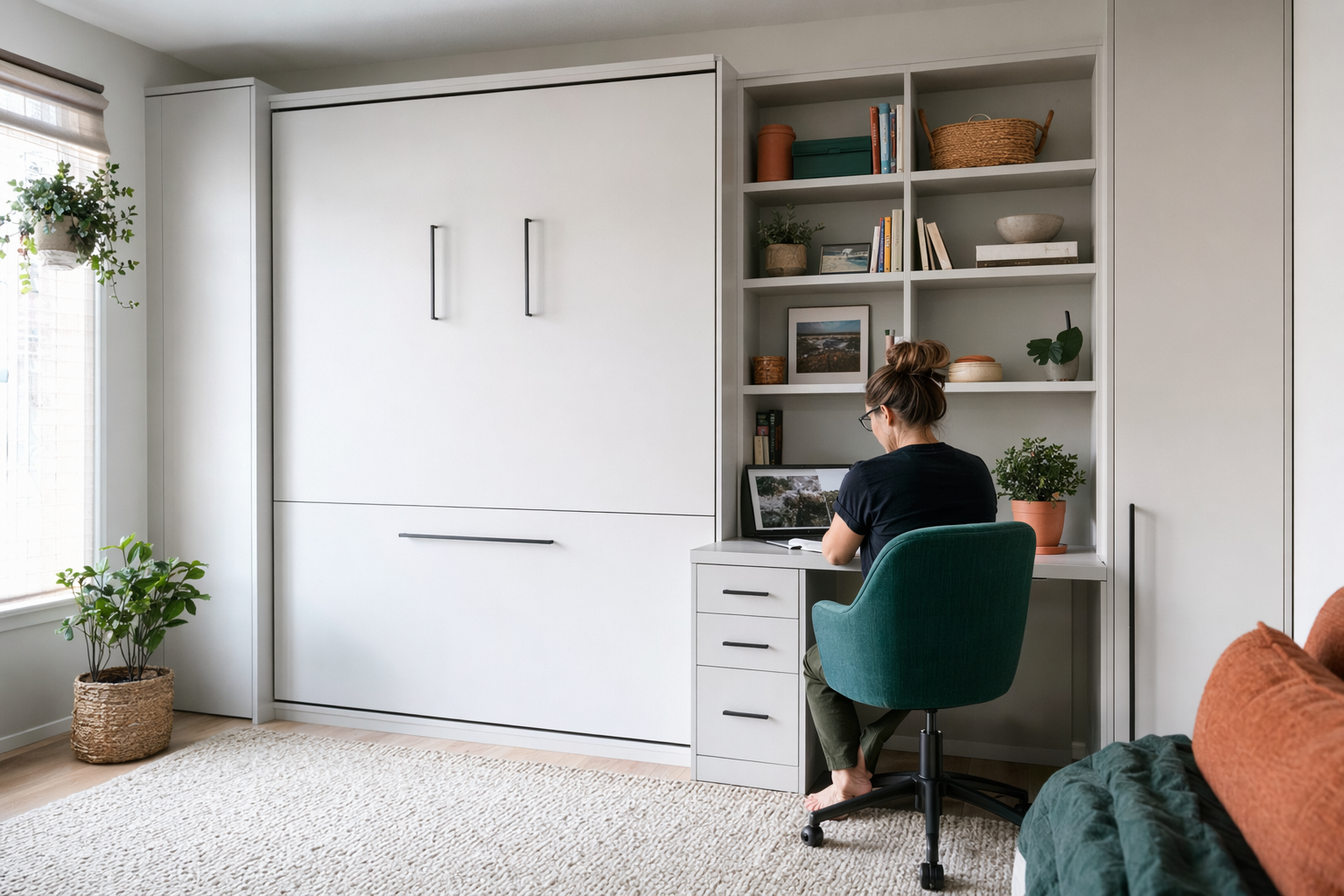
How to plan a home office built-in that actually works
Most home office storage walls are planned by linear foot of wall, then built around a few real needs: desk width, shelf storage, hidden storage, and whether you need files. As a general rule, wire systems are rarely the right fit for a home office because they look unfinished and do not support a built-in desk setup well. Melamine or laminate is usually the value sweet spot for most office walls because it gives you clean panels, shelves, drawers, and desktop surfaces at a more practical cost. Solid wood or wood veneer is the premium option for visible offices, libraries, and higher-end built-ins.
Start with the wall length, then decide how much of that wall should be desk and how much should be storage. A small single-user office often uses 6 to 8 linear feet. A more comfortable wall with desk plus upper shelving often lands around 8 to 12 linear feet. A full built-in wall with desk, bookcases, doors, and file storage can run 10 to 16 linear feet or more.
The parts that matter most in this space are usually simple:
- A desk surface deep enough for real work, often around 20 to 30 inches depending on the setup
- Open shelves for books, printer paper, and daily-use items
- A small number of drawers for office supplies
- File drawers only if you truly use paper files
- Closed cabinets or doors if you want the room to look calm on video calls
- Cable pass-throughs or simple wire-management details so cords do not hang everywhere
The biggest money-saving truth: add only the enclosed storage you will really use. Many people think they need lots of drawers, double file drawers, and upper cabinets everywhere, then end up using mostly the desktop and a few shelves. In many offices, a desk, 3 to 5 shelves, and 2 to 4 drawers do more useful work than a wall packed with expensive cabinetry.
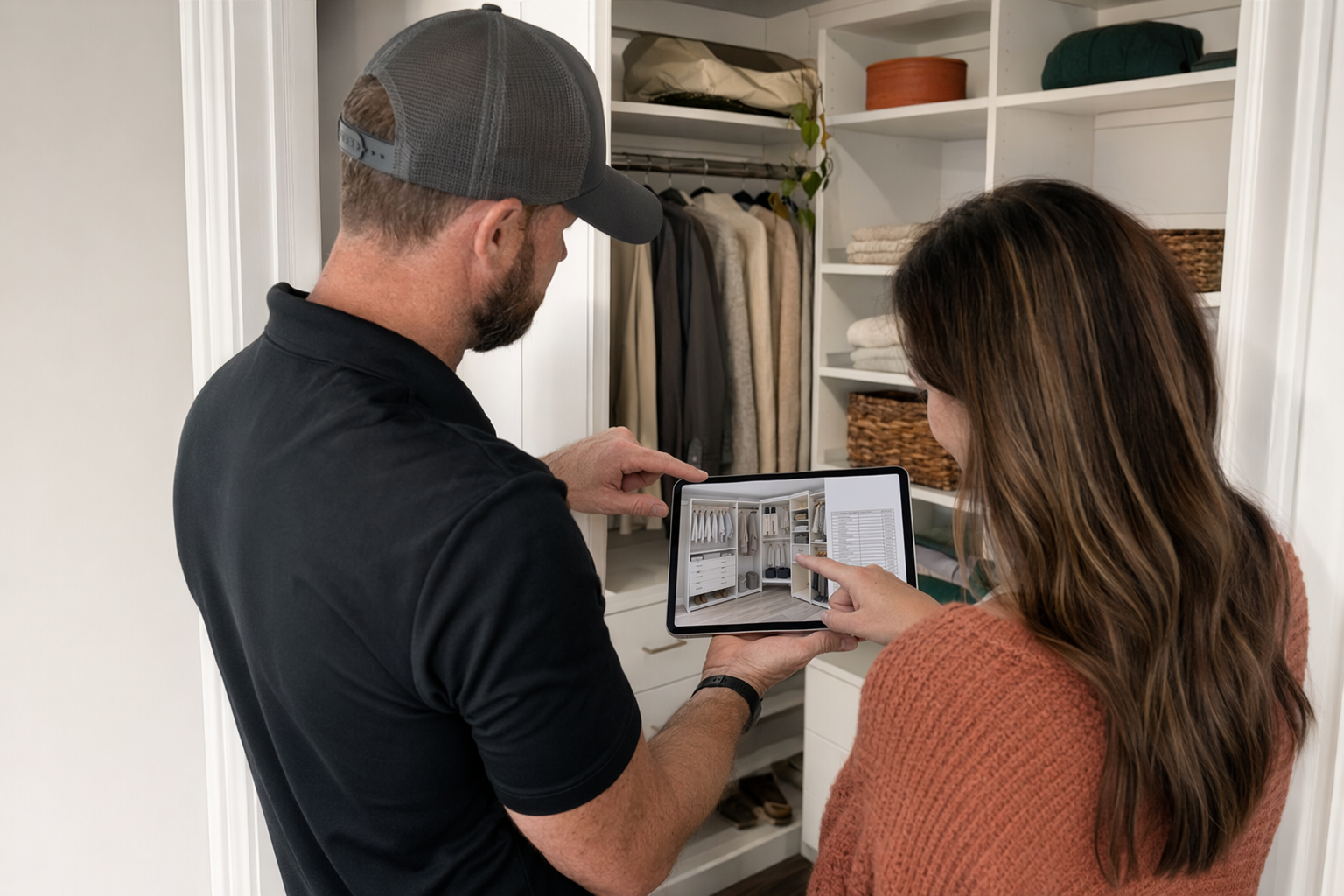
Honest cost range for home office storage and built-in desks
For home office built-ins, many local builders price the main storage wall by linear foot, but desktop sections, file drawers, tall towers, and specialty details can change the math quickly. As a general planning range, simple melamine or laminate office built-ins often start around $250 to $500 per linear foot. Mid-range layouts with better finishes, more drawers, and taller built-in sections often land around $500 to $900 per linear foot. Premium wood or veneer built-ins can run about $900 to $1,500+ per linear foot in many US markets. These are broad planning ranges only, not quotes.
For total project cost, a compact office wall may come in around $2,500 to $5,500 for a straightforward setup. A more finished custom office with desk, shelving, drawer banks, and some closed storage often falls around $5,000 to $12,000. A larger or more furniture-style office with wood veneer, upgraded hardware, tall bookcases, and heavier detailing can go well beyond that. The real number depends on system type, materials, accessories, area, and the size of the space.
Why the range is wide: offices often look simple, but drawers, file hardware, finished end panels, and large desktop spans cost real money. A wall that is mostly fixed shelving is much cheaper than a wall with multiple drawer stacks, cabinet doors, and a long floating-looking desk. If you want a realistic budget, think less about "one office wall" and more about the actual count of shelves, drawers, file units, and cabinet sections.
- Simple office wall: often lower cost if mostly shelves and one desk surface
- File drawers and tall storage towers can raise cost fast
- Premium finishes and furniture-style details push the price higher
Upcharges people miss in office built-ins
The common upcharges in a home office are not mysterious, but they are easy to miss on the first design. Drawers and pull-outs are a major one. A shelf bay is much cheaper than a drawer bank, and file drawers cost more than regular drawers because the hardware is heavier. Soft-close hardware is another common add-on. It is nice, but make sure you know whether it is included or extra.
Premium finishes also change the total quickly. A standard white or basic wood-look melamine finish is usually more budget-friendly than textured finishes, custom colors, wood veneer, or painted furniture-style surfaces. Lighting is another add-on that sounds small but can meaningfully raise the all-in price once wiring coordination, channels, and fixtures are involved. ShelfGrove gives general information only here, not electrical advice, so ask a licensed, insured builder what they handle and whether any separate licensed trade work is needed in your area.
Other office upcharges to ask about plainly:
- Removal of old shelving, desks, or cabinets
- Scribing or trim work to fit uneven walls
- Finished backs, end panels, or decorative moldings
- Extra-deep desktops or long unsupported spans
- Keyboard trays, printer pull-outs, and other specialty accessories
- Glass doors or specialty inserts
Get the all-in price in writing before you agree to anything. Ask the builder to break out the system type, finish, drawer count, file drawers, hardware level, lighting, and any removal or wall-fit work so there are no surprise add-ons later.
How to choose the right system for your budget
If you want the best balance of cost and appearance, melamine or laminate is the practical choice for most home offices. It is clean-looking, widely available, and works well for shelves, desk surfaces, drawers, and cabinet doors. It is also usually easier to keep within budget than wood.
Choose solid wood or wood veneer when the office is a showpiece room and you care about furniture-level appearance more than keeping the price down. This is more common in front rooms, studies, and built-ins that are highly visible from the main living area. Wire systems are usually better for utility spaces than office walls.
A good way to stay on budget is to spend money where you touch the system every day. That often means a comfortable desk height, enough shelf space, and maybe one useful drawer bank. If your files are mostly digital, skip oversized file storage. If you rarely close doors, open shelving may serve you better than expensive upper cabinets. You can also compare ideas across other storage spaces and read more about which closet system to choose if you are still deciding between materials.
How ShelfGrove helps you get matched
ShelfGrove is a free matching service, not a closet or cabinet company. We do not design, build, or install home office storage. We help homeowners connect with licensed, insured local builders so they can compare options and stay in control.
When you use ShelfGrove, you share basic contact and project intent only: your name, phone, optional email, the space you are planning, ZIP code, and preferred language. Then you can get matched with local builders to discuss your office wall, desk, shelving, and storage goals. It is always free for the customer.
Before hiring anyone, verify the builder yourself. Confirm that they are licensed and insured where required, ask what materials they use, and get the full scope in writing. If your project involves wall changes, outlets, lighting, or permit questions, confirm those details locally with the right licensed professionals. ShelfGrove provides general information only, not structural or electrical advice.
Ready to compare options? Start with cost guides if you want to budget first, or get matched when you are ready to talk with local builders.
For most home offices, a simple melamine built-in with only the desk, shelves, and drawers you actually use is the best value, and you should get every add-on listed in writing before hiring a licensed local builder.
Common questions
How much does a built-in home office desk and shelving wall cost?
A simple setup may start around $2,500 to $5,500, while many custom office built-ins land around $5,000 to $12,000. Premium wood or heavily customized projects can cost more. These are planning ranges, not quotes.
Is home office storage priced per linear foot?
Often yes, at least as a starting point, because most office built-ins run along a wall. But drawers, file hardware, desktop spans, closed cabinets, and finish level can change the final number a lot.
What is the best material for a home office built-in?
For most homeowners, melamine or laminate is the practical choice because it balances look and cost well. Wood or veneer is the premium option for more furniture-style offices. Wire is usually not the best fit for this space.
Do file drawers add a lot to the price?
Yes. File drawers usually cost more than basic shelves or standard drawers because they use heavier hardware and more material. Only add them if you really keep paper files.
Can ShelfGrove design my office wall for me?
No. ShelfGrove is a free matching service, not a design or installation company. We help you connect with licensed, insured local builders who can review your space and propose designs.
What information do I need to get matched?
Just contact and project intent details: your name, phone, optional email, the type of space, ZIP code, and preferred language. You stay in control and choose who to speak with.