Spaces
Laundry and mudroom storage systems
Laundry rooms and mudrooms work best when they solve daily mess, not when they look fancy on paper. Plan the wall footage first, add only the parts you will really use, and get the full price in writing before work starts.
How to plan your system
A quick, honest way to plan a storage system so you pay for the shelves and drawers you'll actually use — not features you won't.
- 1 Measure your space in linear feet. Measure the wall space you want fitted — width, depth, and ceiling height — in linear feet. Most systems are priced per linear foot of wall, so this is the number that drives the estimate. Note any windows, doors, vents, or sloped ceilings.
- 2 Pick a system type. Wire is cheapest and ventilated; melamine/laminate is the value-to-look sweet spot for most custom closets and pantries; solid wood or veneer is the premium choice for walk-ins and visible built-ins. Match the system to how the space is used and to your budget.
- 3 Plan the components. Decide on the mix of hanging rods, fixed and adjustable shelves, drawers, pull-outs, shoe racks, hampers, and any island or seating. Drawers, soft-close hardware, lighting, and premium finishes are the main upcharges — add only what earns its place.
- 4 Get a design and get matched. Get matched, free, with licensed local builders who offer a design consult and 3D plan. Confirm the materials, the components, the lead time, and the all-in price in writing before any work starts — you compare and choose who to hire.
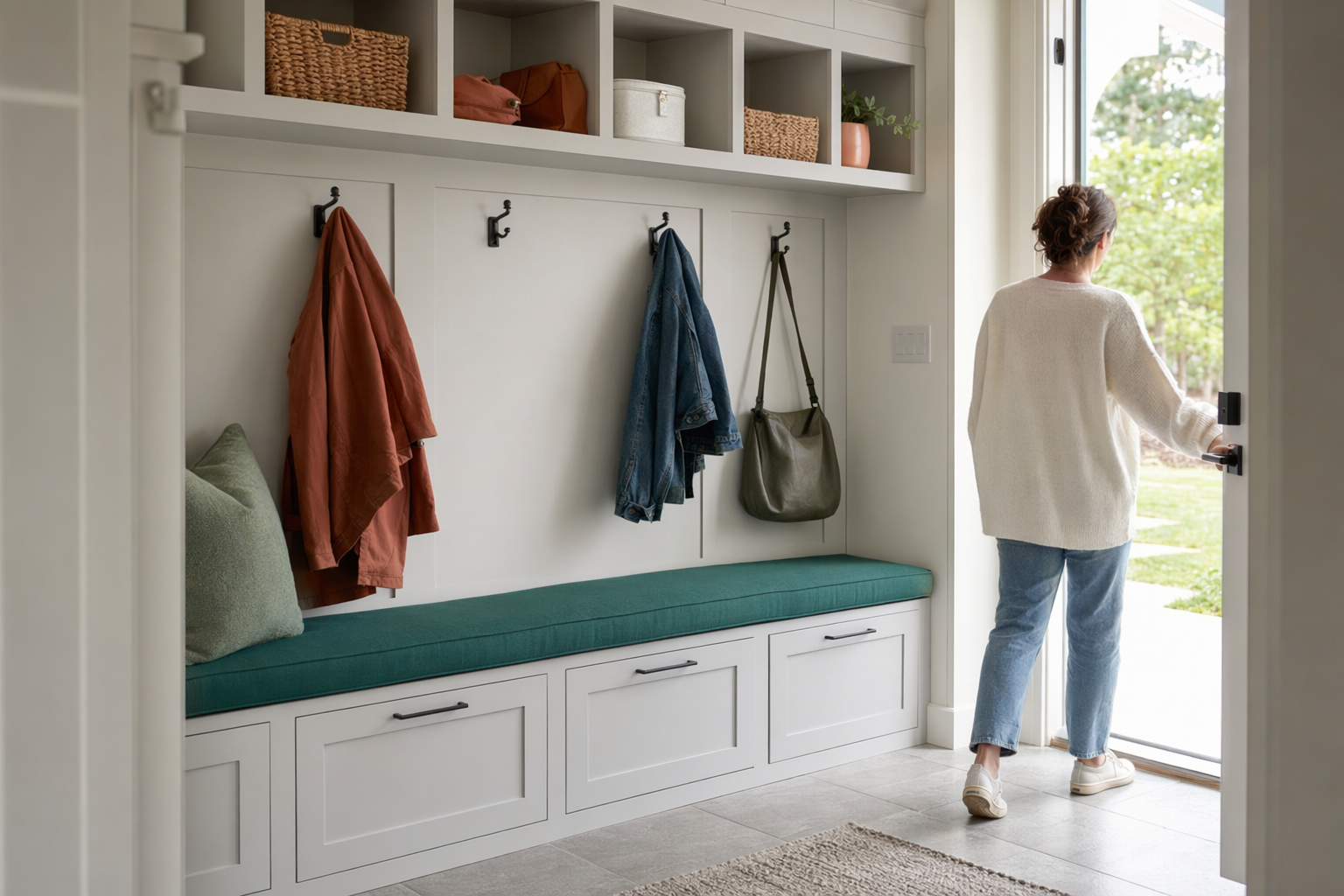
Plan the space around real daily use
Laundry and mudroom storage usually needs to do two jobs at once: hold everyday items neatly and stand up to heavy use. For most homes, melamine or laminate systems are the practical sweet spot. They give you a cleaner built-in look than wire, cost less than wood, and work well for cabinets, cubbies, shelves, and folding counters. Wire can still make sense for simple utility shelving where airflow matters and the budget is tight. Wood or wood veneer is the premium option, usually chosen for visible mudroom built-ins, bench walls, or higher-end homes.
Think in linear feet of wall, not just room size. A small laundry wall may be 5 to 8 linear feet. A combined laundry-mudroom wall with upper cabinets, bench, and lockers may be 8 to 14 linear feet. A full entry wall with bench, tall lockers, overhead storage, and a cleaning closet can run 10 to 16+ linear feet. Most custom systems are priced by that wall length, then adjusted up for drawers, doors, tall panels, counters, and accessories.
For laundry rooms, the most useful components are usually upper cabinets over machines, open shelves for detergent and baskets, a folding counter, and a hanging rod or drying area. For mudrooms, the most-used pieces are a bench, shoe storage, cubbies, hooks, and one locker section per person if the wall allows it. In many homes, a simple 8-foot wall with 2 tall lockers, a 4- to 5-foot bench, upper cubbies, and a cabinet over the washer and dryer is more useful than a fancier design packed with features.
A practical rule: add closed storage where you want the mess hidden, and open storage where you need fast access. Deep cabinets can waste space if they become a pile zone. Too many small cubbies can also backfire if nobody uses them. If you are still comparing materials, which closet system should I choose? gives a simple overview of wire, melamine, and wood.
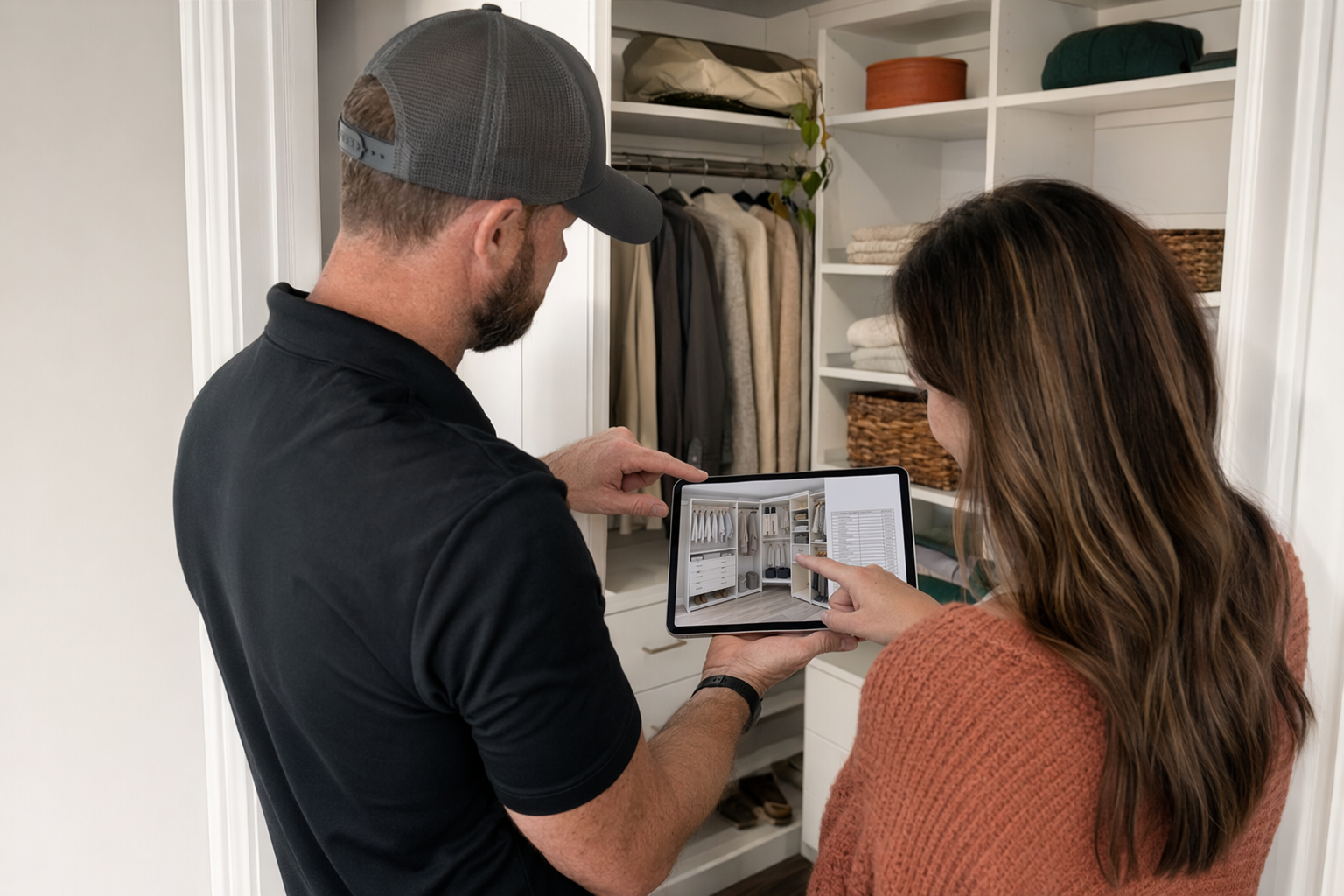
What a laundry or mudroom system usually costs
Honest national-style ranges for laundry and mudroom storage are usually about $140 to $280 per linear foot for basic wire or simple utility shelving, about $250 to $600 per linear foot for most custom melamine or laminate systems, and about $500 to $1,000+ per linear foot for wood or veneer built-ins. These are general ranges, not quotes. The real number depends on the system type, materials, accessories, size of the space, and your area.
In project terms, a small laundry wall might land around $1,500 to $3,500 for a simpler setup, while a more finished custom melamine laundry room with cabinets, counter, and hanging space may fall around $3,000 to $7,000+. A mudroom bench-and-locker wall often starts around $2,500 to $5,000 for a basic custom setup and can climb to $6,000 to $12,000+ for larger, more detailed built-ins. A combined laundry and mudroom with multiple walls, tall storage, and premium finishes can go higher.
Why the spread? A straight shelf-and-cabinet wall is much cheaper than a built-in bench with lockers, finished end panels, drawer banks, and a countertop. Height matters too. Tall lockers, full-height pantry-style storage, and systems that wrap corners use more material and labor. Your builder's local market, finish options, and installation conditions also affect the final number. Use costs as a starting point, but treat any range as budgeting help only, not a promised price.
The upcharges people forget to budget for
This is where many projects go off track. The base price may look reasonable, then the add-ons stack up. The biggest upcharges are usually drawers and pull-outs, soft-close hardware, premium finishes, lighting, islands or extra counter sections, and removal of old shelving or old cabinets. Get the all-in price in writing before you agree to anything.
Drawers are useful in laundry rooms for smaller items, but they cost more than shelves behind doors. Pull-out hampers, tilt-out bins, tray dividers, slide-out baskets, and boot trays can be worth it if you will actually use them every day. If not, standard shelves often do the same job for less. In mudrooms, one or two easy-to-clean drawers may be enough; a full drawer bank can push the price up fast.
Finished panels, nicer door styles, upgraded handles, and matching trim also add cost quickly. So do specialty countertops, backsplashes, and integrated lighting. Electrical or venting changes are outside basic storage pricing and should be handled by the right licensed professionals where needed. ShelfGrove provides general information only and is not a builder, designer, or installer. Always hire licensed, insured local builders, verify that yourself, and confirm any permit, load-bearing, electrical, or code questions locally.
A good budgeting habit is to separate needs from wants:
- Need: upper cabinets, shelf space, bench, hooks, hanging rod, easy-clean surfaces
- Maybe: one drawer bank, one pull-out hamper, nicer hardware
- Luxury: lighting, premium finish upgrades, custom trim details, extra decorative panels
What is usually worth adding — and what often is not
Worth adding: a real folding surface, durable shelves, a hanging rod for air-dry items, and enough shoe and bag storage near the entry. If your mudroom collects backpacks, sports gear, umbrellas, pet items, or work boots, design for those first. A bench with open shoe storage below is often more useful than a fully closed base cabinet. In laundry rooms, cabinets above the machines and one tall section for cleaning tools often give the best daily value.
Often not worth the money: too many tiny cubbies, lots of decorative trim, deep cabinets without internal organization, or premium hardware in a purely utility space. Families often ask for a separate locker for each person, then realize the wall is too short and the lockers become cramped. Two wider shared sections can work better than four narrow ones. The same goes for pull-out accessories that sound smart but hold very little.
If the room is humid, busy, or near an exterior door, ask practical questions about cleanability, durability, and airflow. Simple, wipeable finishes usually beat fussy details in these spaces. Keep the design honest: if you need 3 shelves, 6 hooks, a 5-foot counter, and a place for 8 pairs of shoes, price that exact setup instead of paying for features you may never use.
For more examples of how different spaces are planned, you can browse all storage spaces.
How to get matched with a local builder through ShelfGrove
ShelfGrove is a free matching service, not a closet or cabinet company. We do not design, build, or install laundry rooms or mudrooms. We help homeowners connect with licensed, insured local builders so they can compare options, materials, and pricing.
When you use get matched, we collect contact and project intent only: your name, phone, optional email, the space you want, your ZIP code, and preferred language. That is enough to help connect you with participating local builders. We do not ask for financial account numbers, Social Security numbers, income, or sensitive personal records.
To make the conversations easier, have these basics ready:
1. Your wall length in rough linear feet
2. Whether the space is laundry, mudroom, or both
3. The items you need to store: coats, shoes, backpacks, detergent, hampers, brooms, pet gear
4. The features you actually want: bench, lockers, shelves, cabinets, hanging rod, counter
5. A realistic budget range
Before hiring anyone, compare designs and confirm the materials, component count, lead time, and all-in price in writing. Ask what is included, what costs extra, who removes old shelving if needed, and whether countertop, hardware, and installation are part of the written total. You stay in control of who to hire and what gets built.
For most laundry rooms and mudrooms, a simple melamine system with the right shelves, bench, cabinets, and hooks gives the best value — and the extras are what usually raise the price fast.
Common questions
How many linear feet do I need for a mudroom?
A useful mudroom wall is often 6 to 10 linear feet, but the right amount depends on how many people use it and what needs to fit there. A bench, shoe area, hooks, and 2 to 4 locker sections can fill a wall quickly.
Is melamine good for a laundry room or mudroom?
For many homes, yes. Melamine or laminate is often the best value-to-look choice because it gives a clean built-in appearance at a more manageable cost than wood. The exact durability depends on the product, finish, and builder.
What costs more in a mudroom: lockers or benches?
Lockers usually drive the price up more, especially tall full-height lockers with doors, panels, and upper cubbies. A simple bench with open storage below is often more budget-friendly.
Should I add drawers in a laundry room?
Only where they solve a real problem. One or two drawers for smaller supplies can be useful, but shelves behind doors usually cost less and hold more bulky items.
Can ShelfGrove give me a quote for my laundry room?
No. ShelfGrove is a free matching service, not a builder or installer, so we do not give quotes or perform the work. We provide general information and help connect you with licensed, insured local builders who can price your project.
Do I need to worry about permits or electrical changes?
Maybe, depending on the project and your local rules. ShelfGrove provides general information only, so ask licensed, insured local professionals to review any permit, code, electrical, venting, or structural questions and verify requirements in your area.