Spaces
Pantry systems — organized kitchen and food storage
Planning a pantry is mostly about choosing the right shelf depth, pull-outs you will really use, and a system that fits your budget. Here is the practical truth on pantry systems, linear-foot pricing, and common upcharges.
How to plan your system
A quick, honest way to plan a storage system so you pay for the shelves and drawers you'll actually use — not features you won't.
- 1 Measure your space in linear feet. Measure the wall space you want fitted — width, depth, and ceiling height — in linear feet. Most systems are priced per linear foot of wall, so this is the number that drives the estimate. Note any windows, doors, vents, or sloped ceilings.
- 2 Pick a system type. Wire is cheapest and ventilated; melamine/laminate is the value-to-look sweet spot for most custom closets and pantries; solid wood or veneer is the premium choice for walk-ins and visible built-ins. Match the system to how the space is used and to your budget.
- 3 Plan the components. Decide on the mix of hanging rods, fixed and adjustable shelves, drawers, pull-outs, shoe racks, hampers, and any island or seating. Drawers, soft-close hardware, lighting, and premium finishes are the main upcharges — add only what earns its place.
- 4 Get a design and get matched. Get matched, free, with licensed local builders who offer a design consult and 3D plan. Confirm the materials, the components, the lead time, and the all-in price in writing before any work starts — you compare and choose who to hire.
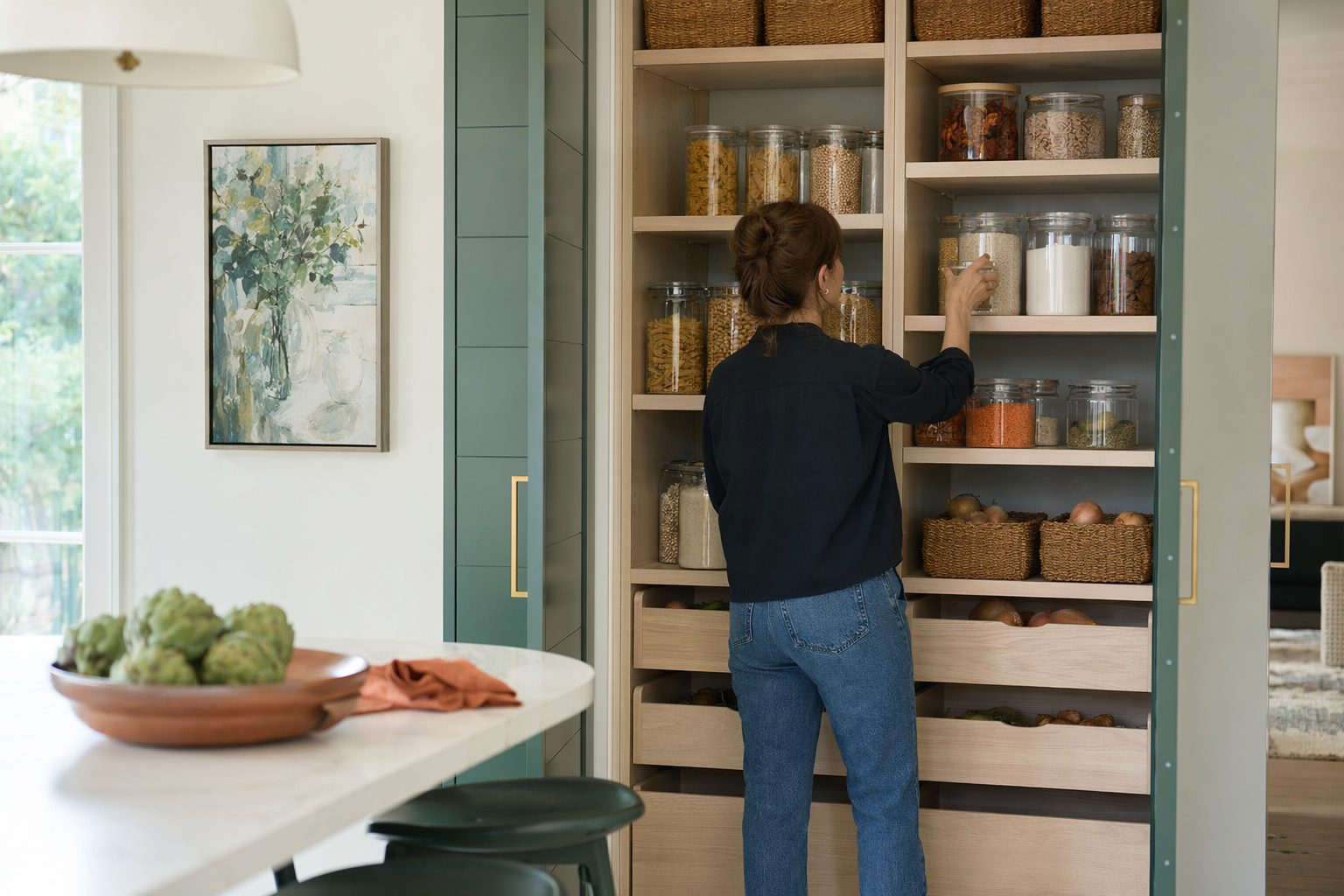
How to plan a pantry system that actually works
For most pantries, melamine or laminate is the practical sweet spot. It gives you flat shelves, a cleaner built-in look than wire, and enough flexibility for cans, cereal, small appliances, serving pieces, and bulk food. Wire is the budget option and has good airflow, but small items can wobble or tip unless you add bins. Wood or veneer is the premium choice, usually for visible pantry walls in higher-end kitchens or butler-style pantries.
Think about your pantry in linear feet of wall, not just square feet of floor. Most builders price pantry systems by the linear foot of usable wall they are outfitting. A small reach-in pantry might have 5 to 8 linear feet of shelving wall. A walk-in pantry may have 10 to 18 linear feet or more, depending on how many walls can actually hold shelving and whether a door swing or window takes space away.
The components that matter most in a pantry are shelf depth, shelf spacing, and whether you really need pull-outs. In many pantries, 12-inch-deep shelves work for cans, jars, and boxed food. Around 16 inches deep is common for larger pantry storage. Depths around 20 to 24 inches can work, but deeper shelves often become black holes unless you use bins or pull-outs. Tall vertical sections for brooms, trays, or small appliances can be worth more than extra shelves.
A practical pantry layout often includes these basics:
- Adjustable shelves for changing food storage needs
- One or two deeper sections for bulk items or appliances
- A few pull-out trays or baskets only where they solve a real access problem
- Lower shelves for heavier items
- Eye-level shelves for everyday food
- Room for paper towels, cleaning supplies, or pet food if that pantry will hold them
Where people waste money: too many drawers, too many pull-outs, fancy dividers they never use, and very deep shelves with no bin system. In a pantry, simple adjustable shelving does most of the work.

Honest pantry system cost: per linear foot and real project ranges
General pantry pricing depends on the system type, materials, accessories, your area, and the size of the space. These are honest ballpark ranges, not quotes. The real number can move up or down based on finish, shelf count, pull-outs, trim details, and whether old shelving has to be removed first.
A basic wire pantry system often starts around $80 to $160 per linear foot installed in many markets. A melamine or laminate pantry system often lands around $140 to $280 per linear foot installed, and that is where many homeowners end up. Premium wood or veneer pantry built-ins can run roughly $250 to $500+ per linear foot installed, especially in visible kitchen-adjacent spaces with trim, taller panels, or furniture-style details.
For full projects, a small pantry upgrade may come in around $800 to $2,000 for basic wire or simple melamine. A mid-range custom pantry often falls around $1,800 to $4,500. A larger walk-in pantry or premium built-in pantry can reach $4,500 to $10,000 or more. Those are broad US ranges, not promises, and local labor rates and finish levels matter a lot.
If you are comparing options, costs and which closet system should I choose are good places to start. The biggest pricing driver is usually not the room itself. It is how many upgraded components you add per linear foot.
The pantry upcharges to watch before you sign
The base pantry price may look reasonable, then the extras get added. Ask for the all-in price in writing before you approve anything. In pantry projects, the most common upcharges are pull-out shelves, drawer boxes, soft-close hardware, premium finishes, decorative trim, lighting, and removal of old shelving.
Pull-outs are useful, but they are one of the fastest ways to raise the price. A couple of well-placed pull-out trays for lower shelves can be smart. Filling the whole pantry with them usually is not. Soft-close hardware sounds minor, but across multiple drawers or pull-outs it adds up. Premium wood-look finishes, edge details, and color upgrades can also move a pantry from practical to expensive quickly.
Lighting is another common add-on. Built-in lighting can look great, but it may involve electrical work that should be handled and confirmed locally by the appropriate licensed trade where required. ShelfGrove gives general information only and is not a builder or licensed trade provider. Always hire licensed, insured builders, verify that yourself, and confirm permit, electrical, or load-related questions locally.
Also ask whether the quote includes:
- Removal and disposal of old wire or wood shelving
- Patching or paint touch-up after removal
- Delivery and installation
- Tax if applicable in your area
- Hardware upgrades
- Trim or filler panels around gaps
If a quote looks much cheaper than others, check what is missing. Pantry pricing gets confusing when one builder includes the extras and another leaves them out.
What a good pantry quote should spell out
A good quote should be easy to read. You want the system type, approximate linear feet, material, finish, shelf depths, number of adjustable shelves, number of pull-outs or drawers, hardware level, and installation clearly listed. If you are comparing two designs, make sure they are truly comparable. One quote may show 10 shelves and no pull-outs; another may show 7 shelves plus 4 pull-out trays. Those are different packages.
Ask simple questions in plain language: How deep are the shelves? How many are adjustable? Which parts are fixed? Are the pull-outs full-extension? Is removal of old shelving included? Is the final number all-in, or are there likely add-ons later? Getting those answers up front is how you avoid surprise upcharges.
It also helps to tell the builder how you really use the pantry. If you store bulk warehouse items, paper goods, mixers, air fryers, water bottles, lunch boxes, or pet food, say that early. Pantry systems work best when the shelf spacing matches real items, not generic showroom displays.
How ShelfGrove helps you get matched
ShelfGrove is a free matching service, not a closet, cabinet, or storage-system company. We do not design, build, or install pantry systems. We help homeowners understand the options, then get connected with licensed, insured local builders so they can compare designs, materials, lead times, and all-in prices before choosing who to hire.
To get matched, you share contact and project intent only: your name, phone, optional email, the space you are planning, ZIP code, and preferred language. That helps us point you toward local builders who handle pantry and storage-system work in your area. It is always free for the customer.
Once you connect, you stay in control. Compare more than one design if possible. Confirm the material type, shelf depths, pull-outs, hardware, finish, expected timeline, and total written price before any work starts. If you want to explore other storage spaces first, see spaces or go straight to get matched.
A good pantry usually needs simple adjustable shelves first, a few smart pull-outs second, and a clear all-in price before you hire anyone.
Common questions
What is the best system for a pantry: wire, melamine, or wood?
For most pantries, melamine or laminate is the best value-to-look choice. Wire is the cheapest and has good airflow, while wood or veneer is the premium option for more visible built-ins.
How deep should pantry shelves be?
About 12 inches deep works well for many canned and boxed goods, while 16 inches is common for larger pantry storage. Very deep shelves can waste space unless you use bins or pull-outs.
Are pull-out shelves worth it in a pantry?
Usually a few are worth it, especially on lower shelves where deep items get lost. Filling the whole pantry with pull-outs often costs more than it helps.
How much does a custom pantry cost?
Many pantry systems fall roughly between $80 and $500+ per linear foot installed, depending on whether you choose wire, melamine, or wood and how many accessories you add. Small projects may start under $2,000, while larger or premium pantry builds can run several thousand dollars more.
How do I avoid surprise pantry upcharges?
Ask for the all-in price in writing and make sure the quote lists shelf count, shelf depth, pull-outs, hardware, finish, removal of old shelving, and installation. Pantry quotes often rise because those details were not spelled out early.
Does ShelfGrove build or install pantry systems?
No. ShelfGrove is a free matching service that helps you understand options and connect with licensed, insured local builders. You choose who to hire and confirm all materials, details, and pricing directly with them.