Systems
Melamine and laminate closet systems
Melamine and laminate systems are the practical middle ground: cleaner-looking than basic wire, far less expensive than all-wood, and a good fit for most custom closets, pantries, and laundry rooms.
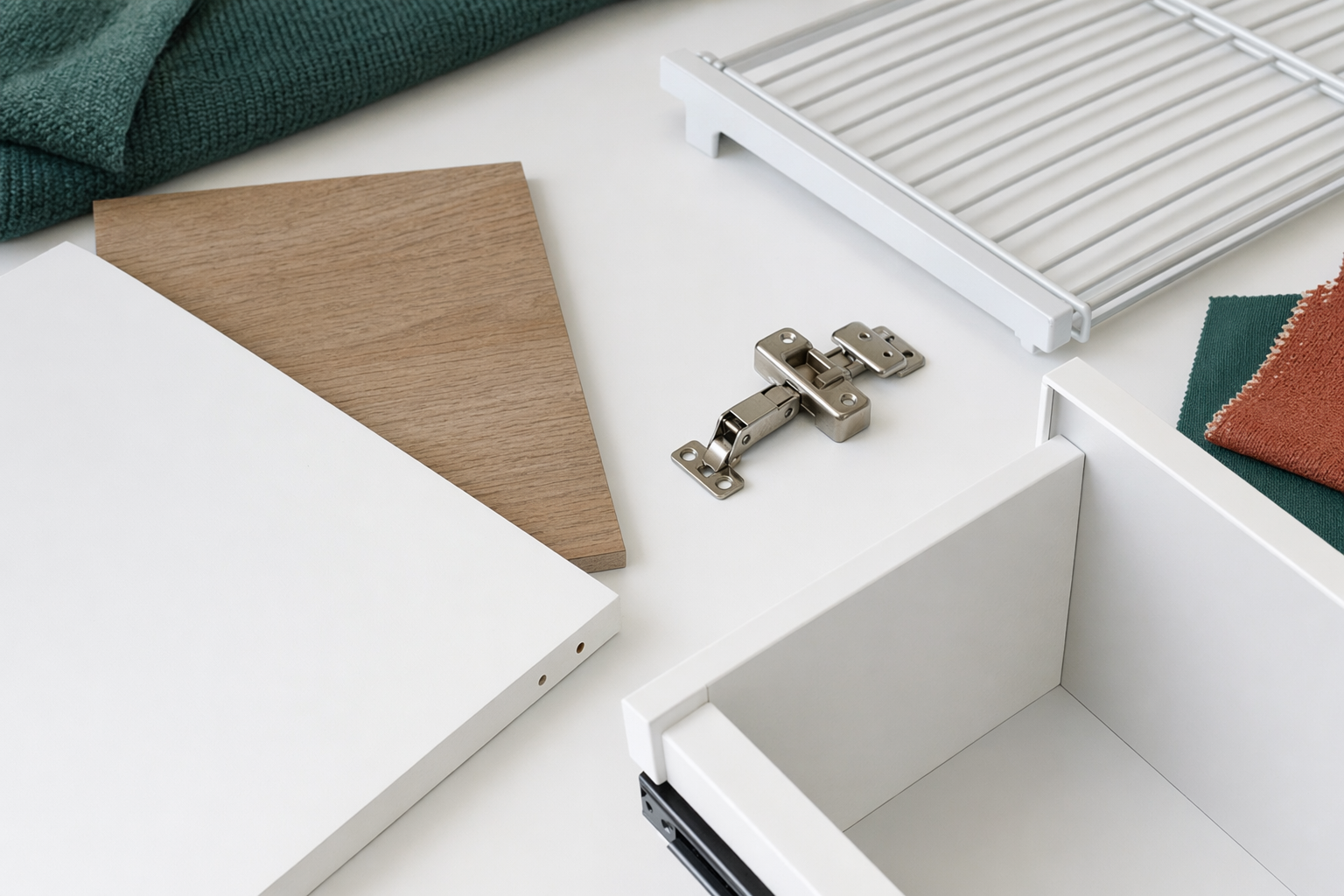
What melamine and laminate closet systems are really like
Most people shopping for a custom closet are looking at melamine or laminate, even if they do not know the name yet. In plain terms, this is a panel-based system made from engineered wood core with a finished surface. It gives you flat shelves, full sides, drawers, doors, and a built-in look without the price of premium wood cabinetry.
For most homes, this is the value-to-look sweet spot. It works well for reach-in closets, walk-ins, pantries, laundry rooms, mudrooms, home offices, and walls of shelving. If you want something that looks finished, holds everyday clothing and household items well, and does not jump straight into luxury pricing, this is usually the first system type to price.
Compared with wire, melamine or laminate looks more furniture-like and gives you more enclosed storage. Compared with solid wood or wood veneer, it is usually more budget-friendly and easier to match to common whites, grays, wood-look finishes, and simple modern styles. You can explore other options in our systems hub if you are still comparing.

Best uses, layout basics, and the components that matter
Melamine and laminate work best when you want a clean built-in look and you know what you actually need to store. Most systems are priced by linear foot of wall, so the smartest first step is to count your wall space honestly and decide what needs hanging, folding, drawers, baskets, shelves, or doors.
A practical reach-in closet often uses 5 to 8 linear feet with a mix like this: one double-hang section for shirts and pants, one long-hang section for dresses or coats, 3 to 6 shelves, and maybe 2 to 4 drawers if you really use drawers. A walk-in might use 10 to 18 linear feet or more, but that does not mean every wall needs expensive accessories. Many people save money by using more shelves and fewer drawers.
This system is especially good for pantries and laundry rooms because it gives you sturdy-looking vertical panels, adjustable shelves, and a more finished appearance than wire. For a pantry, think in shelf depths and spacing: shallow shelves for cans and spices, deeper shelves for small appliances, and maybe one pull-out only where it solves a real problem. For a closet, add only the components you will use every week.
The biggest money wasters are easy to spot: too many drawers, fancy pull-outs in every section, doors that hide things you need to see daily, and decorative extras that do not add storage. Start with the layout, then add upgrades carefully. If you are planning a specific room, our spaces hub can help you think through what belongs where.
Honest cost per linear foot for melamine and laminate
A fair general range for melamine or laminate closet systems is often about $150 to $400 per linear foot installed, with simpler layouts at the lower end and drawer-heavy or finish-heavy designs at the higher end. In some areas, basic designs may come in a little below that, and premium laminate or more furniture-like builds may run above it. These are general ranges, not quotes.
For a small reach-in closet, many projects land around $1,200 to $3,500 depending on length, drawer count, finish, and local labor. A mid-size walk-in often lands around $3,000 to $8,000 or more. A pantry, laundry room, or mudroom built with similar panel materials may price in a similar way, but project totals move up fast once you add drawers, doors, pull-outs, bench seating, tall pantry towers, or decorative trim.
What pushes the price up most: more drawers and pull-outs, soft-close hardware, thicker or more premium-looking finishes, full back panels, doors, lighting, islands, and removal of old shelving. What keeps it lower: simpler white finishes, open shelving, fewer drawers, standard hanging sections, and using only the walls that truly need built-ins. Get the all-in price in writing before you hire anyone, including hardware, installation, and tear-out if old shelving has to be removed.
If you want broader pricing context, see our costs guide. Just remember that final pricing depends on system type, materials, accessories, the size of the space, your area, and the builder. Ranges are not promises.
How it looks, how it lasts, and the trade-offs
The main reason homeowners choose melamine or laminate is simple: it looks finished without going fully premium. You can usually get crisp white, warm wood-look tones, gray neutrals, and other common finishes that fit most bedrooms, pantries, and utility spaces. In many homes, that is enough to make the room feel custom.
For normal household use, these systems can hold up well when designed and installed properly by a licensed, insured local builder. Shelves, panels, and drawers are fine for clothing, linens, pantry goods, and everyday storage. But like any material, they have limits. Water exposure, repeated hard impacts, or overloaded spans can shorten life or damage edges and surfaces.
The trade-off is straightforward. Wire is cheaper and more ventilated, but it looks more basic. Solid wood or wood veneer is more premium, but costs more. Melamine or laminate sits in the practical middle: better look than wire, lower price than wood, and enough finish options for most spaces. If your goal is a smart, clean system rather than a luxury showpiece, this is often the right place to start.
How to get one built without losing control of the budget
ShelfGrove is a free matching service, not a closet or cabinet company. We do not design, build, or install systems. We help homeowners get connected with licensed, insured local builders so they can compare options and choose who to hire.
A practical process looks like this:
1. Measure your wall lengths roughly and note the space type: reach-in, walk-in, pantry, laundry, mudroom, office, or shelving wall.
2. Make a short must-have list: hanging space, shelves, drawers, hampers, doors, shoe storage, or pantry pull-outs.
3. Ask for the system type in writing: melamine or laminate, finish, hardware, and what is included.
4. Confirm the linear-foot scope and the all-in project price before work starts.
5. Verify the builder is licensed and insured, and confirm any local permit, wall, electrical, or load-bearing questions directly with qualified local professionals.
When you use get matched, we collect only contact and project-intent details: your name, phone, optional email, the space, ZIP code, and preferred language. You compare designs, materials, lead times, and pricing yourself. That keeps you in control.
If you want a custom closet that looks built-in without paying wood-cabinet prices, melamine or laminate is usually the smart place to start.
Common questions
Is melamine the same as laminate for a closet system?
People often group them together because both are panel-based finished systems used for custom storage. Exact construction varies by builder and product line, so ask what material, finish, edge treatment, and hardware are included.
Is melamine good enough for a walk-in closet?
Yes, for many homes it is the most practical choice for a walk-in. It gives a clean built-in look and useful storage at a lower cost than premium wood, as long as the layout and installation are done properly.
How much should a melamine closet cost per linear foot?
A common general range is about $150 to $400 per linear foot installed, but that is not a quote. The real number depends on the design, finish, drawer count, accessories, local labor, and the size of the space.
What makes the price jump on a laminate closet?
Usually drawers and pull-outs, soft-close hardware, premium finishes, doors, lighting, islands, and removal of old shelving. Ask for the full included price in writing so those items do not show up later as surprises.
Does melamine last as long as wood?
It can last well for normal household use, but it is not the same material class as premium solid wood or veneer. Its lifespan depends on the product, moisture exposure, loading, and the quality of the design and installation.
Can ShelfGrove design my closet for me?
No. ShelfGrove is a free matching service, not a closet company. We help connect you with licensed, insured local builders, and you decide who to hire after comparing designs, materials, and pricing.