Systems
Modular and freestanding storage systems
Modular and freestanding storage systems are the flexible option: easier to move, easier to change, and often a good fit for rentals, starter homes, garages, and rooms that may change use later.
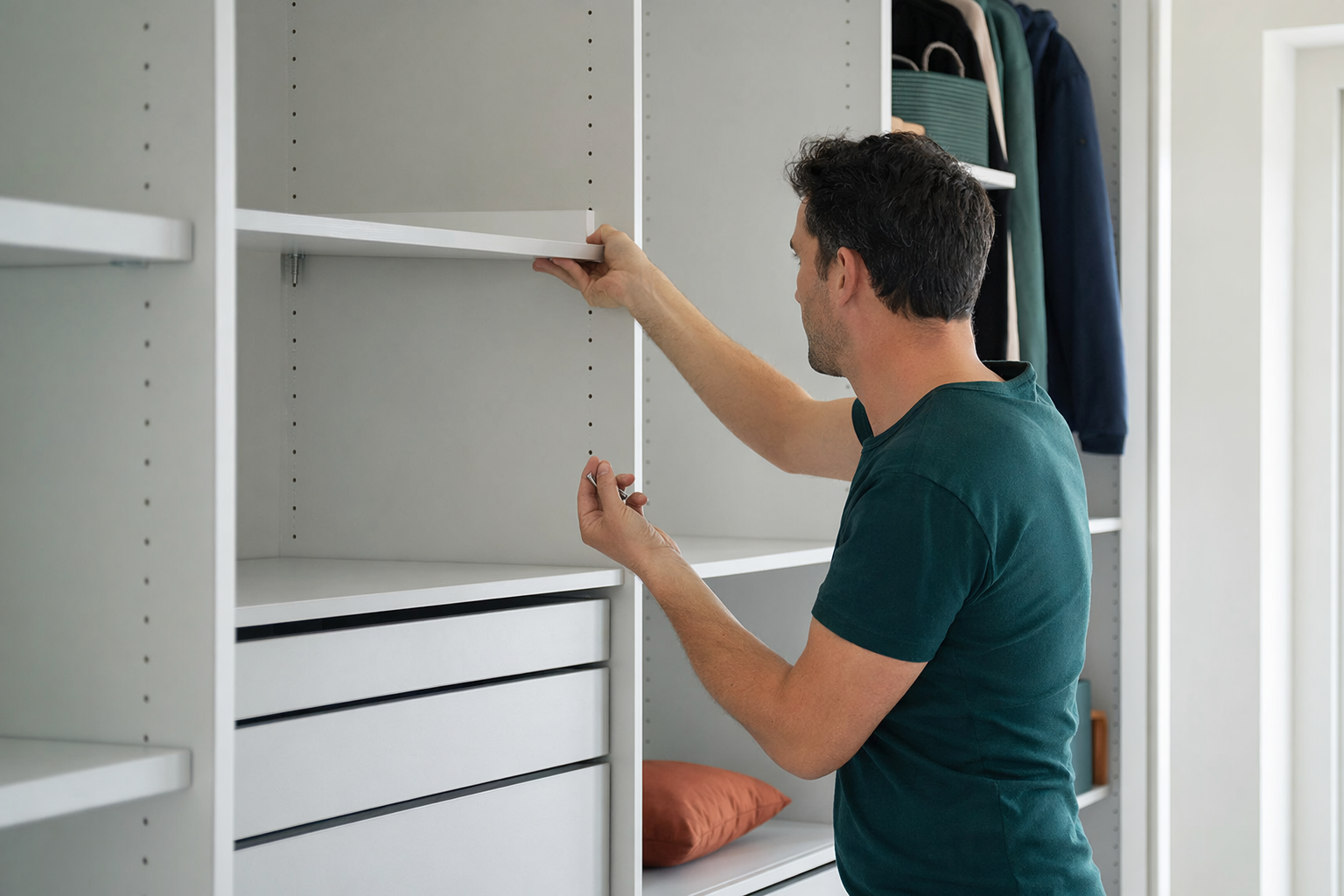
What modular and freestanding systems are best for
A modular or freestanding system is storage made from separate pieces instead of one fully built-in installation. Think towers, shelf units, drawer bases, hanging sections, cabinets, or work surfaces that can stand on the floor, sit against a wall, or connect in simple layouts. Some are lightly secured for safety, but the main idea is flexibility.
This system type makes the most sense when you may move, when you are not ready for a permanent built-in, or when the room may change later. It works well in reach-in closets, kids' rooms, pantries, laundry rooms, garages, home offices, mudrooms, and under-stair areas where you want useful storage without committing to a full custom wall-to-wall system.
In plain terms, modular is usually the right call if you care more about flexibility than a seamless built-in look. A typical setup might be one 24- to 30-inch hanging tower, one shelf tower, and one drawer unit, or a 6- to 10-linear-foot run made from standard-width pieces. Buy the parts you will actually use: a few adjustable shelves, maybe 2 to 4 drawers, and one hanging section. That keeps the cost and clutter down.
If you are still comparing system types, start here and look at wire, melamine, and wood too. Modular is not always the cheapest once you add drawers, doors, and nicer finishes.
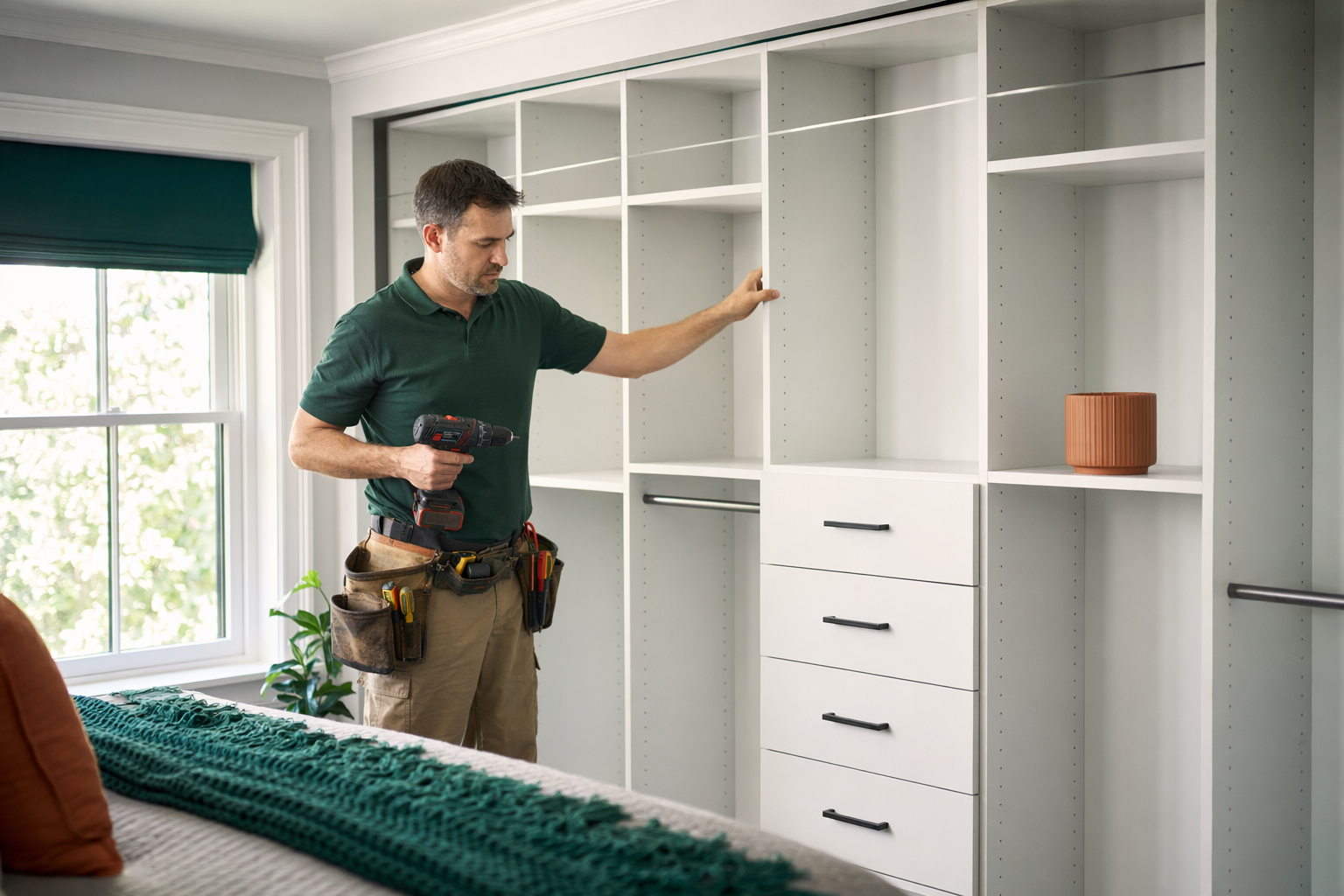
How it looks, how long it lasts, and the trade-offs
The honest truth: modular storage can look clean and useful, but it usually does not look as seamless as a true built-in. You may see gaps at the wall, filler issues in uneven rooms, exposed sides or backs, and less custom fitting around trim, vents, outlets, sloped ceilings, or odd corners. In a garage or utility space, that is usually fine. In a front-facing home office or large walk-in closet, some homeowners want a more finished look.
Durability depends heavily on the material and hardware. Basic modular systems are often laminate or melamine over engineered panels, with adjustable shelves and knock-down connectors. Better versions can last well for normal household use, especially if the units are not overloaded and are assembled correctly. Cheaper units may sag, rack, or wear faster at drawer slides, shelf pins, and edges.
The biggest trade-off is this: modular gives you flexibility, but not perfect fit. A built-in system can use every inch of wall more efficiently, especially in tight closets. Modular may leave dead space above, beside, or between units. On the other hand, if you move in two years or want to rework the room later, modular can save money because parts can often be reused.
Honest cost ranges: per linear foot and by project
Most closet and storage systems are discussed in linear feet of wall, and modular is no different as a planning shortcut. Honest general ranges for modular and freestanding systems are about $100 to $300 per linear foot for basic to mid-range setups, and roughly $300 to $500+ per linear foot when you add more drawers, doors, thicker panels, premium finishes, or specialty hardware. These are not quotes. The real number depends on the material, accessories, layout, size of the space, and your area.
For a simple project, a small 4- to 6-linear-foot closet or wall-storage run may land around $600 to $1,800 for basic modular pieces, and more if you want drawers or matching finish panels. A more complete 8- to 12-linear-foot setup with drawer bases, hanging sections, and upper shelving often falls around $1,500 to $4,500+. A garage, pantry, or office wall with cabinet-style modules can run higher depending on depth, doors, and work surfaces.
Where people get surprised is in the add-ons. The common upcharges are drawers and pull-outs, soft-close hardware, better drawer slides, premium finishes, doors, lighting, countertop surfaces, shoe storage, valet rods, baskets, and removal of old shelving. Delivery, assembly, wall securing, and trim work can also change the number. Get the all-in price in writing before you say yes.
If you want broader price comparisons by material and project type, see costs.
When modular is the smart choice — and when it is not
Modular is a smart choice for renters who can use freestanding pieces, homeowners in starter homes, families setting up a temporary nursery or kids' room, and anyone who wants storage now without paying for a fully built-in custom system. It is also practical in spaces where function matters more than furniture-grade finish, such as garages, utility rooms, and some pantries.
It is usually not the best fit when you need to maximize every inch, when the room has tricky dimensions, or when you want a polished built-in look that feels part of the house. In a walk-in closet, luxury office, or main living area shelving wall, many people end up happier with melamine or wood built-ins because the fit and finish look more intentional.
A simple rule: if the room may change, modular makes sense. If the room is permanent and visible every day, compare modular against a built-in before deciding. A cheap modular plan can become expensive fast if you keep adding upgrade pieces trying to make it look custom.
If you are planning by room first, browse spaces to see what usually works in closets, garages, pantries, laundry rooms, offices, and more.
How to buy smart or get matched with a local builder
You can buy modular storage as ready-made pieces, semi-custom pieces, or through a local builder who installs a more tailored modular system. If the project is simple, some homeowners buy parts directly and handle assembly. If the room is awkward, the loads are heavier, or you want a safer, cleaner installation, it is worth talking to a licensed, insured local builder and verifying that yourself.
ShelfGrove is a free matching service, not a closet or cabinet company. We do not design, build, or install storage systems. We help you understand your options and get connected with local builders for your space and preferred language. You stay in control: compare designs, confirm materials and components, check lead times, and get the all-in price in writing before any work starts.
A practical way to shop:
1. Measure the wall length you want to use in real linear feet.
2. List only the components you truly need: shelves, hanging, drawers, doors, baskets, work surface.
3. Decide whether flexibility matters more than a built-in look.
4. Ask what material the modules are made from and what hardware is included.
5. Ask whether wall securing, delivery, assembly, and old-shelf removal are included.
6. Verify the builder is licensed and insured if the job involves professional installation.
7. Compare the all-in price, not just the base unit price.
When you are ready, get matched. ShelfGrove only collects contact and project-intent details: your name, phone, optional email, the space, ZIP code, and preferred language.
Modular and freestanding storage is best when you want flexibility and lower commitment, but it usually fits less neatly than a true built-in and can get pricey if you over-add features.
Common questions
Are modular and freestanding systems cheaper than built-ins?
Often yes at the basic level, but not always once you add drawers, doors, soft-close hardware, better finishes, and assembly. Compare the all-in price, not just the starting price per unit.
Can a modular system work in a closet?
Yes, especially in reach-ins, kids' closets, and spaces where flexibility matters. Just know it may not use every inch as efficiently as a true built-in system.
Is freestanding storage okay for renters?
Usually yes, and that is one of its biggest advantages. Still, follow product safety directions, and confirm with your landlord if anything needs to be secured to the wall.
How many drawers should I add?
Start small. Many people do well with 2 to 4 drawers in a basic setup and add more later only if they really need them, since drawers are one of the fastest cost adders.
Do I need a builder for a modular system?
Not always. Some simple freestanding setups are straightforward, but for awkward rooms, heavy storage, or a cleaner finished result, many homeowners prefer a licensed, insured local installer and verify that themselves.
What information does ShelfGrove need to match me?
Only contact and project-intent details: your name, phone, optional email, the space you want to organize, your ZIP code, and preferred language. The service is free for the customer.