Systems
Wall-mounted and floating closet systems
Wall-mounted and floating closet systems hang from the wall instead of sitting fully on the floor. They can look cleaner and more custom, but the wall has to be right for the system and the price is usually higher than basic floor-supported options.
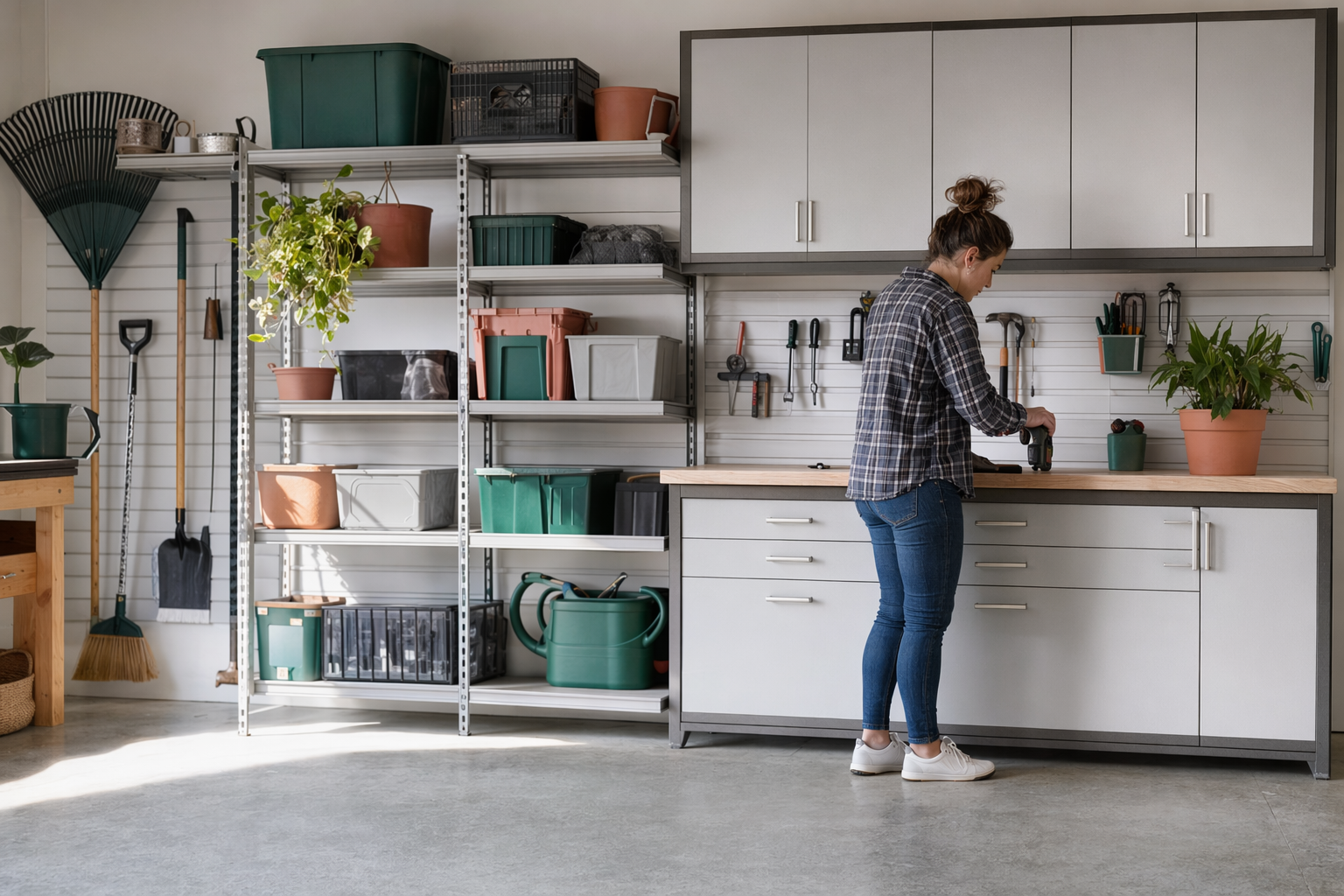
What a wall-mounted or floating closet system is
A wall-mounted closet system is supported mainly from the wall, often with a horizontal rail, cleats, or hidden brackets. The floor below stays open, so the room looks lighter and it is easier to clean under the system.
People use the words wall-mounted, wall-hung, and floating a little loosely. In real projects, some systems are fully suspended from the wall, while others look floating but still use limited floor support in a few places. That is one reason you should confirm exactly how the builder plans to support it before work starts.
These systems are most common in reach-in closets, walk-ins, laundry rooms, mudrooms, home offices, and modern built-ins. They are less about saving money and more about getting a cleaner look, keeping the floor open, and making the space feel more custom.
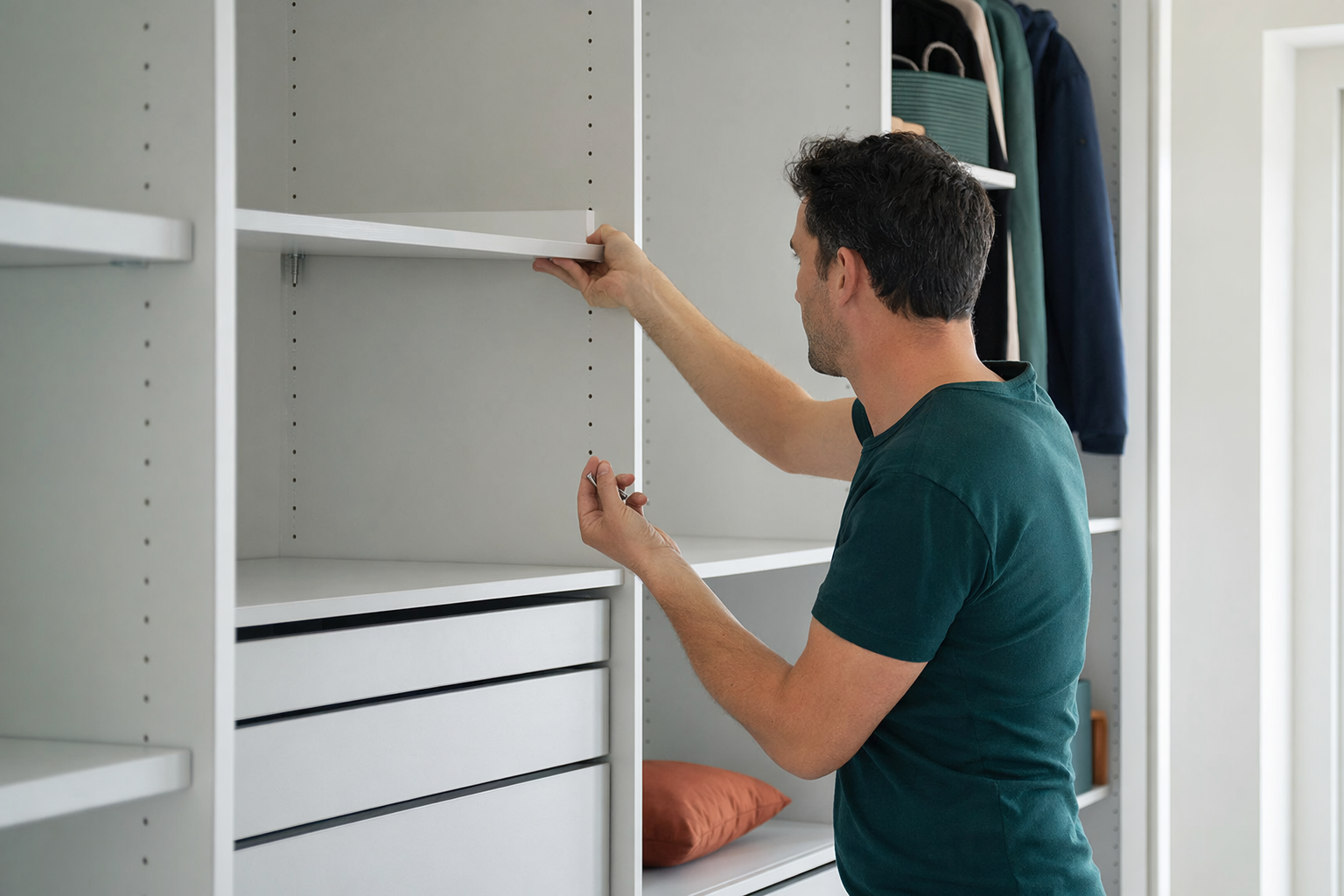
Best uses, what to include, and when this system makes sense
Wall-mounted systems are a strong fit when you want a modern look, need easy floor cleaning, or have a smaller room where open floor area matters visually. They also work well when you want to combine hanging sections, shelves, and a few drawers without making the closet feel heavy.
For a typical closet, think in real wall sections. A practical 6 to 8 linear foot reach-in might use one double-hang section, one long-hang section, 3 to 6 adjustable shelves, and 2 to 4 drawers if you truly need them. A 10 to 14 linear foot walk-in might add more shelving, a hamper pull-out, or shoe shelves, but many people overspend by adding too many drawers and accessories they rarely use.
This style is especially good when you want the floor clear below shelves or drawer banks. That open area can make a narrow closet easier to use. It can also help in laundry rooms or mudrooms where you want room below for baskets, shoes, or easy sweeping.
It makes less sense if your wall condition is questionable, if you want a very traditional furniture look, or if you need the lowest possible price. If you are still comparing types, start with the main systems hub and then compare cost ranges on the costs page.
- Best for: modern closets, built-ins, laundry rooms, mudrooms, open-floor designs
- Usually includes: hanging rods, adjustable shelves, drawer stacks, shoe shelves
- Good place to save money: fewer drawers, fewer pull-outs, simple finishes
How it looks, how it lasts, and the real trade-offs
The big visual advantage is the clean line. Because the floor is visible below the system, the room often feels less crowded. In a walk-in, that can read as more expensive even when the materials are mid-range melamine or laminate rather than premium wood.
Durability depends less on the word floating and more on the material, hardware, and installation method. Many wall-mounted systems are built in melamine or laminate because that gives the best balance of look and cost for most custom closets. Wood veneer or solid wood can be used too, especially for visible built-ins, but that pushes the budget up fast.
The main trade-off is support. A wall-mounted system needs proper attachment for the wall type and layout. ShelfGrove gives general information only and is not a builder, so do not guess on structure or mounting details. Hire a licensed, insured local builder, ask how the system will be supported, and verify any load-bearing, blocking, or permit questions locally.
Another trade-off is expectation. Floating does not mean you should overload every shelf or rod. If you plan to store very heavy items, say that early so the builder can design for the real use.
Honest cost per linear foot and what pushes the price up
Most custom closet and storage systems are priced by linear foot of wall, then adjusted for components and finish. For wall-mounted or floating systems, a fair general range is often about $250 to $700+ per linear foot installed, depending on the material, hardware, accessories, local labor, and how simple or built-up the design is. These are not quotes.
At the lower end, you are usually looking at a simpler wall-hung melamine or laminate layout with open shelves, basic rods, and limited drawers. In the middle, you may have better finishes, thicker-looking panels, cleaner hardware, and a few drawer banks. At the upper end, you may be in premium finishes, more complex built-ins, wood veneer or wood details, integrated lighting, or larger custom features.
For a small reach-in, many projects land around roughly $1,500 to $4,500. A more built-out walk-in can be around $4,000 to $12,000 or more. A home-office wall or visible built-in with floating elements can go higher. The real number depends on the system type, materials, accessories, area, and size of the space. Ranges are not quotes.
The most common upcharges are plain: drawers and pull-outs, soft-close hardware, premium finishes, lighting, islands, and removal of old shelving. Get the all-in price in writing before you agree to anything. That matters more than the base linear-foot number.
Where people waste money on floating systems
The most common mistake is paying for the look of a luxury closet but using it like a basic one. If you mostly need hanging space and a few shelves, you probably do not need two drawer towers, specialty racks everywhere, or expensive interior lighting.
Another easy overspend is choosing premium materials where a good melamine or laminate would do the job well. For most custom closets, melamine is the value-to-look sweet spot. Save wood or veneer for highly visible built-ins or spaces where that premium finish truly matters to you.
People also get surprised by prep work. If old wire shelving or builder-grade shelves need to be removed, patched around, or worked around, that can add to the bill. Ask about removal of old shelving and any wall repair assumptions before the job starts.
A simple rule: add only the components you will actually use every week. A clean hanging section, adjustable shelves, and a modest drawer count usually outperform a fancy design loaded with accessories.
How to get matched with a licensed local builder
ShelfGrove is a free matching service, not a closet company. We do not design, build, or install closet systems. We help homeowners compare options and get connected with licensed, insured local builders for projects like closets, laundry rooms, mudrooms, offices, and shelving walls.
To get started, use get matched. We only collect contact and project-intent details: your name, phone, optional email, the space, ZIP code, and preferred language. Then you can compare builders, ask how they support wall-mounted systems, review materials and components, and choose who to hire.
Before you sign with anyone, confirm these points in writing:
1. The exact material: wire, melamine/laminate, veneer, or wood.
2. The linear footage and what components are included.
3. Drawer count, shelf count, rods, and any pull-outs or special accessories.
4. Whether soft-close, lighting, premium finishes, and removal of old shelving cost extra.
5. The all-in price, estimated lead time, and who handles any local permit questions if needed.
6. Proof that the builder is licensed and insured, and your own verification of that.
If you are still deciding where a floating system fits best, compare room types on the spaces page and review broader budget ranges on costs.
Wall-mounted closets look clean and high-end, but they usually cost more than basic systems, so keep the design simple and make sure a licensed, insured builder explains exactly how it will be supported.
Common questions
Are wall-mounted closet systems stronger than floor-mounted ones?
Not automatically. Strength depends on the material, hardware, design, and installation method. Ask a licensed, insured builder how the system will be supported for your wall type and verify any structural questions locally.
Is a floating closet system more expensive?
Usually yes, at least compared with basic floor-supported systems. The cleaner look, support method, and custom detailing can raise the price, especially once you add drawers, premium finishes, or lighting.
What material is best for a wall-hung closet?
For most homes, melamine or laminate is the practical sweet spot because it looks custom without wood-level pricing. Wood veneer or solid wood is more premium and is usually chosen for visible built-ins or high-end walk-ins.
Can I use a wall-mounted system in a reach-in closet?
Yes, and it often works very well there. Keeping the floor open can make a small closet feel less crowded and easier to clean.
What should I ask before hiring someone for a floating closet system?
Ask what material they are using, how the system will be supported, what is included in the linear-foot price, what the upcharges are, and whether removal of old shelving is extra. Also verify that the builder is licensed and insured.