Systems
Solid wood and veneer closet systems
Solid wood and wood-veneer closet systems are the premium end of custom storage. They can look beautiful and last a long time, but they cost more, so it helps to know where the money actually goes.
What solid wood and veneer systems are best for
A solid wood or wood-veneer closet system is usually chosen for spaces you see and use every day: a primary walk-in, a dressing room, a home office built-in, a library wall, or another visible storage area where appearance matters as much as function. If you want furniture-like detail, warmer color, and a more custom-built look than basic closet panels, this is the category people usually mean.
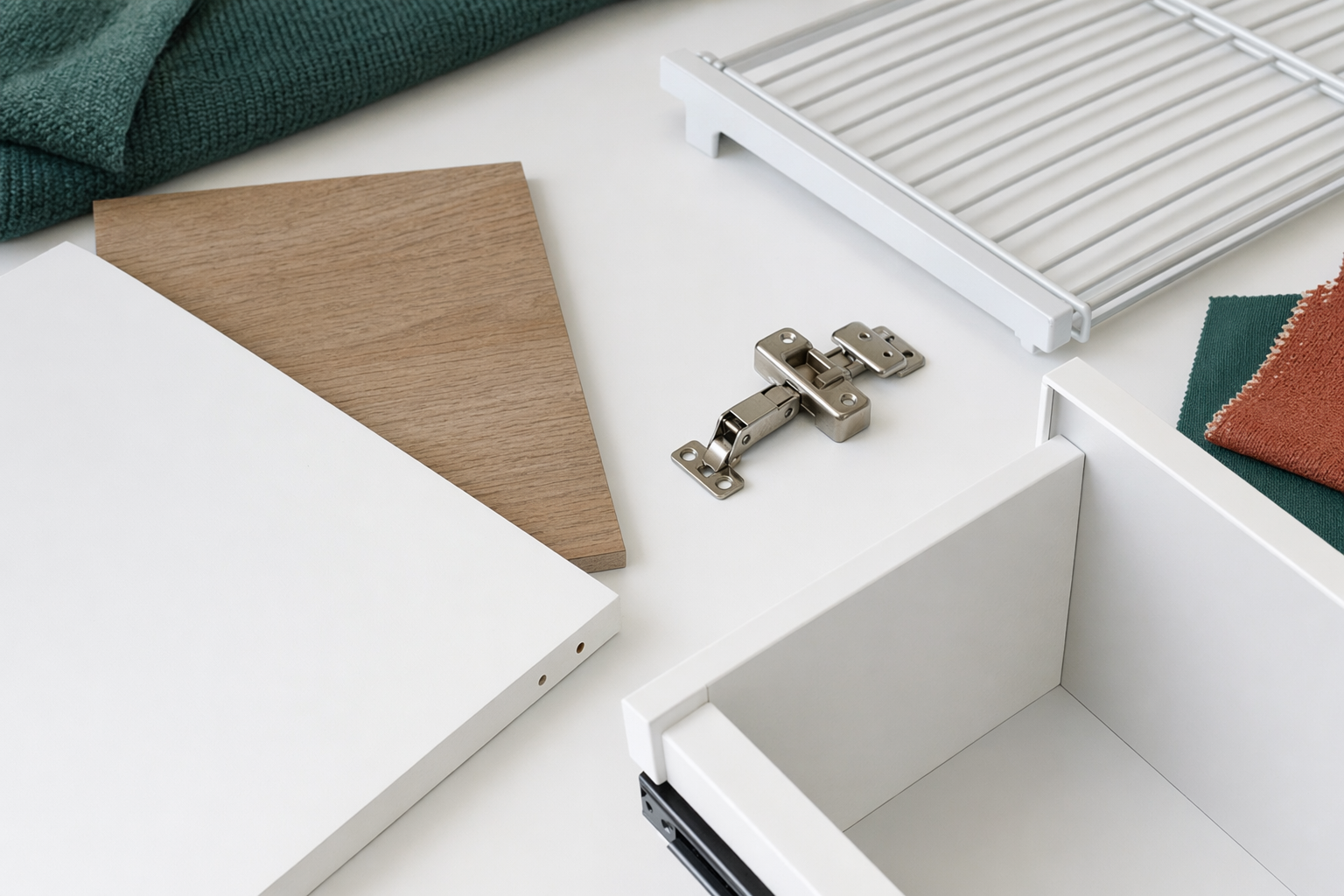
There are two common versions. Solid wood uses real wood parts for more of the visible structure and trim. Veneer systems use a stable core panel with real wood veneer on the surface. In plain terms, veneer often gives you the wood look in a more controlled, consistent product, while solid wood is the traditional premium option. Quality varies a lot by builder, species, finish, and construction method.
For many homeowners, this type makes the most sense in a walk-in or a built-in that stays visible. It is usually not the budget-first choice for a simple reach-in where the doors stay closed most of the time. If your main goal is practical storage at a lower cost, melamine and laminate systems are often the value sweet spot, while wire is still the cheapest option.
Most custom closet and storage systems are priced by linear foot of wall, then adjusted for height, depth, drawers, finish level, and special features. With wood and veneer, the upgrade is often as much about appearance and detail as basic storage capacity.

How it looks, how it lasts, and how to judge quality
The main reason people choose wood or veneer is the finished look. It can feel warmer, richer, and more like built-in furniture than wire or basic laminate. You may see details like thicker shelves, face frames, decorative fillers, crown molding, toe kicks, glass doors, better drawer boxes, and stained or painted finishes that match other millwork in the home.
Durability depends less on the label and more on the actual construction. A well-built veneer system can perform very well because the substrate is stable and the finish is consistent. A poorly made "wood" system can still warp, scratch, or age badly if the joinery, finish, or installation is weak. Ask what parts are solid wood, what parts are veneered panels, what the drawer boxes are made of, and what hardware is included.
Plain quality checks matter more than fancy words. Look at shelf thickness, edge quality, drawer glide brand and weight rating, finish consistency, how hanging sections are supported, and whether tall units are properly fastened by a licensed, insured builder. For any questions about wall conditions, load, permits, electrical, or structural issues, confirm locally with qualified licensed professionals.
If you are comparing options, think honestly about how visible the system will be. In a showcase walk-in, the nicer finish may feel worth it every day. In a basic hall closet, it may not change how the space works.
Honest cost per linear foot and total project ranges
Solid wood and wood-veneer systems are usually the premium price tier. A practical national-style planning range is about $250 to $600+ per linear foot for many custom veneer and wood closet projects, with some high-detail work going beyond that. Those are general ranges, not quotes. The real number depends on whether it is veneer or more fully solid wood, the wood species, painted vs stained finish, hardware, accessories, project size, and your area.
For a smaller reach-in closet, many projects land roughly around $2,500 to $6,500+, depending on design complexity and how many drawers or specialty parts you add. For a walk-in, a common planning range is about $5,000 to $15,000+, and luxury rooms with islands, glass, lighting coordination, and heavy trim can go much higher. If you are still comparing materials, cost guides can help you see how wood stacks up against wire and melamine.
The reason the range is wide is simple: basic hanging sections and shelves are one price; drawers, jewelry inserts, tilt hampers, pull-out mirrors, glass fronts, integrated lighting, and detailed trim push it up fast. Finish work also matters. A painted premium system with multiple built-in-looking details may cost very differently from a simpler stained veneer layout with mostly open shelves and hanging.
Get the all-in price in writing before you hire anyone. Ask whether the number includes design, field measurement, delivery, installation, taxes if applicable, hardware, fillers, trim, and removal of old shelving. Many surprise costs come from assumptions, not from the base linear-foot number.
The upcharges people underestimate
Wood and veneer projects are where add-ons can quietly change the budget the most. The biggest upcharges are usually drawers and pull-outs, soft-close hardware, premium finishes, lighting, islands, and removal of old shelving. These are normal options, but you should decide on them on purpose, not discover them late.
Drawers are one of the biggest budget drivers. A layout with mostly shelves and hanging may feel expensive already, but adding several drawer stacks can move the total quickly. The same is true for pull-out hampers, valet rods, belt racks, tie racks, slide-out baskets, and specialty organizers. Add only the components you will actually use.
Decorative trim also adds cost without always adding storage. Crown, base details, furniture-style panels, thick end gables, glass fronts, and custom color matching can be worth it in a visible room, but they are easy places to overspend. If your goal is function first, put the money into better layout and a few useful drawers instead of many decorative details.
Lighting deserves a careful conversation because it may involve another trade depending on the design and local requirements. ShelfGrove gives general information only and does not provide electrical or licensed-trade advice. Have licensed, insured professionals explain what is included, who handles what, and whether any permit or wall condition question needs local confirmation.
Trade-offs: when wood is worth it and when it is not
Wood or veneer is worth a serious look when the room is visible, the style matters, and you want the space to feel closer to custom furniture than standard closet storage. It is especially common in primary walk-ins, dressing rooms, and built-ins in living spaces or offices. In those places, the finish and details may matter every day, not just the shelf count.
It may not be worth the premium if the closet is small, hidden behind doors, or mainly for basic hanging and folded clothes. In that case, a well-designed melamine system often gives you very similar function at a lower price. That is the honest trade-off: wood usually buys look, warmth, and detail first; it does not automatically double the usefulness of the closet.
There is also a middle ground. Some homeowners choose veneer or wood for the visible parts of a project and keep the inside simpler. Others skip the island, reduce the drawer count, or simplify trim so the room keeps the premium appearance without turning into a luxury-budget project. If you are early in planning, space guides and system comparisons can help you narrow what actually fits your room and budget.
How to get matched with a licensed local builder
ShelfGrove is a free matching service, not a closet company. We do not design, build, or install storage systems. We help homeowners connect with licensed, insured local builders so they can compare options, ask better questions, and choose who to hire.
If you want to get matched, you share only contact and project intent details: your name, phone, optional email, the type of space, your ZIP code, and preferred language. Then you can talk with local builders about layout, material choice, lead time, and the all-in installed price. It is always free for the customer.
When you compare builders, ask the same practical questions each time:
1. Is this mostly solid wood, wood veneer, or a mix?
2. What is included in the linear-foot price and what is extra?
3. How many drawers, shelves, and hanging sections are in this design?
4. What hardware and finish level are included?
5. Does the price include delivery, installation, fillers, trim, and removal of old shelving?
6. Who handles any permit, wall-condition, or trade coordination questions if they come up?
7. Are you licensed and insured, and can I verify that locally?
You stay in control the whole time. Compare designs, confirm materials and components, verify licensing and insurance yourself, and get the final scope and all-in price in writing before work starts. If you are ready, start here: get matched.
Choose solid wood or veneer when you want a premium built-in look in a visible space, but expect higher per-foot pricing and watch the add-ons closely.
Common questions
Is solid wood always better than wood veneer for a closet?
Not always. A good veneer system can look excellent and perform very well, and in many cases it is more consistent and stable than people expect. What matters most is the overall construction, finish, hardware, and installation quality.
How much more does wood cost than melamine?
Often quite a bit more. Wood and veneer systems are usually the premium tier, while melamine is often the better value for most custom closets. The exact difference depends on finish, details, drawer count, and your area, so treat ranges as planning numbers, not quotes.
What makes the price jump fastest in a wood closet?
Usually drawers and pull-outs, soft-close hardware, premium finishes, lighting, islands, and decorative trim. Removal of old shelving can also add cost. Ask for the all-in price in writing before you commit.
Are wood systems only for walk-in closets?
No. They are also common for home offices, libraries, mudrooms, pantry built-ins, and other visible storage walls. They just make the most financial sense where the look matters enough to justify the premium.
How do I find someone local to build a wood or veneer closet system?
ShelfGrove can help you get matched with licensed, insured local builders. ShelfGrove is a free matching service, not an installer, and you still compare options, verify qualifications yourself, and choose who to hire.